


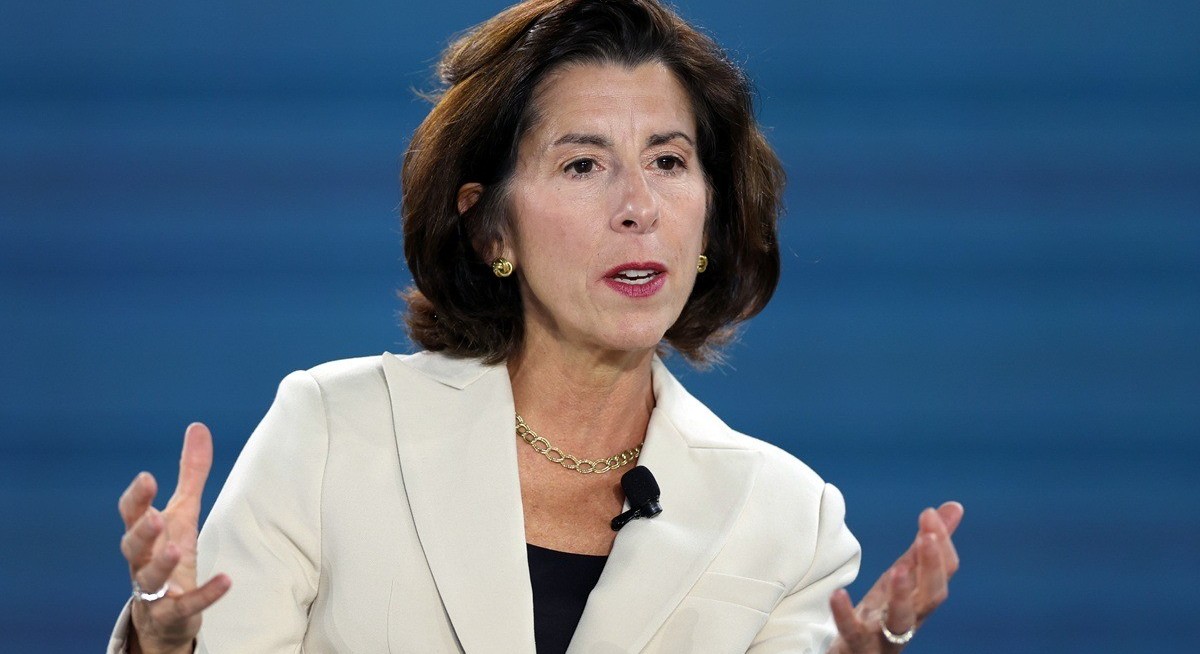


“Tariffs, once they’re put on, are hard to take off,” Raimondo said Wednesday. “No one wants to be the American president accused of letting down the American worker. Tariffs protect the American worker. And I think AI makes it more so of a political reality.”
Former US president Joe Biden maintained duties from the first Trump term to avoid the perception of abandoning domestic labour, despite her urging to reduce some levies, she said on a panel alongside Goldman Sachs Group Inc president John Waldron.
Waldron agreed, adding that a complicated labour environment expected next year would only worsen these political sensitivities.
Beyond labour politics, Raimondo expressed skepticism over tariffs’ effect on boosting the US manufacturing sector. While they help protect strategic sectors like semiconductors and pharmaceuticals, she said they often act as a headwind by increasing costs for US manufacturers who rely on imported inputs.
See also: Option traders see payrolls cementing two or three cuts in 2026
On the geopolitical front, Raimondo anticipates that US-China relations will remain in a “status quo” holding pattern over the next few years. Citing points of leverage such as China’s control over rare earth minerals, she argued that their interdependence means neither side can afford a major escalation.
Trump’s meeting with Chinese leader Xi Jinping last month led to lower tariffs and eased tensions between the world’s two largest economies, although the countries are still negotiating over key details of how Beijing will free up sales of rare earths.
Gina Raimondo is a co-chair of Bloomberg New Economy Advisory Board.
Uploaded by Liza Shireen Koshy




