


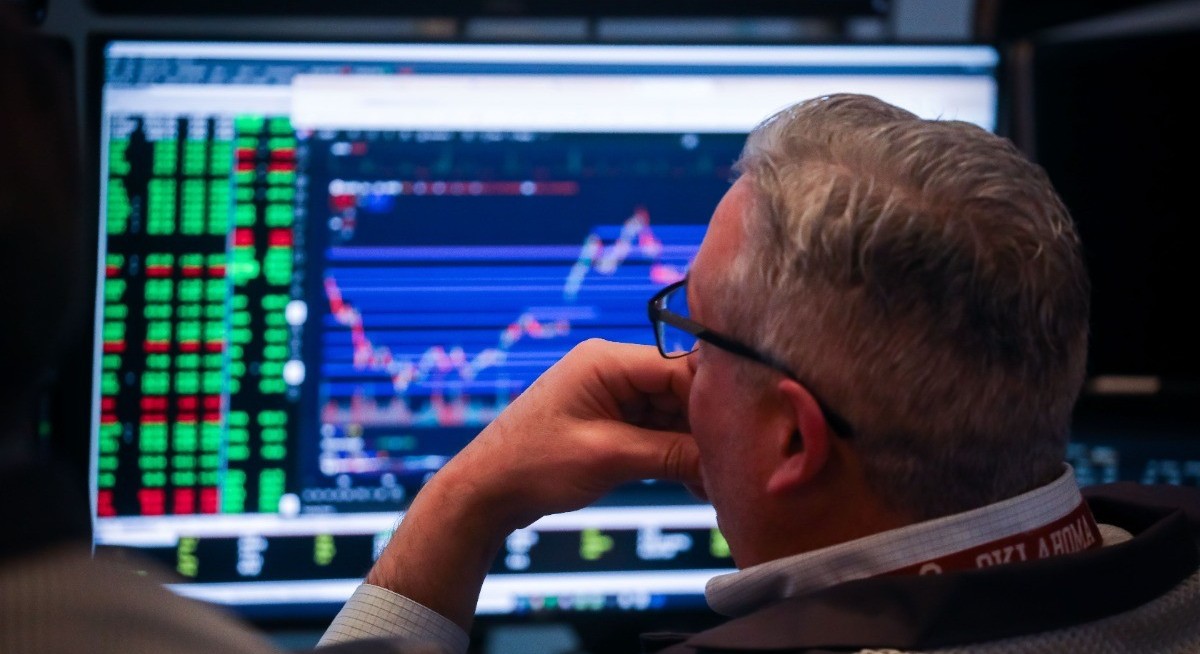


Funds run by industry giants D E Shaw & Co, Millennium Management, Citadel, Point72 Asset Management and Qube Research & Technologies posted double-digit returns. Bridgewater Associates, the half-a-century-old investment firm, scored the best-ever gain of 34% in its flagship Pure Alpha II fund.
Smaller funds focused on a particular strategy might outperform in any given year given their ability to quickly move in and out of bets, minting handsome profits even as the wider industry struggles. But even the largest firms with billions invested across a multitude of strategies, a tactic designed to bring steady gains through diversification, mostly managed to achieve double-digit returns again in 2025.
“2025 was the year when everybody won,” Alexis Maubourguet, chief investment officer of hedge fund ADAPT Investment Managers, said. “There was something for everyone, which is quite rare.”
Private market hedge
See also: US core CPI rises as expected in January on services costs
That outperformance comes as interest in some private market bets shows signs of straining, with private credit investors heading for the exits and private equity firms still struggling to extricate themselves from boom-time acquisitions. The contrast is helping position the industry to grab client attention, reversing a prolonged period of outflows.

Hedge funds secured net inflows of US$71 billion during the first three quarters of last year, HFR’s data show. That’s a major reversal after a decade through 2024 in which US$167 billion fled the sector. The industry’s giants, who offer clients multiple strategies to play the market regardless of its direction, have been among the major beneficiaries.
See also: Investors pour another US$4 bil into US high-grade bond funds
“Hedge funds are an area where we have seen a sizable resurgence in client interest,” said Mike Pyle, deputy head of BlackRock Inc’s Portfolio Management Group, the unit that houses its hedge fund business. “Market neutral strategies that draw on multiple alpha sources are where we have predominantly seen interest, reflecting demand from allocators for a single point of entry to diverse alpha streams.”
Macro mania
Last year was the fourth best for hedge fund returns since the turn of the century. The period was marked by geopolitical shocks from US President Donald Trump’s tariff liberation day to a widening conflict in the Middle East and a series of false dawns in Ukraine. At the same time, AI-related stocks enjoyed a remarkable boom followed by a series of pullbacks as investors contemplated valuation concerns and precious metals soared. Uncertainty over the pace of monetary easing was a constant refrain.

For traders betting on macroeconomic trends, it was a fruitful backdrop.
Billionaires Michael Platt and Louis Bacon, both of whom have eschewed outside capital, guided their firms to bumper years. Platt’s BlueCrest Capital Management made 73% last year, propelling the cumulative gain since he stopped managing external capital a decade earlier to 7,858%. Bacon’s Moore Capital, which has solely managed his and other partners’ money in recent years, netted a 23% return.
Other big-name macro traders who still run clients’ cash, such as Chris Rokos’ eponymous firm and Rob Citrone’s Discovery Capital Management, also posted double-digit gains. Former Moore Capital trader Edouard de Langlade’s EDL Capital achieved its best result since launching in 2015 with a 27% return.
To stay ahead of Singapore and the region’s corporate and economic trends, click here for Latest Section
“We know people want to add more into their portfolio but many of the managers they want are closed to new capital,” Marlin Naidoo, global head of capital introduction at BNP Paribas SA, said. “There’s a big opportunity for the next generation of managers who can rise to the occasion.”
Return of the stock picker
While macro traders thrived amid the volatility, equity hedge funds rode a stock boom propelled by artificial intelligence and an S&P 500 that gained 18% last year.

Funds run by firms including Light Street Capital Management, Maverick Capital, Whale Rock Capital Management and Lone Pine Capital posted double-digit gains. Of all the broad strategies tracked by HFR, equity hedge funds achieved the highest returns with 17.3%.
The bumper year augurs well for a reversal of the trend that has seen more than 6,000 hedge funds shuttered over the past decade, HFR’s data show. While client cash has migrated to the biggest — and mostly multistrategy — names, many of them are already wary that managing too much money can be a drag on performance.
The “last two years have seen some of the best returns for single-manager hedge funds that don’t fit into the pod shop model because they are too directional,” said Caron Bastianpillai, a senior portfolio manager at Switzerland-based NS Partners SA. “If people continue to chase performance, I would expect single managers to get more flows.”
Simpler and more liquid strategies could be among the beneficiaries of increased hedge fund allocation at a time when many multistrats aren’t accepting new cash, according to Marcus Storr, head of alternative investments at German hedge fund allocator FERI.
Equity long-short and merger arbitrage stand out as favoured areas, with falling financing costs and a reopening M&A pipeline expanding the opportunity set for deal-driven trades, he said. Relative-value and commodities strategies are also gaining traction, he added.
“There is a significantly higher appetite for hedge funds right now compared to the last 15 years,” Storr said. “People had been hesitant until two years ago but it’s pretty dynamic right now and that’s obviously the tailwind of the extraordinarily strong performance.”
Events since the start of the year — including the shock capture of former Venezuelan leader Nicolas Maduro by the US — have encouraged many in the industry that 2026 is set to serve up more of the same. Still, for ADAPT’s Maubourguet, the edge toward euphoria could leave the industry poised for a reality check.
“The risks are numerous, inevitable, large and well flagged, making them hard to ignore entirely,” he said. There is a “combination of extreme positioning, extreme leverage and extreme greed across the full spectrum of market participants” that has created a feverish and nervous mood, he said.
Uploaded by Arion Yeow




