




(March 26): Travellers hoping for a drop in long-haul summer airfares are in for a brutal reality check.
Ticket prices on major routes connecting Asia and Europe have surged up to 560% this month and are likely to stay elevated through the summer and into fall as war-related disruptions ripple through the Persian Gulf, the world’s busiest transit corridor, according to Alton Aviation Consultancy.
For June travel, fares across seven popular Asia-Pacific to Europe routes are averaging about 70% higher than a year ago, based on Alton’s analysis of data from analytics firm Cirium and online travel agencies. A Sydney-to-London ticket now averages more than US$1,500 ($1,924.80), roughly double last year’s price. Fares include direct and one-stop flights, as well as transits through Gulf airports.
There’s little relief in sight. Prices are expected to remain about 30% above last year’s levels even as far out as October.
The pressure is just as evident in the opposite direction. Europe-to-Asia fares have jumped sharply, with June prices up by as much as 79% year-on-year and some long-haul routes now costing almost three times more than a year ago.

See also: On the Vietnamese riviera
The disruption, which began Feb 28 when the US and Israel attacked Iran, has triggered about 70,000 flight cancellations and exposed the fragility of global aviation networks. Airspace closures, reduced capacity at Gulf hubs and rising fuel costs have combined to push fares higher — and are expected to keep them there for months.
Demand is already starting to soften due to travel uncertainty and higher fares. Summer bookings from Europe to the US are down 15% from a year earlier, while traffic in the opposite direction has fallen 11%, according to Cirium. Bookings from Asia to Europe have slipped as well, declining 4.4%, including routes that connect through the Middle East.
Even if the conflict ends soon, flight pricing pressure will persist, said Bryan Terry, a managing director at Alton.
See also: Garuda Indonesia loss widens as scheduled airline revenue slips
“It would take up to three months for the price reductions to work their way through the jet fuel supply chain,” he said. “What we’re seeing is not just a short-term pricing shock. Even as the immediate disruption eases, longer routings, tighter capacity and higher fuel costs will keep upward pressure on prices for an extended period.”
560% jump
Hardest hit are flights linking Asia and Europe, many of which pass through Middle Eastern hubs such as Dubai, Abu Dhabi and Doha — a corridor that typically handles about a third of annual traffic between the regions, according to Roland Berger data.
The disruption to this corridor is compounding pressure on fares. Tickets from Hong Kong to London Heathrow are averaging US$3,318 as of March 23 — a 560% jump from the month before, according to Alton Aviation. Prices for Bangkok to Frankfurt flights surged 505% to US$2,870. The classic “Kangaroo Route” between Australia and the UK has also been hammered, with fares from Sydney to London soaring 429% in the period.

Since the war began, both demand and prices on these routes have climbed even as European and Asian carriers scramble to add capacity. Nearly a month into the conflict, aviation networks are still struggling to adjust, while rising fuel costs — driven in part by constraints on shipments through the Strait of Hormuz — are compounding the pressure.
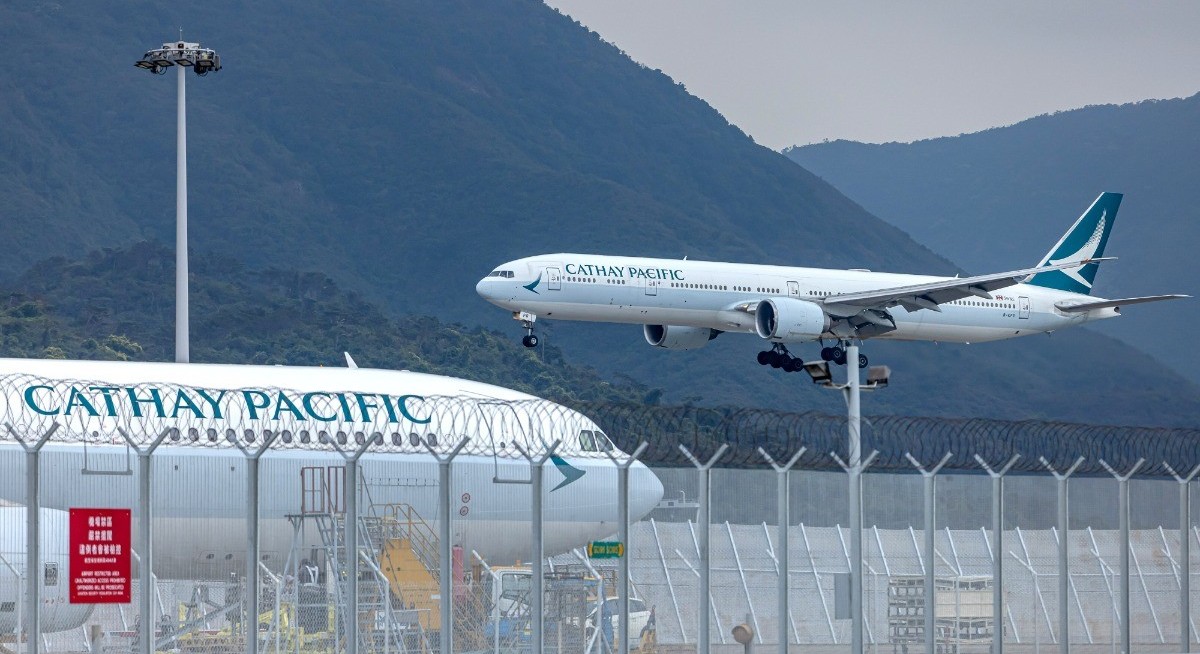
Airlines have started passing those costs onto customers. Jet fuel, which represents about a third of operating expenses, has surged alongside oil prices, stoking fears of shortages. Carriers, including Air France-KLM, Cathay Pacific Airways Ltd and Air New Zealand Ltd, raised fuel surcharges this month.
“Things are very uncertain right now, with so much travel chaos,” said Hanming Li, an independent travel analyst. “If travellers see that flights are getting cancelled, delayed and disrupted, they will carefully consider whether to travel and how to travel.”
Uploaded by Chng Shear Lane




