


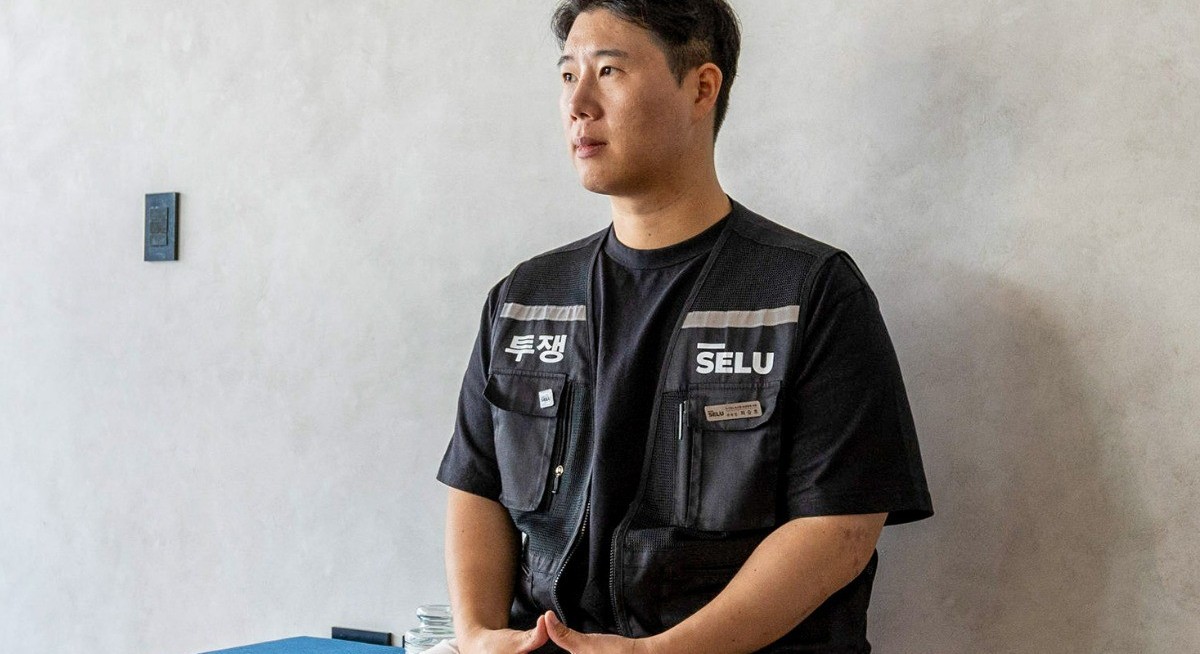


SEOUL (July 6): As recently as late May, Choi Seung-ho was hailed as a hero. Rallying workers at Samsung Electronics Co to demand a greater share of profits, the union leader secured a staggering windfall, particularly for some semiconductor workers who were promised bonuses of roughly US$400,000 ($517,050) this year.
The celebration was short-lived. Workers in less lucrative sections were furious over their much smaller bonuses, in some cases a mere 1% of what their memory-chip colleagues won. Some began showing up to work in black clothes and masks to signal their discontent.
“It’s too bad that the outcome left some people unhappy,” Choi said in a recent interview, days before he put his leadership to a vote of confidence. He kept his job, with 88% of union members voting last week to support him, but only after the departure of thousands. He’s now left commanding a highly fractured organisation: his union’s latest membership, at under 55,000, has fallen to less than half of Samsung’s domestic workforce, meaning it's lost its power to be the single negotiating channel with management.
For the interview, he chose a quiet cafe a safe distance from Samsung’s campus in Pyeongtaek, a port city 50km south of Seoul. Walking around town, Choi said, he feels both warm appreciation and silent resentment.
A fishmonger’s son, 35-year-old Choi long identified as a loyal employee with no interest in organised labour. He fell into union work almost by accident. His online media posts on community affairs and workplace issues gained traction among colleagues. He eventually used that influence to demand that Samsung share the spoils of the artificial intelligence (AI) boom.
His experience highlights how the AI gold rush has both emboldened a new generation of Korean tech workers and created new divisions among them. Led by accidental leaders like Choi, millennial and Gen Z workers mobilised not out of a sense of solidarity but to maximise their personal gains. They tore up the traditional, unspoken contract in which they traded unquestioning loyalty to Samsung for lifelong job security.
See also: SK Hynix seeks access to AI investors in US$29 bil US listing
They also shunned the militant and highly politicised playbook of South Korea’s labour unions and the strict “all-for-one” dogma that bound workers together in the past. But without a shared ideological bedrock, Choi and his colleagues are now discovering how difficult it is to maintain a unified front — especially in the face of diverging financial interests.
“What happened at Samsung reflects a broader shift in Korea’s workforce,” said Shin Jae Yong, a Seoul National University professor and an authority on compensation. Workers in their 20s and 30s, after enduring intense competition for education and jobs, face greater economic uncertainty than the baby-boomers who benefited from Korea’s high-growth decades, he said. “That has made younger employees more sensitive to fairness, and when the company wins big, they don’t think it’s too much to ask for a fair share.”

See also: India tells Meta to remove child abuse content from Instagram
Choi was born in 1991 in Pyeongtaek, before Samsung’s semiconductor complex came to dominate the skyline. Back then, it was a quiet town of pear orchards and rice paddies. The only hint of the outside world was the smell of charcoal-grilled hamburgers drifting from a nearby US military base.
His family ran a fish stall in the local market, which his mother took over after his father died. As a boy, Choi said, he was overweight and introverted, preferring making paper origami to socialising.
After studying industrial engineering at Myongji University in Yongin, near Seoul, he landed a job at Samsung in 2017. He had the option of working elsewhere in Samsung’s vast corporate empire, but he chose to start his career in the memory-chip division in Pyeongtaek, which wasn’t a particularly coveted posting. He thrived and in 2022 was dispatched to the foundry unit for two years to work in optimising processes and systems. He volunteered to develop training materials and built a reputation as a sought-after internal lecturer. His early career coincided with the rapid development of his hometown as Samsung poured massive investments into the area, making it the world’s largest semiconductor cluster. While he was a proud employee, he said, he felt ambivalence as the town’s older, slower rhythms disappeared. On weekends, he helped his mother at the market, unloading heavy boxes, serving customers and chatting with merchants who had watched him grow up.
In 2020, following a high-profile bribery and embezzlement scandal, the company scrapped its decade-old ban on unions as part of a public bid to rehabilitate its tarnished image. The shift dismantled a hardline doctrine against organised labour, established by founder Lee Byung-chull, which had been sustained for years by top-tier pay and the prestige of working for a national champion.
The following year, Choi joined one of the first labour unions established in the wake of that reversal. Yet he initially remained uninterested in union activity. Like many of his generation, Choi grew up watching the often-violent spectacles of South Korean labour campaigns, from the 1998 Hyundai Motor Co lockouts to the 2009 helicopter-and-commando siege at Ssangyong Motor Co He wanted no part in that.
“For us, it's different,” he said. “We just want a fair share of the profits.” Most employees in the chip division, whose average age is about 35, have little interest in political activism, he added.
Instead, he was interested in sharing his thoughts on developments around the local community on Samsung’s online bulletin boards. He visited the local, so-called tent bars — makeshift, tarp-covered drinking spots catering to blue-collar workers and day labourers — and, using the pseudonym Netflix, began writing posts praising the food but urging better sanitation and management.
To stay ahead of Singapore and the region’s corporate and economic trends, click here for Latest Section
He wasn't seen as a rabble-rouser. In 2023, he was featured in an official Samsung Electronics corporate newsroom video about his after-work hobby as a clay artist making tiny figures like Pokémon.
Meanwhile, a shift was occurring at cross-town rival SK Hynix. The company had scrapped its bonus caps and set employee bonuses at 10% of operating profit, establishing a benchmark that Samsung employees could not ignore. The change stemmed from an email from a junior employee to SK Hynix’s then-CEO Lee Seok-Hee, copied company-wide, politely asking for transparency around the calculation of performance bonuses.
“In the context of corporate Korea, sending an email to the CEO and sharing that with 29,000 workers was an unheard-of and incredibly bold move,” said Seoul National University’s Shin. “It captured the attention of the entire workforce and forced management’s hand.”
Disillusioned by what he felt were internal power plays within the original union, Choi joined a smaller union in 2024, where he continued to build a digital following through online posts. One viral post detailed an interview he conducted with a former Samsung engineer who struggled with depression, felt pressure to resign, and went on to thrive at SK Hynix. Choi, visiting a university, also reported that many more semiconductor students preferred SK Hynix over Samsung. These dispatches helped draw thousands to the new union.
Then came the AI boom. By the end of 2025, analysts forecast a 100 trillion-won (US$65 billion or $84 billion) operating profit for Samsung, more than double the previous year. Fuelled by a massive surge in AI infrastructure spending, by early April, estimates tripled to a staggering 300 trillion won.
Choi took to the message board to say that it was only fair that workers get a bigger slice of that. This triggered explosive growth in the union’s membership, which soon reached more than 76,000, making it the first to represent a majority of Samsung’s workforce. This turned Choi from an obscure employee into a powerful union leader and gave him enormous leverage in wage negotiations.
As annual wage negotiations kicked off, he called on management to allocate 15% of the company’s operating profit to the bonus pool — mirroring the profit-sharing model set by SK Hynix. Initially, management resisted altering the bonus framework, offering higher wage increases and some perks but insisting on maintaining a cap on payouts at 50% of an employee’s salary. Rounds of talks yielded little progress as both sides failed to narrow their differences, Choi said.

Choi set a hard deadline of May 21 for a potential 18-day general strike, a disruption which analysts estimated would put billions of dollars in profits at risk and ripple through the global technology supply chain.
Panic soon swept through Samsung’s upper echelons, with customers and investors calling on it to avoid a crippling strike. On May 16, chairman Jay Y Lee cut short an overseas trip, landing at the airport to deliver a rare, chastened public apology.
“We are one body, one family,” Lee pleaded, bowing three times in front of television cameras.
The union was under pressure as well. On May 17, Prime Minister Kim Min-Seok signalled the government could resort to a rarely used emergency order should the parties fail to reach a deal — a move that would halt the strike for 30 days and force workers back to work.
In the end, both sides caved. Management offered a new hybrid bonus, including payments tied to the equivalent of 12% of operating profit, as well as wage hikes and perks. The union accepted that most of the bonus would be paid in shares, vested over multiple years, rather than entirely in cash.
Another crucial compromise was over division-specific payouts. The final agreement funnelled a greater proportion of the bonus pool to the chip division — which spans the memory, system LSI and foundry operations — than the union’s proposal would have allowed. Many of its members belonged to the high-flying memory-chip division, for whom the economic equation had suddenly transformed. Those workers stood to receive a bonus package worth roughly US$400,000, a life-changing sum. Just 90 minutes before the deadline, the strike was called off. An overwhelming majority of the unionised workers supported the deal, potentially worth around US$26 billion to chip employees, with 74% voting to ratify it.
Employees in the memory-chip division won the biggest bonuses, but even those in the loss-making foundry and system LSI businesses were promised payouts worth roughly US$100,000. Workers in mobile and consumer electronics divisions fared the worst with a bonus payout of about US$4,000. The outcome created immense bitterness among workers making Galaxy phones, televisions and washing machines. Many felt it didn’t respect their contributions over the years, including times when the semiconductor market was in a deep downturn.
In an internal memo after signing the bonus deal, Samsung co-chief executive officer TM Roh said he understood that it had left electronics staff feeling “alienated, deprived and disappointed”. He pledged to personally oversee a re-evaluation of business operations.
The disparity may widen as Samsung doubles down on AI. Last week, the company announced plans to commit hundreds of billions of dollars in new spending for a government-backed AI project, including the building of a second semiconductor cluster in the less-developed southwestern region. The US$880 billion project, also joined by SK Hynix, aims to double the country’s memory production capacity within five years.
After the investment announcement, on July 1, Choi called for talks with the government and management to ensure the new site will have adequate infrastructure and compensation for workers.
Reflecting on the tumultuous months of negotiations, he said he believes the union did the best it could. The young organisation had only four people in leadership, faced the threat of a government emergency order and had little guidance in navigating the complexities of Samsung.
“As a young and scrappy union, we faced limitations at times and felt considerable government pressure in the final days of the negotiations,” he said. “But I don’t think conflict could’ve been avoided, given Samsung’s vast business structure and the extraordinary profits from the memory business.”
On a recent afternoon, Choi’s mother, who still works at her fish stall, said she was worried about the controversy around her son. “He is just an ordinary person who was doing his best,” she told a reporter.
Choi said he plans to resolve the internal rift by pushing for a narrower bonus gap between memory staff and employees at loss-making, non-memory units.
But he also said the interests of semiconductor workers and other employees had diverged so much that they may need to be represented by separate unions. Samsung is on track to become one of the world’s most profitable firms this year, led mainly by its semiconductor division. That arm posted a 48-fold jump in profit for the March quarter.
“For now, I have to focus on addressing the fractures,” he said. “As for the people who are upset, I understand. I’d feel the same way.”
Uploaded by Chng Shear Lane




