


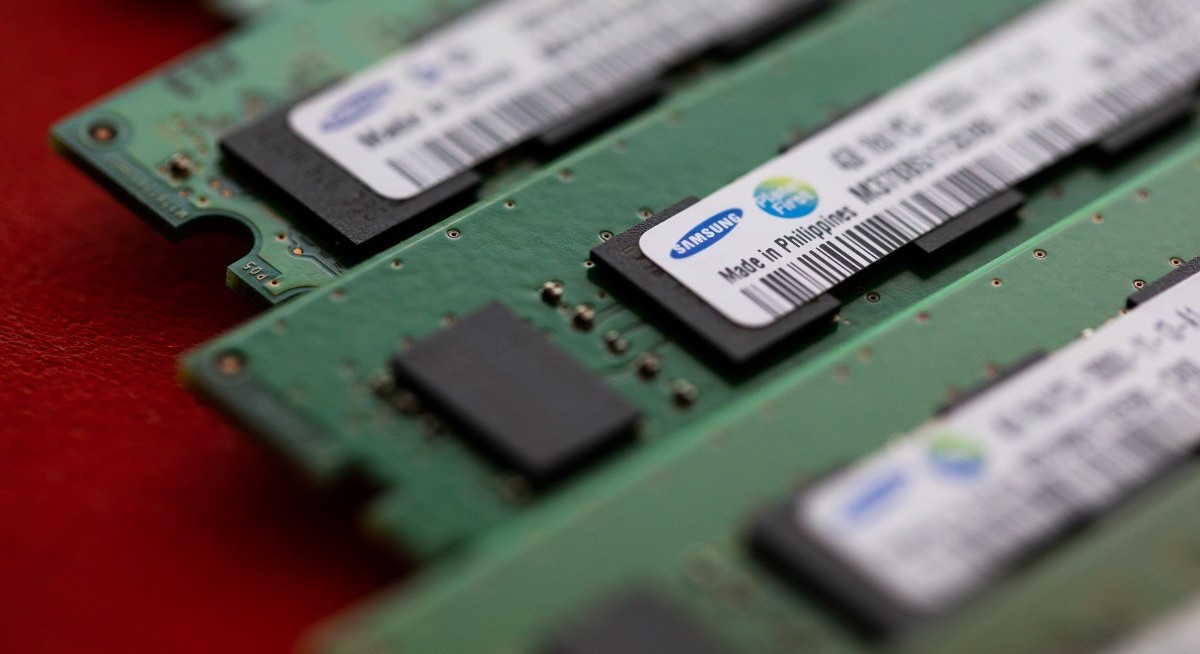


(May 6): Samsung Electronics Co reached a US$1 trillion ($1.27 trillion) market valuation after shares in the world’s largest memory maker more than quadrupled over the past year on booming demand for the chips used in artificial intelligence (AI).
The milestone came as the South Korean company’s shares rallied as much as 12% early on Wednesday, making it only the second Asian firm after Taiwan Semiconductor Manufacturing Co (TSMC) to hit the mark. The gains boosted the Kospi benchmark above the 7,000 level for the first time.
Samsung, alongside memory peer SK Hynix Inc and TSMC, sits at the heart of a transformation that has made Asia a cornerstone of the global AI ecosystem, pairing chipmaking dominance with expanding data infrastructure. That shift has fuelled a powerful rally in regional tech stocks — SK Hynix and TSMC also reached record highs this month — as investors bet on sustained demand for advanced chips and computing capacity.
“The trillion dollar threshold carries material weight beyond the symbolism,” said Dave Mazza, the chief executive officer of Roundhill Investments in New York. “More broadly, it reflects a market judgement that memory’s role in the AI infrastructure stack is structural, not cyclical.”

Just days ago, Samsung’s semiconductor arm brought in historic profit over the March quarter, beating expectations with a 48-fold jump as AI data centre orders delivered hefty margins. Analysts expect the division to build on its record-breaking profit over the next several quarters as contract prices continue their steep upward trajectory amid limited supply.
See also: Hackers used AI to build zero-day attack, Google researchers say
Meanwhile, Apple Inc has held exploratory discussions about using Samsung to produce the main processors for its devices in the US, a move that would offer a secondary option beyond long-time partner TSMC.
“If investors do some work on Samsung Electronics we think they will conclude that the investment opportunity is attractive even if they have missed its performance up until now,” said Sam Konrad, an investment manager at Jupiter Asset Management. “The memory market is currently undersupplied, and Samsung said that 2027 will see tighter supply and demand than 2026, so prices for NAND and DRAM are likely to continue rising.”
Foreigners are likely driving the latest rally, with local media citing a deal between Interactive Brokers and Samsung Securities allowing US investors direct access to purchase Korean stocks. Global investors added a near-record 2.9 trillion won (US$2.0 billion or $2.5 billion) worth of Kospi shares on Monday, and resumed their net-buying spree on Wednesday after a holiday.
See also: OpenAI to buy consulting firm for private equity joint venture

That said, Samsung is facing some challenges too. The chip unit’s earnings growth contrasts with declines in Samsung’s mobile and displays operations, which are fighting rising materials and components prices. The profits generated by the AI boom are also prompting Samsung employees to demand a bigger share, with workers threatening an 18-day general strike later this month.
Still, the stock is expected to rise around 30% over the next 12 months, according to sell-side analyst estimates compiled by Bloomberg. It is trading at just 5.9 times one-year forward earnings, down from 14.4 times in October.
The dizzying gains in Samsung and SK Hynix shares — which together command a weightage of more than 43% in the benchmark Kospi index — have helped make Korea one of the world’s hottest markets. The benchmark rose as much as 5.8% on Wednesday, and a jump in futures prompted the bourse to halt programme buying.
The Korean duo have also played a role in lifting Asia’s stock benchmark to all-time highs. As the companies ride the AI spending boom, investors argue that memory is in a super-cycle of demand that’s breaking a decades-old cycle of boom and bust.
“Corporate earnings in aggregate keep getting stronger and it’s mainly coming from one place — from the technology sector,” said Mark Davids, the Asia-Pacific head of the emerging markets and Asia-Pacific equities team at JPMorgan Asset Management. Samsung’s profits reflect a “very unusual period where these companies can achieve outsized profits”, he said.
Uploaded by Tham Yek Lee




