


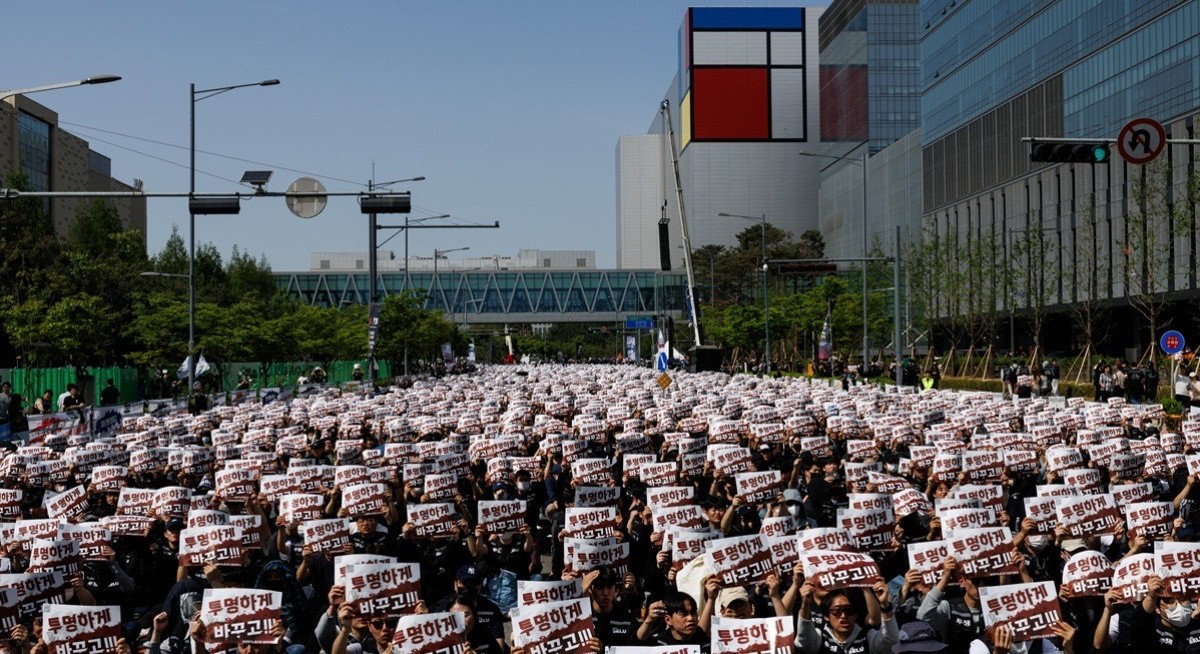


(May 20): Talks between Samsung Electronics Co and its largest labour union broke down, raising the prospect of a strike that may disrupt global chip supply and hamper an important engine of South Korean economic growth.
A general work stoppage will go ahead on Thursday after Samsung’s management rejected a proposal from government mediators that had been accepted by the union, labour leader Choi Seung-ho told reporters. Hours later, South Korean Labour Minister Kim Young-hoon called for direct negotiations between the two sides, though it’s unclear whether even that intervention could resolve their differences. Samsung shares tumbled as much as 4.4% before recouping losses in Wednesday afternoon trading.
The collapse in negotiations puts the global technology supply chain at risk because Samsung is the world’s biggest supplier of the chips that go into devices from data centre servers to smartphones and electric vehicles. Samsung is on track to become one of the world’s most profitable companies this year. The global AI infrastructure roll-out has enriched South Korean companies on a scale not seen before, with Samsung’s semiconductor arm posting a 48-fold jump in profit for the March quarter.
More South Koreans are demanding a greater share of those earnings after SK Hynix Inc agreed last year to allocate 10% of annual operating profit to a performance bonus pool. Samsung’s lingering labour dispute, which puts the company at risk of production delays and complications accelerating development of its next-generation semiconductors, is being closely watched by other firms. On Wednesday, a union at South Korean internet company Kakao Corp said some of its members agreed to strike following failed wage negotiations, Yonhap reported.
Samsung said negotiations failed even after the company accepted the majority of the union’s requests, including those related to bonuses, blaming “excessive” demands. The union didn’t back down from its position that compensation must be raised even for employees in loss-making divisions, which is in violation of the company’s policy, Samsung said in a statement. “Abandoning this principle would not only impact our company but also have a negative ripple effect on other enterprises and industries,” it said.

See also: Google revamps search for AI era, debuts coding tools
The union wants Samsung to scrap an existing bonus cap, allocate 15% of its operating profit to worker bonuses and formalise those terms in employment contracts.
Samsung had proposed allocating 10% of operating profit to bonuses, along with a one-time special compensation package that exceeds industry standards. Samsung executives argued that the union’s demands would be difficult to sustain over the long term.
Still, Samsung said it will continue to seek a resolution through talks in an effort to prevent a walkout.
See also: Meta begins 8,000 global job cuts in Asian hub of Singapore
“While the mediated talks have failed, a window for agreement remains,” said Kim Dae Jong, a professor at Sejong University’s Business School in Seoul. “Even if the strike commences tomorrow, I expect the government to intervene by invoking emergency labour laws to halt the walkout because of the gravity of the matter.”
The government has previously hinted that it could resort to rarely used emergency powers to prevent a strike if the parties fail to reach an agreement. South Korea has invoked the emergency arbitration mechanism only four times since 1969. The last time was in 2005, when Korean Air pilots went on strike.
The Bank of Korea forecast that the strike could lead to as big as a 0.5 percentage point cut in South Korea’s gross domestic product growth this year, local media reported.
The dispute is an especially tricky test for President Lee Jae Myung, who rose to the nation’s top job on a platform of stronger labour protection and has hinted that labour rights could be curtailed for the greater good.
“We urge the parties to do the utmost to reach a labour-management agreement — even before the final deadline — out of consideration for the potential repercussions on the South Korean economy,” a presidential spokesperson said.
A Labour Ministry official expressed regret over the collapse of the talks and said the government would continue supporting their negotiations “regardless of format”. Asked whether the government was considering invoking emergency arbitration powers, the official said: “There’s still time.”
Uploaded by Tham Yek Lee




