


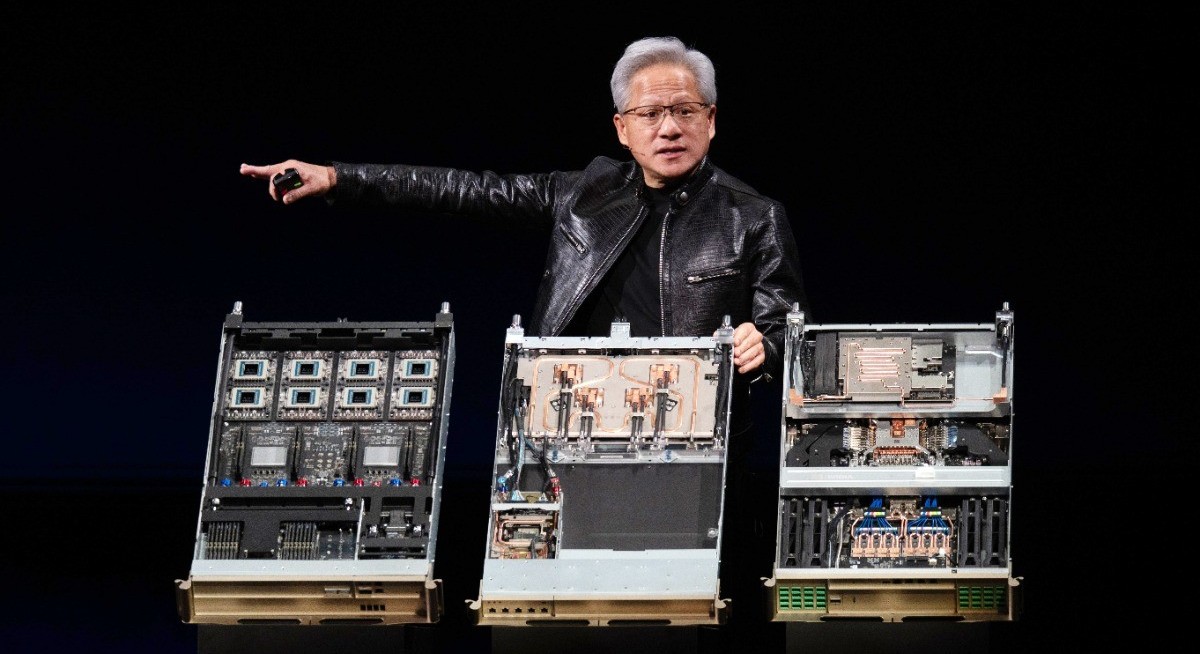


(June 1): Nvidia Corp said Anthropic PBC, OpenAI and SpaceX are among the first big users of its upcoming microprocessor, securing key customers for its latest attempt to expand an already extensive footprint in artificial intelligence (AI) data centres.
Company co-founder and chief executive officer Jensen Huang name-dropped the AI developers in a presentation at the Computex conference in Taiwan. They’ll be among the first to use the Vera central processing units from Nvidia in their data centres, he said. The new product will go into full production in the third quarter of this year.
Nvidia is making a concerted effort to demonstrate to customers and investors that it’s aware and already ahead of the shifting trends in the technology of AI data centres. As the bulk of the work moves from training the software to running it and related services, there’s been increasing talk of using more general-purpose CPUs and concern that Nvidia’s AI accelerators might become less crucial.
Vera is Nvidia’s first standalone data centre microprocessor that goes head to head with Intel Corp’s Xeon line, Advanced Micro Devices Inc’s Epyc chips and in-house programmes at large-scale operators like Amazon.com Inc’s Graviton. Last month, Huang said that Nvidia continues to gain share at customers such as Amazon, despite their attempts to carve out independence in components. He’s also continuing to assert that Nvidia is the only company that produces all of the components that data centre operators need and has integrated them into computers in a way that even customers with limited expertise can deploy quickly.
Huang said that Vera is 1.8 times faster at essential AI-related workloads than Intel technology-based chips known as x86. That’s the first time Nvidia’s thrown down the gauntlet of performance comparisons against products that, up until now, have been the industry standard.
Separately, Nvidia has updated and extended its offerings for software used to plan, deploy and monitor data centre computers. Users can take as much or as little of the open source DSX product as they want, Nvidia said. The new offering comes with the benefit of enabling far more efficient management and monitoring of the electricity that data centres need, according to the company. That can result in them being able to use as much as 40% more of Nvidia’s accelerator chips in the same power budget, a massive advantage, the chipmaker is claiming.
See also: Nvidia enters Windows laptop market, taking on Intel and AMD
Nvidia is also offering new high-end workstation computers in combination with PC-maker partners. The Nvidia DGX Station for Windows will help companies that use Microsoft Corp’s Windows to develop and deploy AI software, Nvidia said. Dell Technologies Inc and other computer makers will begin selling the machines in the fourth quarter of this year.
In an attempt to fire up the nascent market for humanoid robots, Nvidia said it’s working with Chinese robot maker Unitree to mass produce humanoid machines that will speed up the ability of researchers to work on the technology and produce devices that are ready for the real world. Currently, labs spend too much time working with “Frankenrobots” that need setting up and fine-tuning before they can be used for research, the chipmaker said. The product of the collaboration will feature five-fingered hands plus built-in chips and software that will ensure it works immediately out of the box, according to Nvidia.
Uploaded by Chng Shear Lane




