


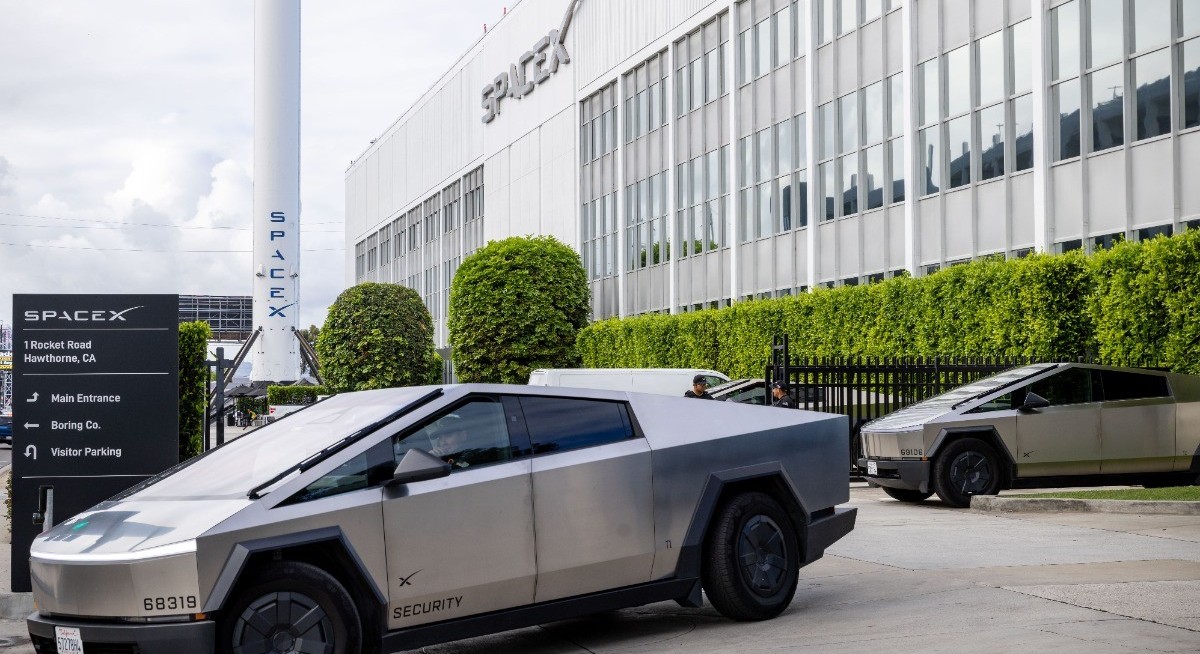


(July 10): In the weeks leading up to SpaceX’s monster initial public offering (IPO), many Wall Street pros feared the deal represented an existential threat for Elon Musk’s other giant, Tesla Inc. But after a month in the stock market, the outcome is far from clear.
The truth is, for all the noise surrounding SpaceX, formally known as Space Exploration Technologies Corp, the stock has been pretty quiet. The shares were priced at US$135 ($174) in the biggest IPO ever on June 11, and they opened for trading at US$150 on June 12. The IPO captivated investors as the stock soared in its first few sessions. But it quickly came tumbling back down, closing on Thursday at US$152.16 after dropping below US$150 for a couple of sessions.
Tesla shares are also up slightly since the IPO. They opened on June 12 at US$399.49, closed that day at US$406.43, and now are at US$406.55. Meanwhile, traders are actively debating if, when and how SpaceX and Tesla will merge to create one gigantic Musk conglomerate. Indeed, the speculation of some form of combination appears to be preventing the initial concerns about Tesla’s “Musk premium” from hitting its stock price.
“SpaceX is a phenomenon strictly because of the Elon Musk halo,” said Steve Sosnick, the chief strategist of Interactive Brokers. “I have long referred to Tesla as a ‘faith-based’ stock, and that faith is well-earned after Musk made huge money for many of his most dedicated believers.”
History says investors shouldn’t be too worried about SpaceX’s muted showing in the market so far. After all, it’s what happened to Tesla following its IPO 16 years ago. The shares opened for trading at US$1.27 on June 29, 2010, and closed that day at US$1.59. A month later were trading at around US$1.35. They are up almost 30,000% since then.

See also: AI could affect millions in Asean but ILO sees no big job cuts yet
Investors hope Musk can repeat or exceed that performance with SpaceX, which was founded more than two decades ago and waited much longer to go public than Tesla did. Though it’s currently unprofitable, the company has a US$2 trillion market capitalisation, which is higher than Tesla’s US$1.5 trillion. It would be sixth most valuable company in the S&P 500 if it was a member of the index.
Retail traders are still buying SpaceX’s stock, which has yet to see a day of net negative flows, according to Vanda Research data as of Wednesday. And Wall Street is unflinchingly bullish on the shares. Of the 35 analysts tracked by Bloomberg who follow the company, 29 have 'buy' ratings. The average price target of US$236 implies a 55% gain over the next 12 months.
“SpaceX represents in our view the apex of civilisational ambition, oftentimes expressed in steel and fire, bending the arc of history to make humans multiplanetary,” Deutsche Bank’s Edison Yu wrote as he initiated coverage with a 'buy' rating and US$255 price target.
See also: China chip firm Nexchip rises in HK after US$891 mil listing
The issue, however, is SpaceX’s fundamentals don’t come close to justifying its stock price. It’s the same criticism sceptics often lob at Tesla, which trades at more than 180 times projected earnings over the next 12 months, making it the most expensive stock in the S&P 500. But at least the electric-vehicle maker has earnings — SpaceX lost US$4.4 billion in 2025 and is projected to lose another US$2.6 billion in 2026.
“From a valuation perspective, SpaceX does not make any sense,” said Vikram Rai, a portfolio manager and macro trader at First New York. “It’s completely overvalued.”

Of course, Tesla has successfully traded more on hopes and dreams than car sales for years. That’s cutting both ways now, as investors focus more on what might happen between Musk’s two ventures than what’s actually happening inside the companies. For example, last week Tesla reported record second-quarter vehicle sales but the stock suffered its worst rout in a year.
“That price action tells you exactly where the market’s attention is,” said Dmitry Shlyapnikov, an analyst at Horizon Investments. “Earnings on July 22 will be a near-term test of whether management can show the robotaxi and storage businesses moving from narrative to actual numbers.”
Essentially, Tesla is stuck. If SpaceX’s stock outperforms, it gobbles up attention and cash from the companies’ overlapping investor base. But if it does poorly, that stymies the value of a future combination.
“A splashy SpaceX IPO and strong trading have clearly pulled Musk‑focused retail and momentum money away from Tesla, yet the same richness in SpaceX’s valuation underpins Tesla’s perceived bailout floor,” said Ivan Feinseth, the chief investment officer of Tigress Financial Partners.
To stay ahead of Singapore and the region’s corporate and economic trends, click here for Latest Section
However, Feinseth added that “where Tesla actually trades between those poles still depends on Tesla‑specific execution”.
Regardless of what the stocks do, many Musk watchers assume some combination of the trillionaire’s companies is inevitable, with SpaceX seen as most likely to take over Tesla. SpaceX is the larger, more-hyped firm, while Tesla’s fundamentals have deteriorated. However, most analysts and investors don’t see a tie-up coming for at least a year, giving Tesla time to change the narrative.
“It could absolutely reassert itself as the more valuable company if robotaxis and robotics become meaningful businesses,” said Haris Khurshid at Karobaar Capital, which owns Tesla shares through derivatives and SpaceX shares outright. “In a world where Tesla executes, it wouldn’t even need SpaceX.”
Uploaded by Tham Yek Lee




