


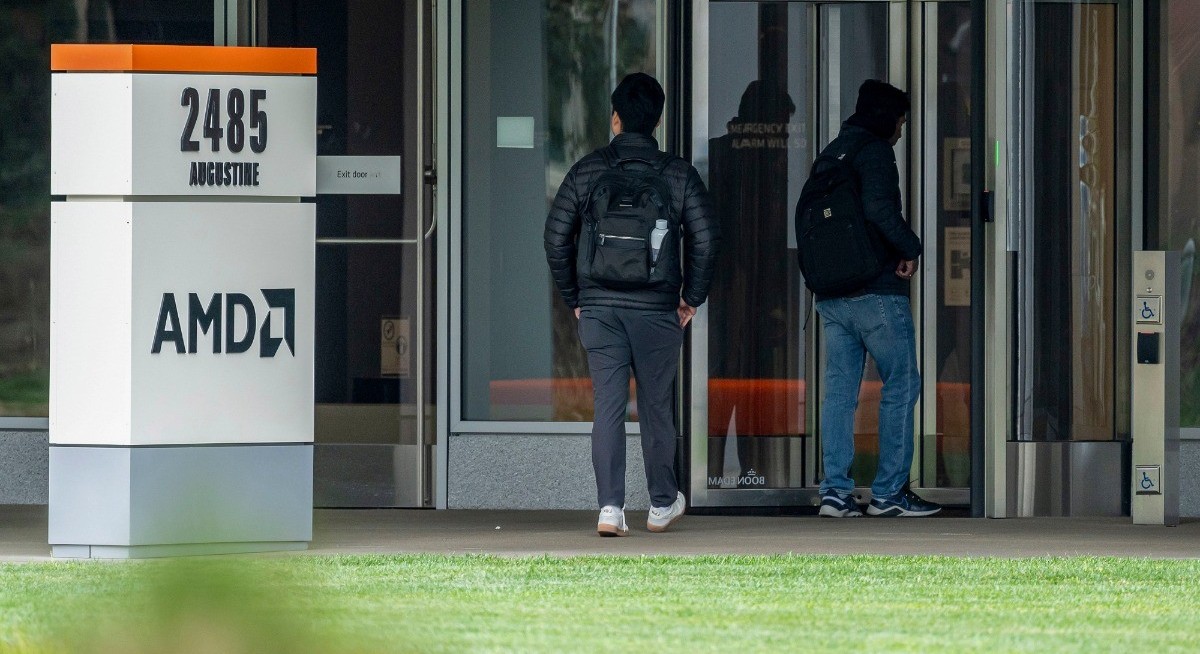


(Feb 5): Advanced Micro Devices Inc (AMD) shares tumbled by the most in more than three years on Wednesday after the chipmaker’s sales forecast underwhelmed investors, a sign that it’s not making the artificial intelligence (AI) inroads that some on Wall Street anticipated.
First-quarter sales will be roughly US$9.8 billion, plus or minus US$300 million, the company said in a statement on Tuesday. Analysts had estimated US$9.39 billion on average, but some projections topped US$10 billion, according to data compiled by Bloomberg.
In a mixed blessing, AMD reported some sales of older chips in China. That added to revenue — and signaled that the company is navigating trade restrictions — but weighed on profit margins.
The outlook let down investors who had hoped to see a bigger payoff from AI spending. AMD is still playing catch-up with Nvidia Corp in this lucrative market, but the chipmaker has said that a new more powerful design — due in the second half of the year — will give it an advantage.

AMD chief executive officer Lisa Su is positioning the company to compete with Nvidia in AI chips.
See also: Alphabet earnings need to justify its stock’s US$2 tril rally
The shares fell as much as 14% as trading got underway in New York on Wednesday, the biggest decline since October 2022. They had been up 13% this year through Tuesday’s close.
Chief executive officer Lisa Su stuck to her usual bullish tone, repeating a prediction that the company’s AI revenue will reach the tens of billions of dollars in 2027. She brushed off questions about the possibility of component shortages and said that her company will be able to meet the expected increase in orders.
“There’s no question that demand continues to be strong,” Su told analysts on a conference call. “And so we’re working with our supply chain partners to increase supply as well.”
See also: AI fears drag Asian software stocks lower after US tech rout
Fourth-quarter sales rose 34% to US$10.3 billion, beating a US$9.7 billion average estimate. Profit was US$1.53 a share, minus certain items. Analysts projected US$1.32 on average, according to data compiled by Bloomberg.
AMD’s data centre business, the main beneficiary of AI spending, rose 39% to US$5.38 billion in the period. Analysts had predicted US$4.97 billion on average. Personal computer-related sales rose 34% to US$3.1 billion. The average prediction was US$2.89 billion.
Like Nvidia, AMD is contending with US restrictions on what it can export to China — the world’s biggest market for chips. President Donald Trump recently moved to relax the curbs, but it’s taken time to get the needed licences from the Department of Commerce.
The company generated US$390 million of revenue last quarter from shipping older-generation MI308 chips to Chinese customers. It expects about US$100 million of such sales in the current period, the dropoff a sign of diminished demand for a product that’s becoming more outdated.
AMD is looking to sell its newer MI325 processor in China, but it still doesn’t have licences to offer that chip. The company said it continues to discuss the issue with Washington and prospective Chinese customers.
More broadly, AMD expects giant deals with OpenAI and Oracle Corp — as well as overall demand for AI gear — to generate tens of billions of dollars in new revenue. Analysts and investors have pressed executives for more precise projections on when that will happen.
AMD’s recent agreements with OpenAI, Oracle and the US Department of Energy reflect increased interest in its MI series of AI accelerators. Those products, which go head to head with chips from Nvidia, are used in data centers to create and run AI services.
AMD is also one of the largest providers of graphics chips and central processing units used in PCs and servers. Intel, AMD’s chief rival in that field, gave a disappointing forecast last month, saying it couldn’t get enough supply to meet strong demand. Wall Street took that as an indication that AMD was continuing to win market share.
Uploaded by Felyx Teoh




