


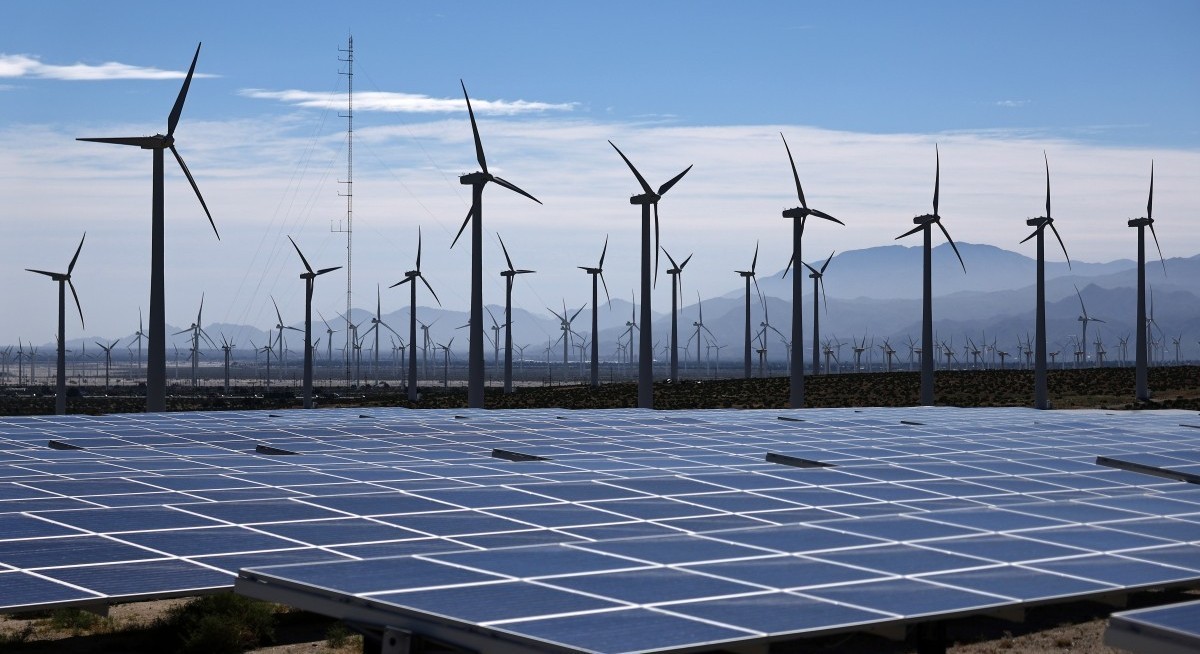


A report by Zurich Insurance finds that targeted investment of around US$13 ($16.7) billion in climate resilience could help ASEAN members mitigate potential losses to renewable energy infrastructure of up to US$82 billion, a return of 6.5 times.
According to the Powering Through: Building Climate Resilience into Southeast Asia’s Energy Future paper published on June 10, up to US$165 billion worth or 75% of renewable energy capacity across 1,380 existing and future projects across ASEAN (excluding Timor Leste) is projected to face severe climate risk exposure by 2030.
Highlighting the financial case for early action, Zurich’s analysis demonstrates that resilience must be built into the region’s clean energy growth from the outset, with the suggested investment reducing the forecast financial exposure from climate events by 40% to 50%.
With ASEAN targeting to increase renewable energy as a proportion of total power generation from 33% to 45%, around USD190 billion in investment is required by 2035. Thus, as Southeast Asia begins the largest clean energy expansion in its history, the findings highlight a major opportunity for governments, investors, developers and insurers to protect the region’s developmental prospects as climate hazards intensify.
The report forecasts 181,000 MW, enough to power 180 million households for a year, to sit in the top two climate risk bands of Category 4 and 5. Solar infrastructure carries the most pronounced near-term exposure, with 80% of solar sites projected to fall into the top two bands.
Wind, flooding, hail and tornadoes rank as “very high” risk hazards across the report, each linked directly to material loss mechanisms, including civil works damage, substation failure, module degradation and compromised turbine structures.
See also: Green transition lags behind world’s rate of construction: UNEP
Zurich Insurance’s Mark Fletcher believes that it is “critical” to embed climate resilience into planning, design, procurement, financing and operations of renewable energy projects from the start to deliver reliable power and durable long-term returns. “Our analysis shows that targeted resilience investment can significantly reduce future climate-related losses, while also improving the insurability, bankability and long-term performance of renewable energy assets,” says Fletcher, who is head of Zurich Resilience Solutions, Asia Pacific.
The report also sets out five practical actions to help governments, investors, developers and operators move from risk identification to resilience investment. These include making climate risk screening mandatory at planning and permitting; stress-testing the highest risk assets first; building hazard-specific resilience in procurement; treating system resilience as part of asset resilience; and using resilience quantification to unlock capital.
Zurich Insurance global head of sustainability and climate solutions Amar Rahman expects that physical climate risks to not be a “distant consideration” for renewable energy infrastructure. He says, “Forward-looking climate data gives asset owners and investors a clearer view of dominant risks, potential losses and where resilience investment can have the greatest impact on revenues.”
See also: ‘Get your house in order’ before setting science-based targets: CLI exec
The insurer adds that resilience measures are most effective when embedded during the design and construction phase, when engineering flexibility is greatest and costs are lower. Beyond reducing physical damage, resilient assets are also easier to insure, easier to finance and better positioned to deliver reliable long-term performance,
Tulsi Naidu, Zurich Insurance’s CEO in the Asia Pacific says that building resilience into projects is increasingly becoming a bankability and insurability issue. “Projects that can demonstrate how risk has been assessed, quantified and reduced will be better positioned to attract capital, secure insurance capacity and deliver reliable long-term performance,” she reiterates.




