




For many investors, building wealth in the stock market comes down to selecting the right counters and minimising trading costs. But according to industry practitioners, the bigger question may be how efficiently an investor’s capital is deployed.
One concept gaining traction among more experienced investors is capital efficiency.
Long-term wealth creation is often driven by compounding, which is the ability of returns to build on themselves over time. For instance, an investment of $200,000 growing at an annualised return of 6% would reach roughly $860,000 over 25 years. But if the same capital compounds at 10% annually, the final value would reach around $2.1 million.
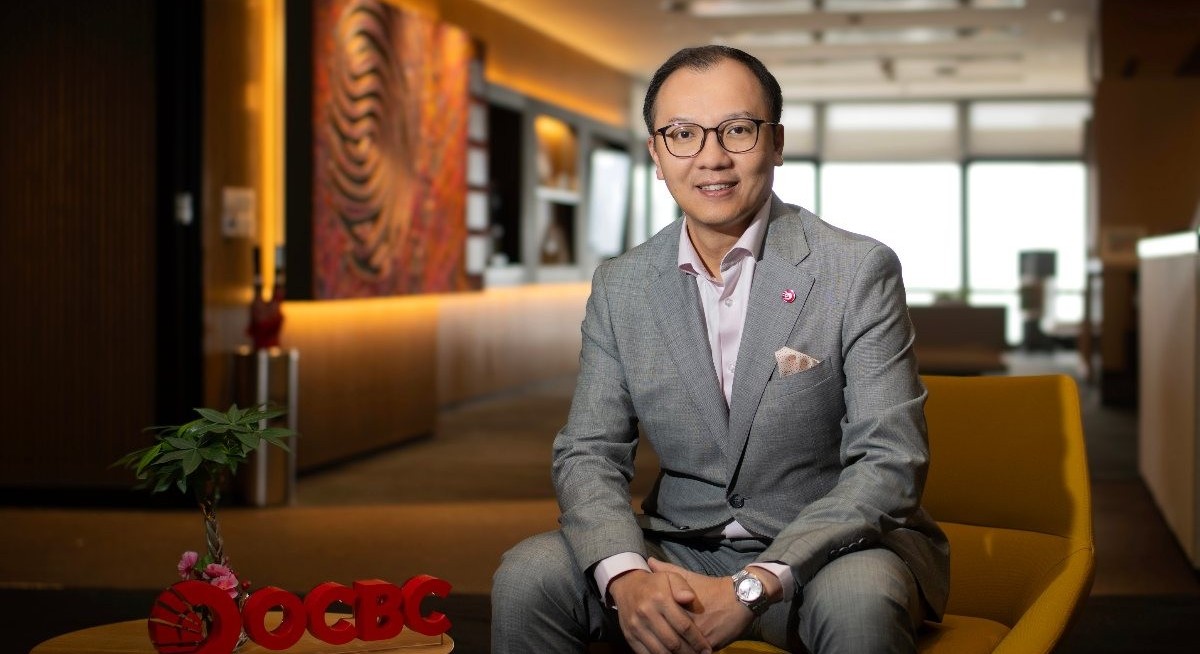
To Wilson He, managing director of OCBC Securities, just four percentage points can make all the difference. “One of the key elements is compounding… it is the foundation,” he says.
Some investors prefer holding their shares in the Central Depository (CDP) account, while others are comfortable using custodian arrangements offered by brokerages. In Singapore, both structures are widely used, and the choice often comes down to personal preference.
For long-term investors, CDP accounts offer clear ownership and direct access to corporate communications and shareholder rights.
Custodian arrangements, on the other hand, can offer greater flexibility, as shares are held through the brokerage or a custodian bank and may be integrated into broader portfolio services. That said, custodian-held assets may come with trade-offs, including slightly reduced direct control and limited access to certain shareholder privileges, which some investors may consider important.
“The question is: How could you unlock more from your idle assets?” says He.
Unlocking liquidity from existing portfolios
The idea of putting capital to work is hardly new, yet many equity portfolios remain underutilised. Beyond dividends and capital gains, shares held passively do not generate additional income.
Through share financing, investors can unlock liquidity from existing holdings.
For example, an investor with $500,000 worth of equities across a mix of higher- and lower-grade stocks may be able to access roughly about $350,000 in additional buying power. “Take a look at your mix of your capital and your equities, after applying a haircut, I’ll give you potentially a margin of $350,000, which you can use to invest in Singapore dividend stocks that give you 6% in dividends.”
With financing rates starting from about 3% per annum for higher-grade securities, offset by the dividend yields of 5% to 6% typically offered by Singapore equities, this investor would earn a net return of 3%, which is about $10,500 a year on capital that was not originally available, although actual yields may vary and are not guaranteed.
Understanding the risks
However, borrowing to finance securities trading carries real risks. If collateral values fall significantly, investors may face margin calls requiring additional deposits, or they may need to liquidate their positions to meet financing requirements. As share financing involves leverage, losses may be amplified and could exceed the initial capital invested.
Given this, share financing is typically used alongside clearly defined risk controls. Investors may apply different approaches depending on their objectives and risk tolerance.
For instance, some may incorporate financing with dividend-paying stocks as part of a more conservative strategy. Others may use financing to support broader portfolio strategies, such as diversifying across markets or currencies or maintaining liquidity while keeping longer-term investments. Each approach carries its own risks, particularly if market conditions change and asset values fall.
Share financing with OCBC Securities allows leverage of up to five times with cash collateral and up to four times with shares. In practice, many investors apply internal guardrails rather than maximising available leverage, keeping financing at manageable levels relative to their overall portfolios. This approach helps preserve liquidity buffers and manage potential volatility, with the objective being improved capital efficiency rather than aggressive borrowing, while maintaining prudent risk management.
Brokerages are also expanding the range of markets available for such financing. For instance, OCBC Securities introduced Japanese yen (JPY) share financing and access to the Japan market for share financing accounts in April.
The addition of JPY financing may be relevant for investors who are exploring overseas opportunities. Japan has historically maintained relatively low interest rates compared with many other major currencies, and the interest rate differential may influence borrowing costs. At the same time, recent shifts in monetary policy by the Bank of Japan have brought renewed attention to the Japan market and currency.
Why brokerage support still matters
The brokerage landscape has evolved significantly in recent years. While newer online platforms have made trading more accessible, investors should also consider the broader ecosystem offered by full-service brokerages.
He likens the industry to airlines: “The brokerage industry today resembles the airline industry,” he says. “Budget airlines are here to [...] democratise travel [and] low fares. If you want to go from point A to point B efficiently, [budget airlines] are okay.”
Full-service carriers, by contrast, provide a broader range of services. “Both models serve different business needs,” he adds.
Similarly, different brokerages serve different investors. Beginners prioritising cost may prefer platforms with lower fees. Other investors may value deeper research, advanced tools and stronger institutional support.
Navigating volatile markets
Professional support can be particularly valuable when markets turn volatile. “If you take a look at the US market today, a lot of the trading volumes are driven by algorithms,” says He. As a result, markets may move faster and overshoot more sharply than before, which can drive technicals to a “very, very large extreme,” he adds.
For instance, when the Liberation Day tariffs were announced on April 2, 2025, markets reacted violently. Within days, J.P. Morgan’s retrospective data shows the S&P 500’s steepest drop in April was around 15%–19%, making it the sharpest decline since the Covid-19 pandemic, Fortune and NBC News reported.
At many online brokerages, investors had to face critical decisions alone. By May, many had capitulated at the worst prices, missing the subsequent recovery. Having experienced Trading Representatives can help investors by providing them with timely information, drawing on insights from navigating multiple market cycles such as the Global Financial Crisis (2008), Covid‑19 (2020) and more recent periods of market volatility.
OCBC Securities’ Trading Representatives, each averaging about a decade in the business, have navigated multiple market cycles and bring deep industry experience to their roles.
Tech meets human insight
Technology is also playing an increasingly important role in investment decision-making.
OCBC Securities has developed A.I. Oscar, a virtual trading assistant integrated into the iOCBC trading platforms. The system analyses an investor’s portfolio and market data to provide stock ideas based on the customer’s holdings and trading history with OCBC Securities.
Ultimately, the investment decision remains with the client. The institutional-grade infrastructure has earned consistent recognition for OCBC Securities: Euromoney Best Securities House in Singapore for three consecutive years from 2023 to 2025, Best Mobile Trading Platform and Most Innovative Trading Platform in Singapore from Global Banking & Finance Awards for five consecutive years since 2022 and received the 40 Years of Excellence in Brokerage award from the Global Banking & Finance Awards Singapore 2026.
The consolidation advantage
He believes that investors could also consider how consolidating their assets may enable more streamlined portfolio management. He likens it to seeing one doctor who knows your full medical history rather than multiple physicians with fragmented information.
Similarly, scattered investment accounts may limit an investor’s ability to form a holistic strategy “If your assets are placed with different brokers, you may not have a clear and holistic view, which can hamper your ability to strategise and formulate an investment plan,” he says.
Fragmentation can also limit benefits as share financing calculations apply only to assets held within each brokerage. A client with $2 million spread across four brokers may effectively be treated as a $500,000 client by each one.
That said, consolidating has its trade-offs. While it simplifies ongoing management, moving assets to another institution later can be cumbersome and potentially costly. Investors should also consider concentration risk and the potential impact of changing fee structures when assessing whether consolidation remains appropriate over time.
Beyond the benefits of consolidation of assets, investors can also explore ways to generate additional income from the assets they hold.
Layering additional income streams
Beyond share financing, OCBC Securities rolled out share lending last year for Singapore, US and Hong Kong equities, where investors may lend out their shares and potentially earn annual lending fees of up to 8% per annum,* depending on demand. That said, lending is not guaranteed, and fees vary with market conditions.
“If the shares are in high demand, then the annualised return will be higher,” He adds.
Even if the lending period is short, the share lending programme could still help customers generate additional potential returns from assets that would otherwise remain idle.
Looking beyond trading
As investors accumulate larger portfolios, the advantages of consolidation may extend beyond brokerage services.
OCBC Securities clients whose assets grow beyond certain thresholds may gain access to the wider OCBC ecosystem of products and services, such as cross-border asset allocation and legacy planning.
Investors worried about the hassle of transfers can now rest easy, as moving funds is now instant, secure and hassle-free. Via the iOCBC Mobile Trading app, CDP transfers can now be initiated within the mobile app directly and are processed in as soon as two business days.
These operational improvements may seem minor, but even small efficiency gains through other investment tools can have a potentially big impact over time.
To learn more about the brokerage and meet the research team from OCBC Group Research, OCBC Securities will be hosting an Investment Forum in May 2026. Visit www.iocbc.com for more information.
Through June 30, 2026, customers can receive up to $1,200 in cash and 1% per annum on their USD and HKD investment fund balances^ until Dec 31, 2026, when they transfer their shares and hold them with OCBC Securities. Terms & Conditions apply.
Important notes
This content is sponsored by OCBC Securities Private Limited.
This advertisement has not been reviewed by the Monetary Authority of Singapore.*The lending of securities is not guaranteed, and the lending fee may vary depending on market conditions. OCBC Securities will only borrow your securities based on prevailing market demand, and there may be instances where some or all of your securities are not lent out.
^All funds are held in a trust account and subject to the relevant OSPL Standard Trading Terms and Conditions.
Trading in capital markets products and borrowing to finance transactions can be very risky, and you may lose all or more than the amount invested or deposited. Please seek advice from an independent financial adviser before committing to a trade or purchase. Regardless, you should always carefully consider the suitability of the product and any trading decision. The information provided does not consider your investment objectives, financial situation, and particular needs. Any reference to a company, financial product, asset class or figures is for illustration purposes only. OCBC Securities Private Limited (“OSPL”) makes no representations or warranties in respect of any information provided herein or in your personalised AI watchlist (generated based on demographic data and your trading history with OSPL). Any information provided should not be construed as personal trading recommendations or financial advisory from OSPL. OSPL is not responsible for any loss howsoever arising, directly or indirectly, as a result of any person acting on any information provided. The information provided may not be published or circulated in whole or in part without our prior consent.
For the full disclaimers, refer to go.iocbc.com/AIOscar
Risk warning for Share Financing
Borrowing to finance the trading of securities (leveraging/gearing) carries a high degree of risk. If the value of the collaterals declines substantially, falling below the maintenance margin requirement, you may be called upon to deposit substantial additional funds on short notice in order to maintain your position. If you fail to comply with a request for additional funds or reduce your loan within the specified time, your position may be liquidated at a loss and you will be liable for any resulting deficit in your account.
Risk Warning for Lending Securities
It is important that you fully understand the risks in enabling OSPL to borrow, on-lend or deliver your securities for OSPL’s discharge of delivery obligations of such securities to third parties. These include the following:(a) the borrowing and on-lending of your securities will be on a title transfer basis; (b) where OSPL may, where relevant, have contractually agreed to use its reasonable endeavours to arrange for any voting rights to be exercised in accordance with your instructions, there is no assurance that such rights will be exercised as you wish; (c) your claim for the return of equivalent securities is a contractual claim against OSPL. OSPL will provide collateral to secure the obligation to return equivalent securities, which may be held by OSPL and commingled with that of other clients of OSPL, but your interest in such collateral may not be identifiable by separate certificates or other documents or records; (d) there is a risk that any return of equivalent securities by OSPL may not occur on time. OSPL may also have the right, in certain circumstances such as in an event of your insolvency, to convert the obligation to return equivalent securities to pay you the aggregate market value of the same; and (e) insofar as you will receive manufactured dividends, you may be required to treat the entire amount as income for tax purposes.
For the full disclaimer, visit iocbc.com/disclaimer
Information is correct as of the publication date and is subject to change without prior notice.
The promotion details in this digital advertorial have been updated and supersede those published in print.




