


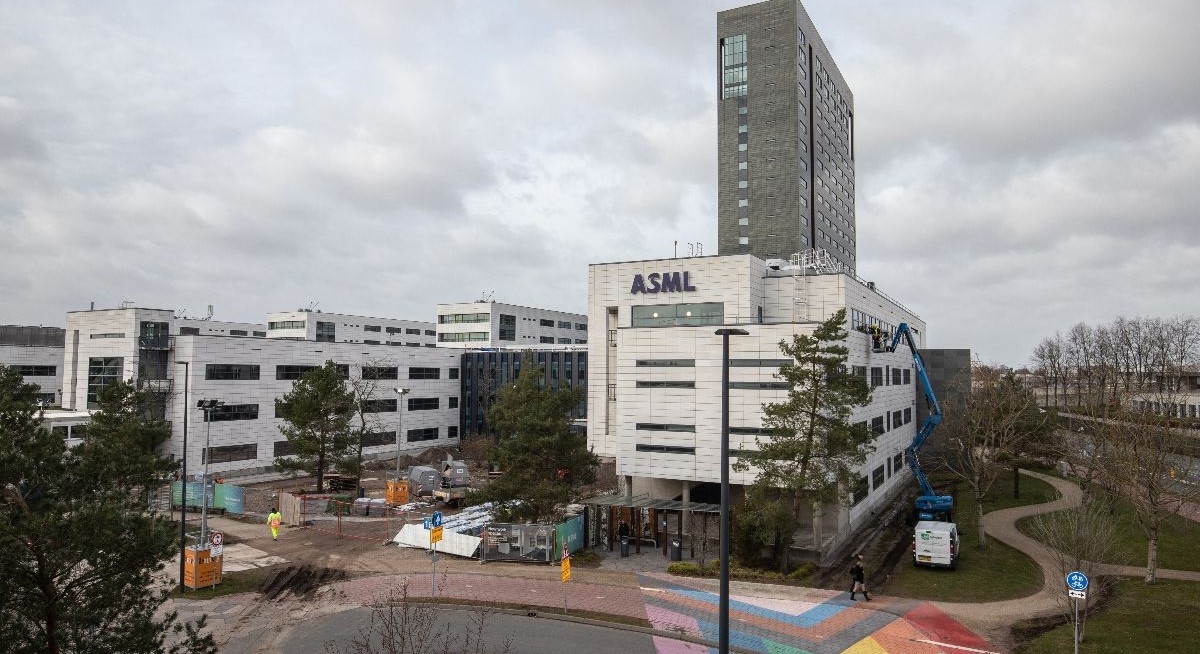


Shares rose as much as 4.8% on Wednesday. ASML has rallied 30% this year, making it Europe’s biggest company by market capitalization.
ASML, which is the only company that makes extreme ultraviolet lithography machines needed to produce the most advanced chips, is benefiting from a boom in AI infrastructure spending. OpenAI, the world’s most valuable startup, has already struck deals for data centres and chips that top US$1 trillion.

AI Boom Boosts Chip and Chip Equipment Stocks | ASML shares are up almost 29% this year
See also: Applied Materials taps on NUS and SIT for AI chipmaking push
Third-quarter sales were €7.5 billion, compared to €7.7 billion forecast by analysts, as sales of some of its older models were lower than expected. Bookings of its extreme ultraviolet lithography machines were the highest in seven quarters.
Just three months ago, ASML Chief Executive Officer Christophe Fouquet walked back his forecast that sales would grow next year, blaming trade disputes and global tensions. Those comments sent the company’s shares plunging 11%. Now, soaring demand for AI chips has changed his tone.
“We have seen continued positive momentum around investments in AI, and have also seen this extending to more customers,” Fouquet said in the statement on Wednesday. The company’s sales will favor its cutting-edge machines, but business in China will be “significantly lower,” he said in a video accompanying the results.
See also: Applied Materials opens new US$500 mil facility in Singapore as AI chip demand rises
Net income in the period rose 2.3% from a year earlier to €2.1 billion.
“For 2026 we expect our net sales to not be below 2025,” Fouquet said in the video.
The guidance is “a bit more enthusiastic” than previous commentary, according to Degroof Petercam analyst Michael Roeg.
“The outlook is still cautious, which must be because they expect sales to China to decrease significantly in 2026,” Roeg said by email. “That must be compensated by higher sales in 2026 to customers in leading-edge logic and memory.”
Some of ASML’s biggest clients, including Taiwan Semiconductor Manufacturing Co and Samsung Electronics Co, recently reported robust AI chip demand.
The chip toolmaker plans to ride the AI boom in the coming years, and reaffirmed a target to grow annual revenue to as much as €60 billion in 2030 from €28.3 billion last year. It is developing a project that has the potential to double its workforce based near its Veldhoven, Netherlands, headquarters.
The strategic importance of ASML’s machines has caught the company up in geopolitical fights as trade tensions surge around the globe. It faces restrictions on what it can sell to China, one of its largest markets, stemming from US attempts to rein in Beijing’s chip industry.
To stay ahead of Singapore and the region’s corporate and economic trends, click here for Latest Section
Last week, a US House committee said ASML along with other toolmakers were boosting China’s semiconductor industry and supporting its military. The panel called for tighter controls on sales.
ASML is waiting for the results of a so-called “Section 232” investigation into semiconductors and semiconductor manufacturing equipment launched by the Trump administration in April, which could result in higher tariffs.
Still, some of the uncertainty surrounding trade tensions has been reduced, according to Chief Financial Officer Roger Dassen.
“We also see that in the discussions with our customers,” Dassen said on a call with reporters. “We do see more and more customers benefiting from from what’s going on in AI.”
ASML said its China net system sales were 42% of its total in the third quarter, up from 27% in the previous three months, making it the company’s biggest market in the period.

ASML's Third-Quarter Sales by Region | Net system sales
ASML is also bracing for disruptions due to restrictions China imposed on exports of rare earth, which is necessary for its production, Bloomberg News reported last week, citing a person familiar with the company.
The company is well prepared for the curbs, according to Dassen.
“We have long lead times, and therefore also in our supply chain, we make sure we have the materials that we need for the next couple of months,” Dassen said. “There is also potential impact on the wider on the wider ecosystem, which at this stage is very hard to predict.”




