


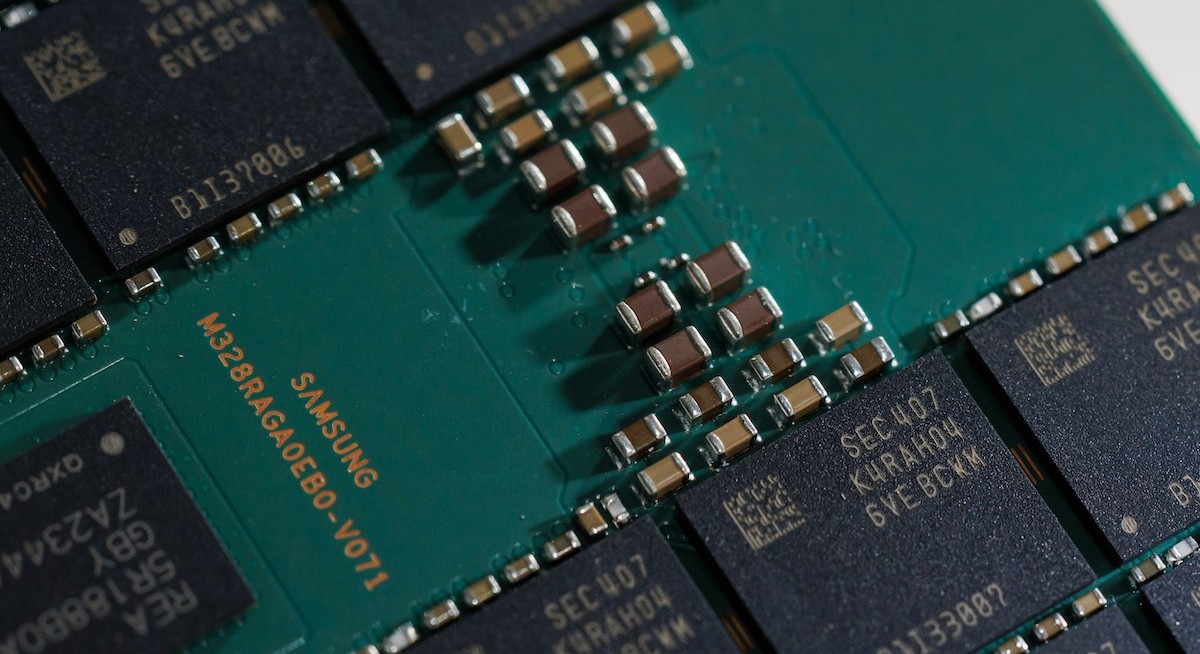


(Julu 7): Samsung Electronics Co.’s quarterly profit surged 19-fold, soaring past elevated expectations due to rocketing demand for memory chips needed in AI data centres.
The world’s largest memory maker reported preliminary operating income of 89.4 trillion won (US$58 billion) in the three months through June, dwarfing its performance for all of 2025. Analysts on average had projected 84.2 trillion won. Revenue came to 171 trillion won, against the average estimate of 169.2 trillion won. Samsung is expected to release a full financial statement, including net income and divisional breakdowns, around the end of the month.
A shortage in memory chips remains a key bottleneck for AI development, executives including Nvidia Corp. chief Jensen Huang and OpenAI Chief Operating Officer Brad Lightcap have said. Manufacturers are giving priority to high-end memory development to meet data centers’ needs, leading to inadequate volumes of conventional memory as well. Analysts expect shortages to last through 2027 at least, giving Samsung and rivals SK Hynix Inc. and Micron Technology Inc. enormous pricing power.
That’s lifted average DRAM selling prices more than 40% in the April-June quarter from the previous three months, while NAND prices jumped more than 50%, according to HSBC.
Samsung’s results are in the spotlight as investors try to gauge how long sky-high investments and valuations around AI will last. Global semiconductor shares jumped to record levels earlier this year, but have hit turbulence on fears about increased competition, possible overcapacity and whether plans for hundreds of billions of dollars in investment will pay off.
Shares of Samsung, which has broad portfolio of chips and consumer electronic, have underperformed cross-town rival SK Hynix’s, which is more focused on high-end memory geared for AI’s computation needs. Samsung’s shares, which were hurt by a selloff in the five days to Friday, are up 165% this year, compared with SK Hynix’s roughly 260% gain.
The two chipmakers are central to South Korea’s ambitions to pull ahead of other countries to take leadership in AI. Samsung Group and SK Group plan to build two chipmaking plants apiece in the nation’s southwest for a total of 800 trillion won to expand capacity quickly. The country aims to double its memory production capacity within five years. For 2026, Samsung has announced plans to spend over US$70 billion in production capacity expansion and research.
Chipmakers are enjoying an unprecedented rise in demand for the high-bandwidth memory essential to AI accelerators. But the shift in production is in turn fomenting a historic shortage of conventional memory chips that go into most modern devices, squeezing profits and inflating price tags.
Uploaded by Jason Ng




