


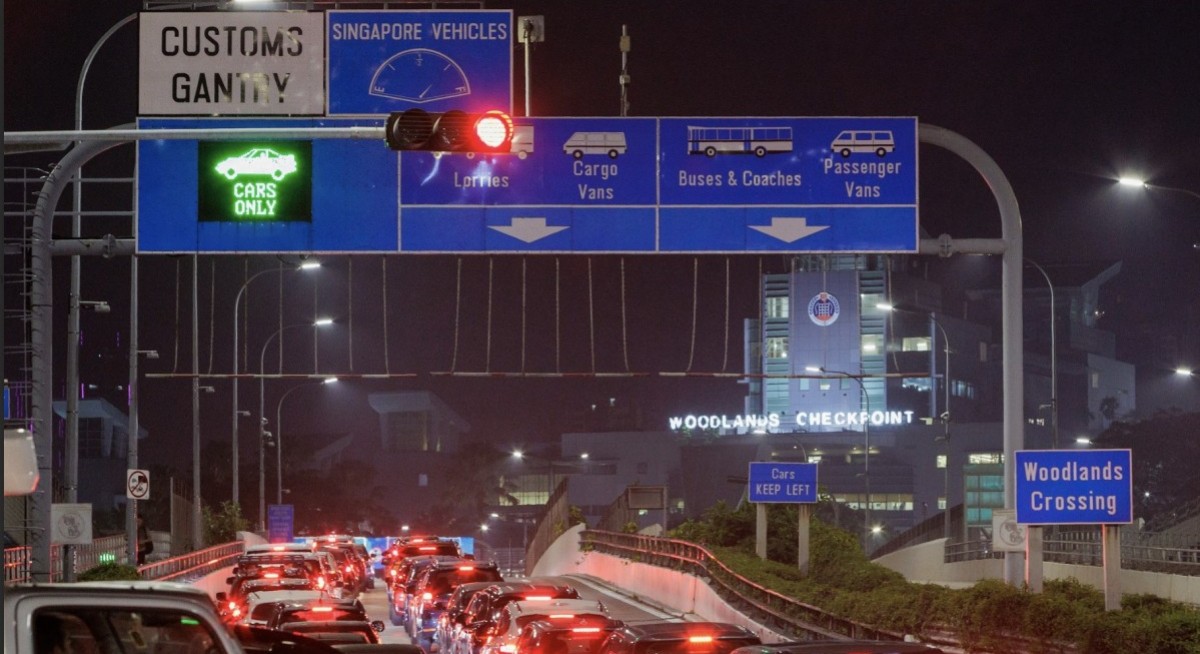


“We can take some space back. That is in the works, which is why we are not ready to unveil the plan. But definitely it’s a very exciting plan. Our plan is to transform Causeway Point into something of a regional mall. Today, the focus is really about serving Woodlands,” Ng says.
Causeway Point’s potential would be based on the Draft Master Plan. “There is so much development that’s going to happen in the north region, with tremendous growth in population and the working population there. We see a real opportunity to expand the catchment of Causeway Point beyond Woodlands. We’re looking at parts of Sembawang. We are also targeting the future Kranji area,” Ng reveals.
In its replies to unitholders, FCT said it had engaged CBRE to conduct independent market studies and shopper surveys to assess current market trends and the implications for FCT of the Johor Bahru-Singapore Rapid Transit System (RTS).
Based on CBRE’s Retail Property Market Overview published in FCT’s 2025 annual report (pages 38 to 65), there are various infrastructural, commercial and residential growth drivers across Woodlands, Sembawang, Kranji and Sungei Kadut, which will support the development of the North Region in the coming years.
See also: Elite UK REIT divests four properties in Wales for GBP6 mil
According to the CBRE report, the North region is expected to see a 25%–27% increase in its residential population, with more than 50,000 residential units added over the next 10–15 years. The Woodlands Regional Centre is anticipated to create approximately 100,000 jobs, with about 100 hectares of land set aside for future development. This will increase the shopper catchment in Singapore’s northern region.
The North will benefit from increased transport connectivity to the rest of Singapore. The North-South Corridor, a 21.5km integrated transport artery that will directly connect Singapore’s northern towns (Woodlands, Sembawang, and Yishun) to the city centre, will support the broader development of the northern region and expand the catchment for FCT’s malls.
FCT malls have successfully attracted a pipeline of Malaysian F&B brands, including Oriental Kopi, Zus Coffee, and Beutea. With the same brands and offerings in JB available in Singapore, the propensity for cross-border travel is reduced. Based on media reports, food and rental prices in JB have risen over time, eroding the value proposition of JB as a shopping destination. According to CBRE’s Retail Property Market Overview, retail sales leakage is expected to rise from its current level of 3%–4% to approximately 5% by 2032.
See also: FCT to divest White Sands mall for $467 mil; 8.4% above independent valuation
Elsewhere, Tan Choon Siang, the CEO of CapitaLand Commercial Trust’s manager, believes that the incremental leakage to Johor is probably limited. He thinks the North Region should benefit from the inflow from Malaysia. “There’ll be a certain vibrancy too,” he suggests.
In Tan’s view, a leakage already exists. “The existing leakage doesn’t affect the numbers (when the RTS starts running). What we should be concerned about is the incremental leakage from the RTS. People who drive are likely to remain drivers in JB because you cannot substitute that away,”
The RTS could take demand away from the buses that ply the Causeway. “It is likely you will take away the demand and move it over to RTS. But that’s not incremental leakage. Incremental leakage is people who are currently not going to Johor and then suddenly decide to go because of greater convenience and slightly shorter travel time. If you are the type that will go to Johor to shop for cheap goods, you’re probably already doing it,” Tan reasons.
The RTS will also make it easier for Malaysians to enter Singapore. “This facilitates cross-border labour which then allows us to tap into incremental demand in terms of labour flows,” Tan suggests. As he sees it, the whole of Johor is booming, which is likely to attract population growth.
“Some of these people will likely want to come to Singapore over the weekends, etc. There’s also the incremental benefit. I don’t think it’s all bad. It’s not doom and gloom,” Tan concludes.
Jonathan Koh, an analyst at UOB Kay Hian, expects the leakage of consumer spending from the JB-Singapore RTS Link to be mitigated by population growth in the catchment area of Causeway Point. Koh maintains a “buy” rating on FCT and a target price of $2.90. The target price is based on the Dividend Discount Model (DDM), with a cost of equity of 6.5% and terminal growth of 2.2%.
Vijay Natarajan, vice-president and head of real estate and REITs at RHB Bank, says concerns over the negative impact of the upcoming Johor Bahru–Singapore RTS are slightly overblown, as the potential retail sales leakage can be offset by a significant planned increase in housing units in the northern region.
Meanwhile, Ng is forging ahead with AEI plans for Causeway Point. He has indicated that the cost is likely slightly higher than NEX’s AEI cost, with an ROI in the 7%–8% range.




