


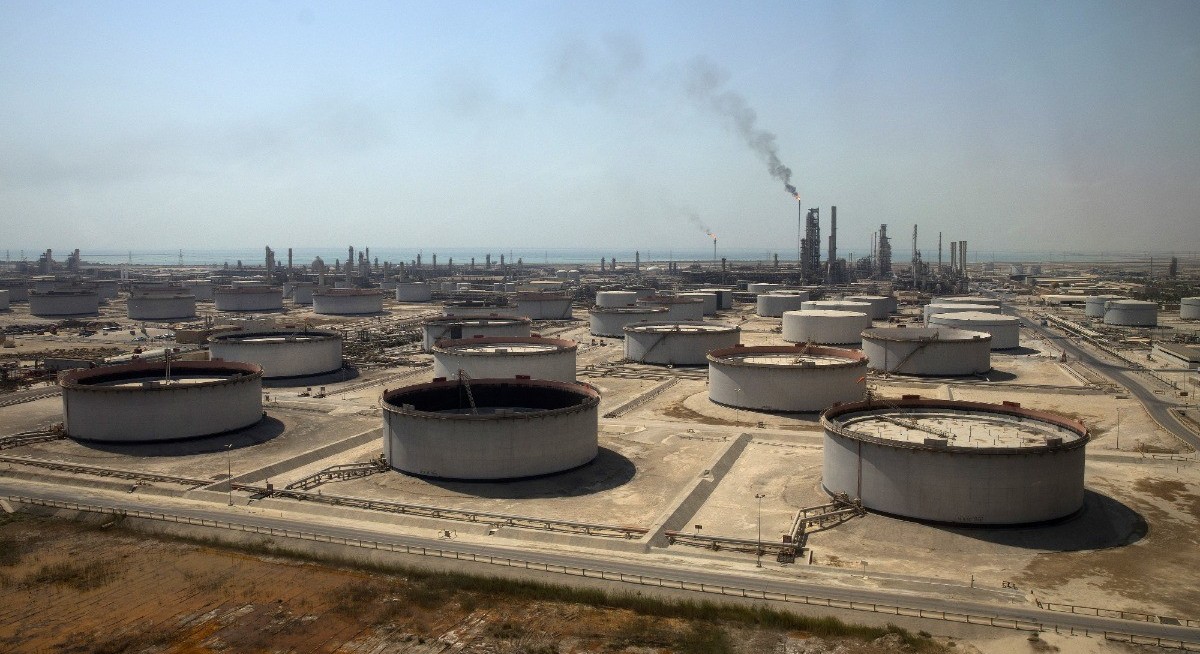


(July 2): Oil deepened its slide below pre-war levels as Saudi Arabia ramped up crude exports towards normal rates, extending the recovery in flows from the Persian Gulf and heightening the prospect of a supply surplus.
US benchmark West Texas Intermediate dipped under US$68 a barrel, with a key indicator flashing signs of oversupply for the first time since November. Brent futures slipped near US$70 a barrel in London, hitting their lowest since the week before the Iran war began on Feb 28.
Saudi Arabia managed to load crude at almost 90% of previous levels after restarting shipments late last week from its giant Ras Tanura terminal, according to vessel-tracking data compiled by Bloomberg.
The kingdom’s rebound resembles that of its neighbour, the United Arab Emirates, which last month restored its oil exports to pre-conflict levels of more than 3.9 million barrels a day. A US official estimates that oil supply through the Strait of Hormuz chokepoint has now reached more than 10 million barrels a day.
The result has been a gush of oil into the market at a time when many of the wartime supply workarounds are still in place — including releases of emergency reserves and depressed imports by China. Brent futures are trading in a bearish contango price structure that signals short-term oversupply, with discounts on the closest contracts. Premiums for physical crude have also plunged in recent days.
“A wave of oil is about to enter the market,” said Natasha Kaneva, head of commodities research at JPMorgan Chase & Co. “And here lies the paradox. The surge in oil supply is about to collide with a market that, at least for now, simply does not need it.”
See also: Saudi oil exports approach pre-war levels as Hormuz flows rise
Saudi Arabia has made the unusual move of selling millions of barrels on an ad-hoc basis to customers in Asia as it starts shipping its crude from inside the Persian Gulf again.
Brent futures have continued to decline after their biggest quarterly drop since the pandemic in 2020, with a loss of more than 40% from their peak at the height of the war. Flows through Hormuz — which connects Persian Gulf producers to global buyers — continued despite tensions over the weekend, allaying fears of an oil-led inflationary spike.
Prices:
See also: Oil extends decline as barrels flow through Strait of Hormuz
- WTI for August delivery declined 1.3% to US$67.71 a barrel at 10.45am in New York.
- Brent for September settlement fell 0.99% to US$70.86 a barrel.
“The market is currently being flooded with crude oil,” said Arne Lohmann Rasmussen, chief analyst at A/S Global Risk Management. “Ample volumes of oil are putting pressure on the front end.”
How quickly the immediate supply glut dissipates will depend on a rebound in buying from China, and the pace that other governments choose to replenish depleted inventories, JPMorgan said. Total US stockpiles have fallen to the lowest level since March 2025, with inventories excluding strategic reserves at around 1.2 billion barrels after 12 straight weeks of declines.
And some hints of geopolitical risk still remain in the market. The US and Iran have yet to iron out a permanent peace deal. Qatar said the next set of indirect talks between the two sides would be scheduled at the earliest possible time following the funeral processions for Iran’s former Supreme Leader Ali Khamenei, who was killed in an air strike at the start of the conflict. Ceremonies are expected to begin July 4 and continue for days, according to Iranian state-run media.
Ahead of the Qatar talks, Iran reiterated its determination to control shipping through Hormuz, one of several sticking points that include the Islamic republic’s nuclear programme and fighting in Lebanon.
In a sign of a developing post-war equilibrium, some leading European powers now accept that ships transiting Hormuz will have to pay fees to Iran and Oman, people familiar said.
Uploaded by Felyx Teoh




