


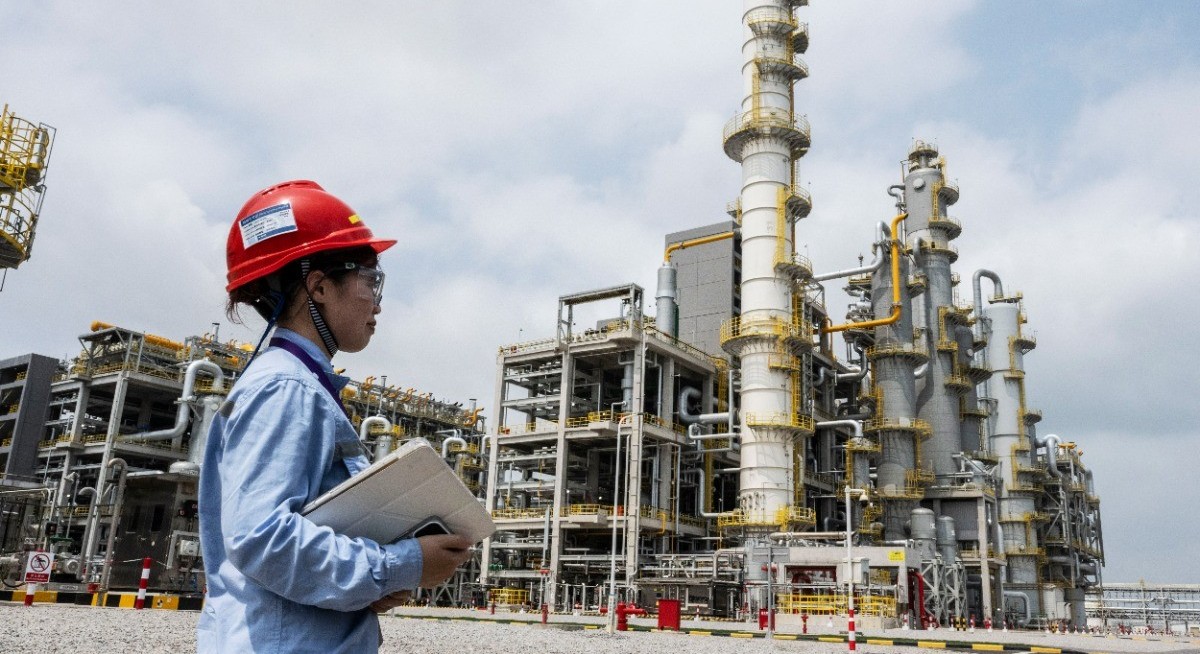


(July 1): The war in Iran has rewired China’s petrochemicals trade, allowing plants to ease their glut of the key building blocks for plastics, rubber and textiles by boosting exports.
The loss of feedstock from the oil and gas fields of the Persian Gulf has prompted buyers from Vietnam to Indonesia to tap China instead, which has massive stockpiles and is less reliant on the Middle East for supply. If those channels endure after the conflict ends, Chinese producers will have secured a vital means of dealing with the overcapacity afflicting their industry.
The war “has pushed many importers of petchem products, such as polyolefins, to turn toward Chinese suppliers out of desperation”, said Darryl Xu, principal analyst for base chemicals and feedstocks at ICIS, “This has allowed Chinese petchem producers to establish supply chains to the rest of Asia.”
Polyolefins such as polyethylene are a last stepping stone to the plastic goods that pervade modern life. The transformation begins with crude oil and natural gas, which are “cracked” into olefins and then turned into more complex chemical chains that eventually become food wrappers, bin liners and toys.
The disruptions to shipping through the Strait of Hormuz have affected China as well. But it’s been able to fall back on alternatives, from existing inventories to a resurgent coal-to-chemicals industry that doesn’t depend on foreign oil or gas, according to ICIS. Imports of US ethane, derived from natural gas, have also risen sharply.

See also: Oil steadies as peace talks, flows through Hormuz in focus
China flipped for the first time in April and May to a net exporter of olefins, ICIS said, a shift equivalent to about 10% of global demand. Downstream chemicals have seen similar gyrations.
“The biggest story by far I’d say is polyethylene,” said BloombergNEF analyst Philip Geurts, after net imports tumbled to just 35,000 tons in May from 988,000 tons in February, the month that the war started. “I don’t think we’ve ever seen such a trade swing.” Polyethylene is the most common plastic in the world.
Peace between the US and Iran won’t necessarily fully reverse flows. Hormuz has been exposed as a chokepoint that traders won’t want to rely on in the future. China, meanwhile, has built too much capacity for the slower economic growth that’s taken hold in recent years.
See also: Shell nears US$1 bil South Africa fuel stations sale to Adnoc unit
The country is forecast to expand annual ethylene capacity — the most important olefin — from about 60 million tons last year to about 80 million tons at the end of the decade, according to ICIS. That would take it to as much as a third of the global market, creating additional urgency to secure a share of sales in other countries.
Uploaded by Chng Shear Lane




