


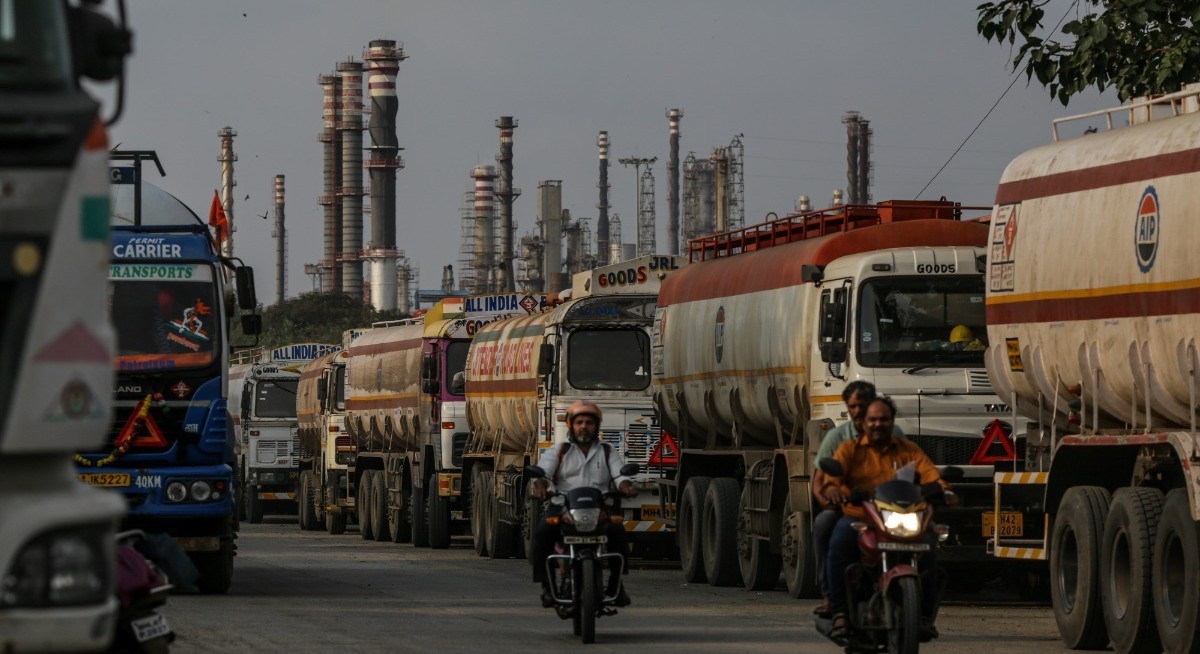


(April 27): India’s efforts to shield consumers from a historic oil shock are reverberating through the refining sector, squeezing margins, stretching balance sheets and forcing companies into costly workarounds.
Since US and Israeli strikes on Iran began at the end of February, refiners in the world’s third-largest crude importer have had to contend with the effects of a sharp rise in prices, freight and insurance costs, all compounded by a weaker rupee. They have also had to scramble to find alternatives to Middle East cargoes.
The government, with an eye on price-sensitive voters, has instead prioritised fuel availability and accessibility. It has kept pump prices frozen through the war — limiting state processors’ ability to pass on costs — while imposing crippling taxes to curb exports. Refiners have also been pushed to maintain run rates and to crank up production of low-margin liquefied petroleum gas to help resolve an acute shortage of the cooking fuel.
The result, refiners say, is unprecedented strain.
“We have never seen such a situation earlier,” Srinivas Tuttagunta, chief operating officer of private behemoth Reliance Industries Ltd, told analysts late on Friday.
Freight rates have jumped 10–15 times; crude premiums have surged to US$20–US$30 a barrel from just a few dollars pre-conflict; and war-risk insurance has ballooned from thousands to near a million dollars, he added.
See also: Goldman hikes oil forecasts again as ‘Hormuz shock’ builds
India’s integrated processors need crude prices around US$80–US$85 a barrel to break even, according to analysts at Macquarie — a level the market has far exceeded in recent weeks. Brent touched US$108 a barrel on Monday as efforts to resume peace talks over the Iran war stalled, adding to pressure on the government to consider raising prices for the first time in four years.
Oil refining and retailing companies are currently losing revenue worth about 100 rupees per litre on diesel and 20 rupees on gasoline, according to the oil ministry.
Based on India’s crude import cost and low fixed margins, gasoline and diesel prices could credibly be increased by 25-28 rupees a litre, Kotak Institutional Equities said in a note. Political considerations, though, will likely keep expected hikes modest.
See also: Vietnam buys more LNG as temperatures set to rise above average
Reliance, which operates the world’s largest single-site refinery, reported March-quarter profit fell about 9% to its lowest in six quarters, dragged by its oil-to-chemicals business. Smaller state-owned peer Mangalore Refinery & Petrochemicals Ltd. separately reported a steeper drop of 68% on year in quarterly profits.
“The uncertainties due to logistical constraints, volatility of crude oil prices, do pose challenges,” Rohit Agrawala, finance director at Chennai Petroleum, told analysts in an earnings call on Friday.
Supply does not seem set to improve, with oil imports down 10% year-on-year so far in April and still-limited flows from the Persian Gulf pushing India to tap its strategic and commercial reserves.
Heat and panic buying, meanwhile, have already pushed up diesel sales more than 9% in the first 15 days of April and gasoline sales up 12.5%.
Energy markets will stay volatile thanks to risk premiums, Reliance said, adding that even when the conflict ends, war-related costs will take time to cool.
Uploaded by Arion Yeow




