


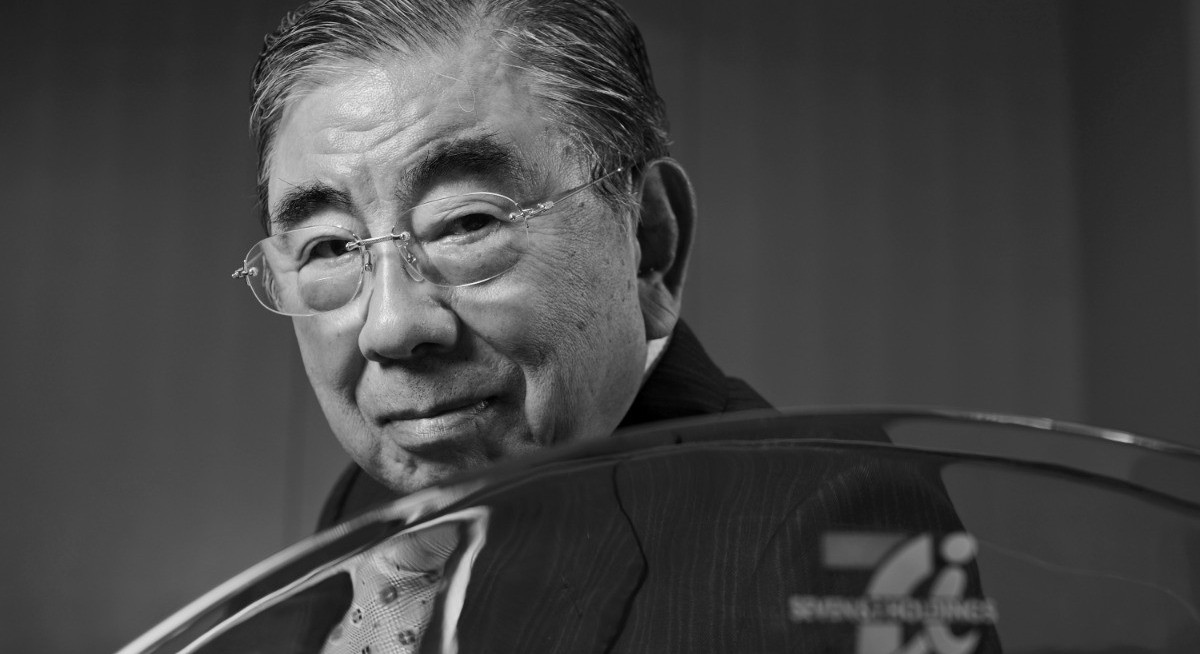


Suzuki revolutionised how Japanese people shop when he opened the nation’s first 24-hour 7-Eleven franchise in 1974, a time when mom-and-pop stores dominated the local retail landscape. He bought 7-Eleven’s US parent, Southland Corp, after it filed for bankruptcy in 1990 and went on to expand it to more than 55,000 outlets in at least 16 countries by the time he left in May 2016.
“When I first decided to bring 7-Eleven to Japan, everybody said it won’t succeed and opposed the idea — executives, university professors, consultants, all of them,” Suzuki said in a 2013 interview. “I knew they were wrong.”
The group now has more than 85,000 stores dotting the globe, with about a quarter of them in Japan. 7-Eleven traces its roots to the 1920s and 1930s, when icehouses in the US South expanded into selling eggs, bread and milk, growing into a chain of convenience stores called Tote’m. In 1946, the name changed to 7-Eleven to reflect extended hours — 7am to 11pm, seven days a week.
Suzuki was named chairman and CEO of 7-Eleven parent Ito-Yokado Co in 2003 and changed the Tokyo-based company’s name to Seven & i in 2005. He expanded the chain to countries such as Indonesia and Denmark and increased the number of US stores to almost 10,500 in 2015 from about 7,300 when Southland failed.
See also: Alan Greenspan dies at 100; led Fed during boom before 2008 bust
Since then, the retailer’s convenience store empire has grown to more than 18,000 outlets, including the US$21 billion ($26.82 billion) acquisition of Speedway stores from Marathon Petroleum Corp in 2021 as well as Sunoco gas stations. Seven & i became a takeover target in 2024 when Circle K owner Alimentation Couche-Tard Inc made an unsolicited proposal to buy the company. Negotiations over a deal never gained traction and the Canadian company walked away last year.
Suzuki’s abrupt departure as chairman and CEO in 2016 followed a clash with US activist investor Daniel Loeb. Seven & i was one of several Japanese businesses Third Point LLC, Loeb’s hedge fund, had invested in.
Suzuki tried to get Seven & i’s board to oust an up-and-coming younger executive, Ryuichi Isaka, president of the company’s core Japan unit, for alleged performance issues. In intervening to thwart that plan, Loeb raised concerns about Suzuki’s “chronic health problems” and claimed he planned to anoint his son, Yasuhiro Suzuki, as successor, which Suzuki denied. (Yasuhiro left the retailer a year later.) In the end, Isaka was promoted and Suzuki resigned as CEO, remaining with the company as an honorary adviser.
See also: KK Fong, who rode to riches on print and fell from the dotcom burst, has died
Suzuki was born on Dec 1, 1932, in the town of Sakaki in Nagano, a mountainous prefecture west of Tokyo. His father, Jinshiro, was a public servant and at one point the town’s mayor, according to Suzuki’s Japanese-language autobiography, published in 2008. His mother, Hisami, ran the family farm and a silkworm business.
Suzuki was the ninth of 10 children, and two of his siblings died young. Although the family was wealthy and had many hired hands, his mother was a disciplinarian who taught her children that “those who don’t work shall not eat”, he wrote in his memoir. The children would sweep the yard every morning before breakfast and were scolded for signs of laziness.
Suzuki initially thought he wanted to be a politician. He was active in student politics at Tokyo’s Chuo University, where he studied economics and graduated in 1956. He worked at a publishing company before joining retailer Ito-Yokado in 1963.
He was an executive at Ito-Yokado in 1974 when he opened a 7-Eleven in Tokyo’s bayside Toyosu district. He had discovered 7-Eleven during a visit to the US to negotiate a deal with Denny’s Corp. Within five years, the business was flourishing.
Suzuki became president of Ito-Yokado in 1992 after his predecessor, company founder Masatoshi Ito, resigned to take responsibility for alleged payments by company officials to three yakuza gangsters to keep order at a shareholders meeting.
In 1999, Ito-Yokado started selling online through a unit now known as Seven Net Shopping, and in 2001, Suzuki started a financial-services unit, now called Seven Bank Ltd, that gets most of its revenue from fees charged at ATMs inside 7-Eleven stores.
The chain attracted customers in recent years by offering more fresh food, bento lunches and private-label goods. Nowadays, the shops are called “combini”, a shortened version of the word for convenience stores in Japanese. Customers can pay bills, send parcels and withdraw cash as well as shop.
To stay ahead of Singapore and the region’s corporate and economic trends, click here for Latest Section
Even into his 80s, Suzuki regularly visited 7-Eleven stores on weekends to buy and inspect merchandise.
“I’ve been very lucky as a businessman, but I’ve always felt that luck is on the side of those who do everything they can to achieve their goals,” Suzuki wrote in his autobiography. “It doesn’t simply come to special people.”
Uploaded by Chng Shear Lane




