


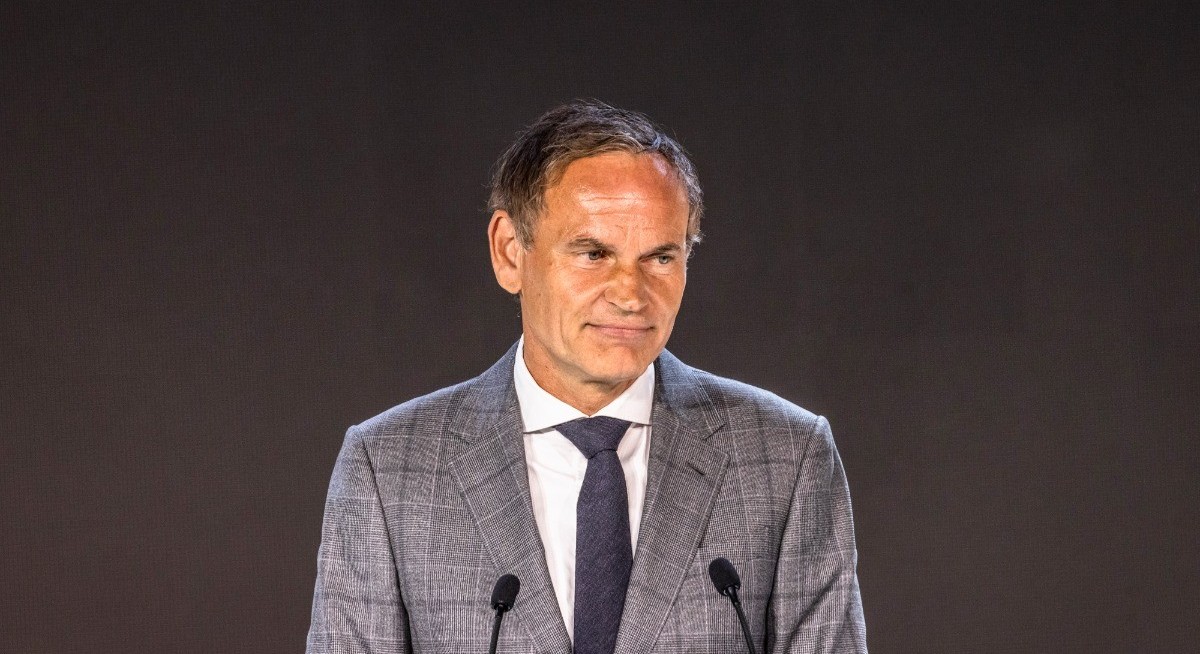


(July 11): Volkswagen AG chief executive officer Oliver Blume faces an uphill battle to push through a fundamental overhaul of the carmaker, after failing to win initial backing from the supervisory board.
Blume’s deliberations, including more job cuts, plant closures and possibly even carve-out of the VW brand from the rest of a sprawling carmaker that also owns Audi and controls Porsche, was rejected by 12 of the currently 19 VW supervisory board members at the meeting on Thursday, according to local media reports.
Without the support of labour representatives, which account for ten of the supervisory seats, and the state of Lower Saxony as the company’s second-largest shareholder, the prospects for his far-reaching restructuring plan are uncertain.
Late Thursday, the company outlined only vague goals following the meeting, pledging to reduce complexity across its vast product offerings, with a goal of concentrating the lineup on the most attractive market segments.
There was “no indication of progress towards an agreement having been reached on either plant closures, five-year investment plan or additional headcount reduction,” Jefferies analyst Philippe Houchois said in a note to clients.
As a result, Thursday’s news that the company plans to halve the model lineup was met with a shrug. VW’s shares were little changed Friday.
See also: MGM resorts engaged in deal talks with Diller, WSJ says

While change at VW is always hard-won due to its unique setup, the challenges to its industrial future have rarely been greater. Profits from China are unlikely to recover as local rivals like BYD Co win over buyers, and US tariffs sap returns at the luxury Audi and Porsche nameplates.
VW has been struggling to bring down carmaking costs in Germany, which are estimated to be about two-thirds higher than in other locations such as Portugal and Spain, according to Jefferies. High labour and energy costs, as well as bureaucratic burdens are key drivers, alongside a workforce accustomed to generous bonuses and the power base to push through its interests.
See also: Hedge fund Elliott builds stake in software firm CCC — Bloomberg
Investors’ patience will be tested in coming months after Blume stumbled at the first major hurdle in his effort to revive eroding profits. The company’s market valuation continues to hover around a decade low of €38.6 billion (US$44.1 billion), meaning it’s trading around it’s net cash position.
VW’s management board “is taking responsibility for the company’s sustainable future — at a time when the automotive industry is under intense pressure worldwide,” CEO Blume said Friday in a statement. The comeback plan is “positioning the group to be even more robust and competitive, even in a highly challenging global environment.”
Labour’s swift response was to heap more pressure on management with VW works council chairwoman and supervisory board member Daniela Cavallo issuing an ultimatum that urged Blume to explain himself to the company’s workforce on Friday.
The comments marked a distinct shift in tone. Blume, a VW lifer, has largely been spared from the fierce attacks VW labour leaders launched against his predecessor Herbert Diess, the former BMW AG top executive who was ultimately ousted at VW in 2022.
On Friday, labour officials sent an internal letter to the company’s employees, blaming management for stoking fear among workers over losing their jobs. The document demanded Blume and his team respond to more than 80 questions to explain their restructuring plan.
The planned revamp “still contains major gaps in content, inconsistencies, and contradictions,” labour representatives said in the letter seen by Bloomberg. VW, like other major corporations in Germany, runs on a system of co-determination with worker representatives that’s designed to foster long-term consensus.
At VW, workers hold even more sway. The federal state of Lower Saxony owns a 20% stake and has certain veto rights. Its two representatives on the supervisory board usually side with labour officials. This often makes it hard to push through investor interests when key stakeholders haggle over important decisions.
To stay ahead of Singapore and the region’s corporate and economic trends, click here for Latest Section
“There will undoubtedly be some who argue that this is all part of a well rehearsed dance between management and the workforce,” Bernstein analyst Stephen Reitman said in a note to clients. However, the renewed clash likely shares more ground with a previous attempt in 2024 to shut sites in Germany that got watered down, Reitman said.
After this initial round on the reform push, the company may resort to a piecemeal approach on individual cost-cutting measures that could take several months to finalise.
“The second half of the year is going to be tough,” VW labour officials wrote in their letter to staff.
Uploaded by Liza Shireen Koshy




