




Pop Mart’s North America revenue growth slowed to 424% in the current quarter to Dec 6 — more than halving from the three months to September — according to YipitData, a New York-based firm that gathers and analyses alternative data. Bearish wagers against its stock have tripled since November to their highest since August 2023, S&P Global data showed.
“The market is very focused on Pop Mart’s short-term numbers,” said Richard Lin, the chief consumer analyst of SPDB International Holdings Ltd. “The biggest question is if it can’t sustain a very high year-on-year growth rate towards year end, then can it still deliver growth next year with such a high base?”
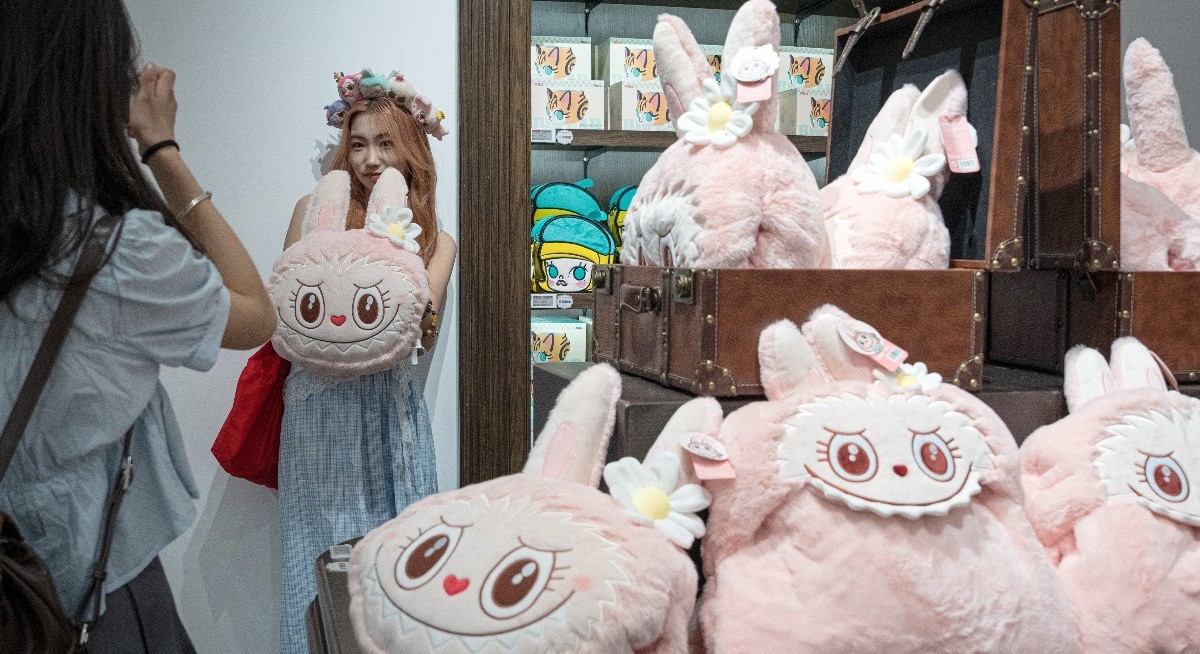
Investors’ growing scepticism has turned the Chinese pop toy maker into one of Hong Kong’s worst performers. The core concern is whether the sharp-fanged creature behind Pop Mart’s 3,200% rally from 2022 lows is a durable long-term character, or a fashion trend whose shelf life is already expiring.

See also: Why relevance matters more for SGX, says head of equities Ng Yao Loong
Worries accelerated as China’s secondary-market pricing softened — an early warning for collectibles cycles. Jitters fueled a share sell-off in early December after high-frequency US trackers pointed to a holiday shortfall. The two-day slump erased nearly 14% and pushed total losses since August’s peak to roughly US$24 billion ($31.0 billion), or about triple Sanrio’s market value.
“Sentiment has clearly turned very negative, so I would wait to re-engage,” said Kevin Net, the head of Asian equities at Financiere de L’Echiquier. “Valuation was already not that expensive late September, but there are a lot of question marks on future earnings-per-share right now.”
A Pop Mart spokesperson declined to comment on its stock’s moves and Black Friday sales, but said the company now has 60 US stores and 100 “roboshop” kiosks, and expects numbers to double next year.
See also: SGX-Nasdaq dual-listing framework stirs up ‘real buzz’ but technical issues expected
The stock dropped as much as 2.8% during Thursday’s early trading, making it among the worst performers on the benchmark Hang Seng China Enterprises Index.
Conviction is ‘difficult’
“Having conviction on Labubu is difficult — it’s discretionary spending and inherently hard to model,” said Daisy Li, a fund manager at EFG Asset Management.
To be sure, the company’s fundamentals remain extraordinary. First-half 2025 revenue surged to CNY13.9 billion (US$2 billion or $2.6 billion), more than five times its 2020 full-year sales, driven largely by overseas expansion. The company reported up to 250% sales growth in the three months ended September.
Pop Mart has been pushing into entertainment — opening the 40,000 sq m (431,000 sq ft) Pop Land theme park in Beijing, reportedly striking a deal with Sony Pictures to potentially develop a Labubu movie, building an in-house studio for an animated Labubu series and rolling out its POPOP jewellery brand.
That’s helping prop up optimists’ argument that Pop Mart’s growth engine is far from spent, citing stronger supply chains, better product-cycle management and more sophisticated global marketing that could extend Labubu’s lifespan. Rising enthusiasm for other characters supports the view that the company has staying power beyond Labubu mania.
Sell-side analysts largely agree, with an average 12-month price target of HKD359.23, about 84% above its latest close.
To stay ahead of Singapore and the region’s corporate and economic trends, click here for Latest Section
“Some profit-taking and short-term correction are normal, but pushing the stock down to trough valuation appears ‘overly preemptive’ — and unjustified,” Morgan Stanley analysts including Dustin Wei wrote in a November note. “The market’s focus on near-term product cyclicality” overlooks the longer-term expansion of Pop Mart’s recurring customer base, they said.

Still, Pop Mart’s efforts remain nascent, and haven’t yet proved to many investors that it can build enduring, multi-platform entertainment franchises akin to Disney.
Doubt intensified after the company’s holiday showing in the US, a market central to its global ambitions, despite an aggressive marketing blitz that saw Labubu appear in the Macy’s Thanksgiving Day Parade and tour the Empire State Building. Search interest on Alphabet Inc’s Google peaked over the summer but has cooled steadily, despite high expectations heading into Black Friday.
The resale market is showing signs of cooling too. Labubu still dominates collectibles on US site StockX, but items that once doubled or tripled retail prices now often trade below it. The popular sherbet-coloured Big Into Energy series sells for about US$110 versus its US$168 retail price, down from nearly US$400 at the peak. Rare editions still do draw premiums — one sold recently for US$105, nearly four times its US$28 price — though far below the more than US$500 fetched in June.
“The biggest concern for now is whether the momentum of Labubu and its leading intellectual properties is fading out,” said Xiadong Bao, a fund manager at Edmond de Rothschild Asset Management. If Labubu sales fade, the rest of Pop Mart’s stable of characters “may not be sufficient to compensate and maintain the strong momentum previously baked into the price”.
Uploaded by Tham Yek Lee




