


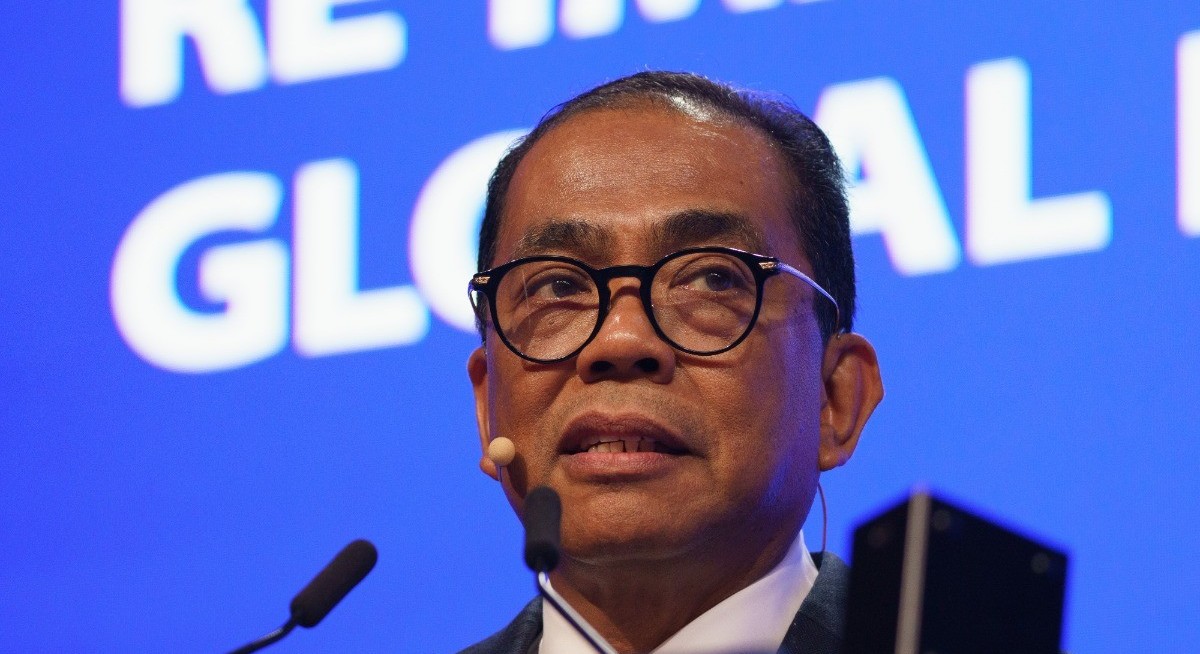


(May 30): Malaysia will not rush to increase its defence budget despite US pressure for partners to become more self-reliant, as the Southeast Asian nation seeks to balance military modernisation with other critical sectors, Defence Minister Datuk Seri Mohamed Khaled Nordin said.
“It doesn’t mean that we will implement it immediately because America says so,” Mohamed Khaled said in an interview on the sidelines of the Shangri-La Dialogue on Saturday. “Our budget needs to be allocated to various sectors because we are not a developed nation.”
His remarks came moments after US Defense Secretary Pete Hegseth urged Asian allies to ramp up military spending to a 3.5% of gross domestic product target in part to counter China’s “historic military buildup”.
Malaysia is also pursuing asymmetrical warfare capabilities, focusing on low-cost, mass-produced weapons like drones and rockets. It’s also pursuing technology from countries like Türkiye, South Korea and Australia, and remains open to Chinese or Russian procurement.
Mohamed Khaled noted Hegseth assured him of Washington’s commitment to the region during a meeting on Friday.
To address defence constraints, Mohamed Khaled met with Hegseth on Friday to discuss alternatives after Norway abruptly blocked a missile contract export licence, citing a policy to sell only to Nato allies. He said Hegseth told him in that meeting the US was “in the dark” over Norway’s move and offered to sell American missiles as a replacement, an option he said Malaysia would seriously consider.
See also: SkyeChip IPO highlights Malaysia deals surging towards 13-year high
With the closure of the Strait of Hormuz choking energy supplies and trade to Asia, Mohamed Khaled dismissed concerns that something similar could happen closer to home, guaranteeing that the vital Strait of Malacca will remain a free navigation corridor managed neutrally with Indonesia, Singapore, and Thailand.
“We can give our assurance that the Strait of Malacca will be a strait that will allow free flow of navigation,” he said.
Uploaded by Chng Shear Lane




