




When picturing their investments, many who invest in REITs might call to mind office space in the business district, suburban malls in the heartlands, or industrial buildings and data centres clustered away from cities and urban areas.
Rent is collected, leases are managed, occupancy is kept stable, and investors and REIT managers alike benefit from the resulting yield. So it goes.
Sasseur REIT, on the other hand, operates in a different universe.
Its malls are in China and its revenue moves hand in hand with retail performance.
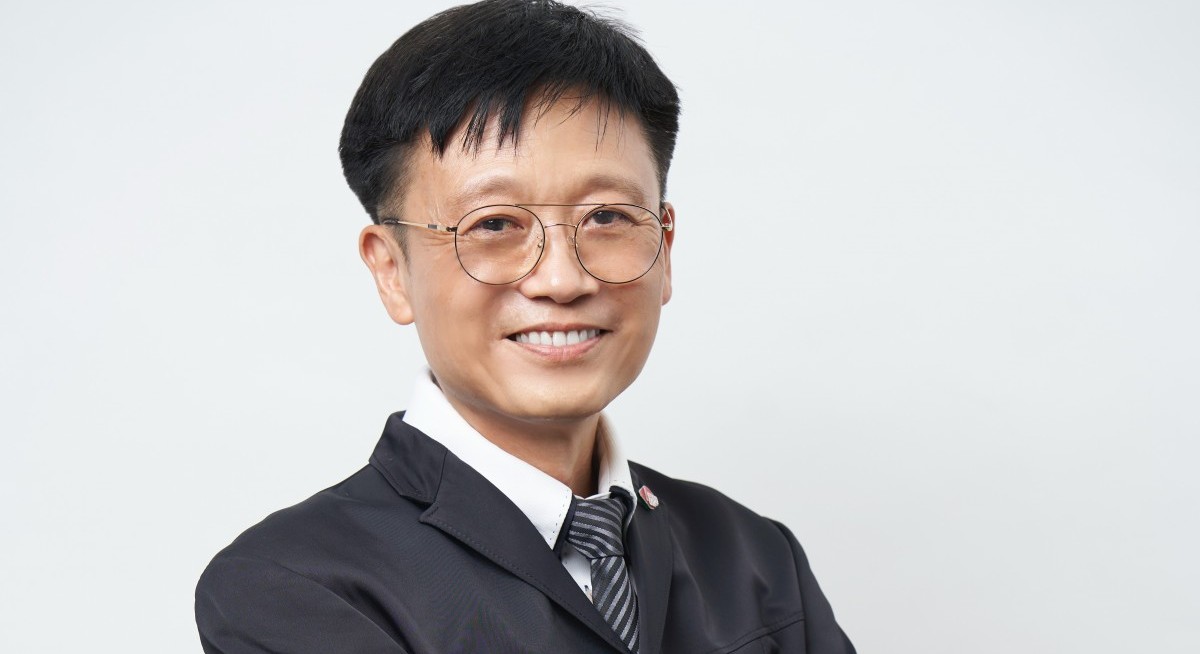
After all, its CEO Cheng Hsing Yuen believes the business succeeds only when its tenants succeed — a perspective some may find refreshing, in contrast to the reputation REITs sometimes have as landlords who collect rent while their tenant retailers struggle to survive.
“We are not just a piece of real estate,” Cheng says. “Our business is about creating value for consumers and brands. And when they do well, our investors do well too.”
See also: Hyphens Pharma: From dispensary to Asean’s dermatology specialist
Winning when tenants win
Cheng officially stepped into the CEO role on Oct 29, but his preparation began long before then. As part of the management team under the REIT’s first two CEOs, he spent years learning the ins and outs of the business. His experience has spanned the sponsor’s operations to the entrusted manager’s day-to-day realities on the ground in China.
Sasseur REIT listed in 2018 with four premium outlet malls — two in Chongqing, one in Kunming and one in Hefei — part of a larger ecosystem of 19 outlets managed by its sponsor.
See also: Soon Hock Enterprise: From operator to developer
But behind the brand is a symbolic origin story. The word “Sasseur”, Cheng shares, is adapted from the French term for “sifting” or “refining”.
Cheng explains that the founders adopted it to express three ideas: refinement, the goal of delivering the best retail experience; quality, reflected in curating strong brands; and value, the belief that if you capture what consumers want, you can translate that into meaningful returns for investors.
He smiles as he shares this, then adds: “What others don’t have, we have. What others have, we do even better.”
And he has the examples to back that up. In Chongqing, Sasseur’s flagship mall — Liangjiang Outlet — remained open for 36 hours during its recent anniversary sale.
In response, the mall brought in more than 100,000 shoppers and achieved over 20% sales growth on its first day.
It reflects how Sasseur REIT views its outlets: they are not just shopping centres; they are experiential destinations for middle-class consumers and families.
Cheng also describes how, during year-end festivities in Kunming, the team transformed the outdoor plaza into a circular performance stage. Singers performed, fireworks lit up the night sky and families stayed late into the evening.
To stay ahead of Singapore and the region’s corporate and economic trends, click here for Latest Section
Doing more with every sale
If there is one idea that captures Sasseur’s model, it is this: everything is built on helping tenants sell more, because the REIT only grows when tenants grow.
This is based on Sasseur’s Entrusted Management Agreement (EMA) model, which determines how the REIT earns income.
Unlike conventional REITs, which rely primarily on fixed rents, Sasseur has a dual structure: a fixed component that provides predictable income for unitholders and a variable component tied directly to outlet sales.
On top of this, more than 90% of leases are based on turnover rent at the outlet operation level. In layman’s terms, tenants pay rent as a percentage of sales.
This method creates alignment because the REIT is not incentivised to increase rent; it’s incentivised to increase tenant sales. As Cheng puts it, “If our tenants don’t survive, we don’t have rental.”
This alignment manifests in Sasseur REIT’s operational culture, too. General managers walk the malls daily, giving feedback on store layouts, visual merchandising angles, and product ranges.
Promoters — the sales staff behind each brand — receive training and motivation from the operator, not just the brands they work directly for. If they hit sales targets, they are rewarded with vouchers or cash.
“Our general managers are like event organisers,” he adds. “If a promotion is coming up, it must feel exciting.”
Reading the shifts in Chinese consumer behaviour
Cheng’s consumer insights are sharp and grounded in what he and his team observe across malls. He says that younger Chinese shoppers, especially millennials, are increasingly drawn to domestic brands such as Anta and Li-Ning, reflecting a deeper pride in Chinese products.
This pride has led to a shift in the tenant mix, with domestic sportswear and fashion becoming a growing component of outlet demand.
He also highlights the rise of children’s wear, driven by local family demographics. In Kunming, the team converted a low-traffic third floor into a dedicated children’s zone, featuring playgrounds, children’s fashion, and entertainment.
The result: footfall surged, and families now make it a shopping destination.
Looking ahead: confidence built on track record
Despite some malls being 16 or 17 years old, the REIT recently achieved 30% y-o-y sales growth on the First Day of Anniversary event. Cheng sees this as proof that with the right operational approach, outlet malls can grow even in an uncertain environment.
At the same time, Cheng uses a treadmill analogy to describe retail in China. “If you run on a treadmill and don’t stop, you must keep moving. Retail is the same. If we stop moving, if we become stagnant, we will fall.”
It is an elegant way to capture the pace of the Chinese consumer market, where preferences shift quickly and malls must respond even faster.
Describing future growth plans, he speaks cautiously about acquisitions — he is currently constrained by non-disclosure agreements — but says the REIT is actively exploring assets across the sponsor’s other managed outlets, assessing which could meet the required yield threshold.
He also highlights broader macro trends. China’s government has been pushing for stronger domestic consumption and outlet malls have benefited. Traditional malls have struggled, but outlets have grown steadily, expanding at about 10% annually.
With the Chinese middle class estimated at 300 million to 350 million people — “the size of the US population,” Cheng stresses — he believes the REIT is riding a long-term structural trend rather than a short-lived burst.
Why this REIT matters to Singapore investors
When asked to summarise his pitch, Cheng does not hesitate. “We are not just real estate. We are a high-yield instrument backed by China’s fast-growing domestic consumption.”
He emphasises resilience. After all, outlet malls tend to perform well even during consumption downgrades because shoppers still want quality but at better prices. He discusses the REIT’s attractive yield, among the highest in the Singapore market. He also mentions its intrinsic value, which he believes the current market price does not fully reflect.
But beyond the numbers, what stands out is the business’s ethos. According to Cheng, Sasseur REIT is not a landlord that is just concerned with extracting rent. It is a partner that works for every sale, every brand relationship, and every consumer experience.
Simply put, it succeeds because it delivers more value to tenants, their paying customers, and its investors.
About Sasseur REIT
Sasseur REIT is the first retail outlet mall REIT listed in Asia, providing investors with a unique opportunity to participate in China’s fast-growing retail outlet mall sector. Its initial portfolio comprises four high-quality retail outlet malls strategically located in rapidly expanding cities, including Chongqing, Kunming and Hefei, with a combined net lettable area of 310,241 square metres.
Established with a clear investment mandate, Sasseur REIT focuses primarily on acquiring and managing a diversified portfolio of income-producing real estate assets used predominantly for retail outlet mall purposes. It also invests in real estate-related assets in this sector, with an initial focus on opportunities in Asia.
About kopi-C: The Company Brew
kopi-C is a regular column by SGX Research in collaboration with Beansprout, a MAS-licensed investment advisory platform, that features C-level executives of leading companies listed on the Singapore Exchange. These interviews are profiles of senior management aimed at helping investors better understand the individuals who run these corporations




