


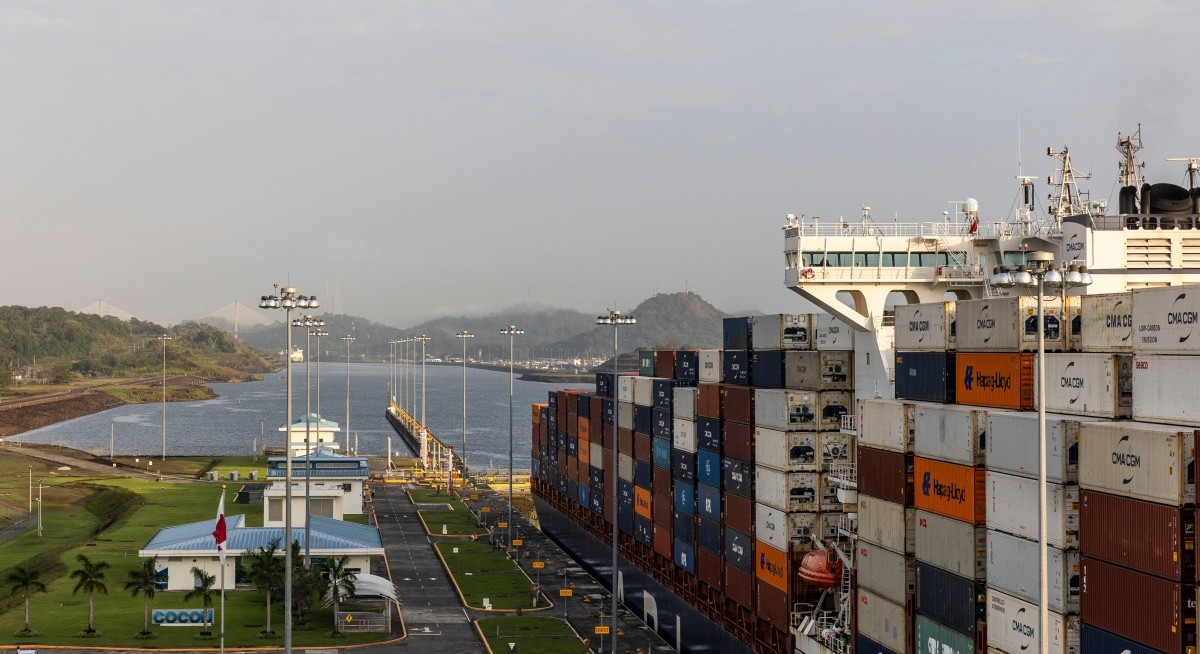


(April 17): Tankers and cargo ships are facing three-and-a-half day waits to enter the Panama Canal as the Iran war sparks a surge in traffic, prompting one vessel to plunk down an extra US$4 million to jump to the front of the line.
The queue at the 50-mile (82km) waterway — the longest since a historic 2023-2024 drought that slashed vessel passages — has grown as the near-shutdown of the Strait of Hormuz strangled oil, natural gas, fertiliser and chemical shipments from Persian Gulf nations. In response, buyers scrambling for alternative supplies are relying on the canal to send those deliveries to markets in Asia and beyond.
A tanker hauling liquefied petroleum gas agreed to pay US$4 million in a canal auction in recent days to expedite its passage, according to people familiar with the matter who asked not to be identified discussing non-public matters. That was up from less than US$1 million that some vessels were paying to bypass the line as recently as early March, during the first weeks of the Iran conflict.
The auction fee is on top of the normal cost to sail the canal, which can run in the hundreds of thousands of dollars, depending on the vessel and its cargo.

Ships that make a reservation to enter the canal don’t need to wait in line as long as they show up at their appointed time, a representative for the waterway said in an emailed statement. Most vessels arrive with a booking, the representative said.
See also: US plans 4,000-acre hub in Philippines to boost supply chains
The Gas Virgo, a Singapore-flagged tanker controlled by China’s Wanhua Chemical, transited the canal on Wednesday carrying LPG from Texas, according to data from energy analytics company Vortexa. LPG is a byproduct of oil refining and natural gas processing that is used in everything from household stoves and forklifts to chemical production lines.
A spokesperson at Wanhua Chemical’s headquarters in Yantai declined to comment.
“Transits through the canal have become busier in recent weeks on the back of higher US export flows of various cargoes, leading to the heightened congestion,” said Clarksons Securities analysts in a note, including Omar Nokta.
See also: America vs China: Asymmetry between product marketplace and stock market of the two economic giants
“The recent result of an auction awarded to an LPG vessel reflects temporary market shifts and are not the result of a fee set by the Panama Canal,” the canal authority wrote in an emailed response to inquiries. “Auction values are determined by multiple factors, including the urgency and commercial priorities of individual clients, as well as broader supply-demand conditions in global commerce, and consider other factors such as freight rates and bunker prices.”
The wait time is the median over a seven-day period for all commercial cargo, according to data compiled by Bloomberg, which includes vessels with and without reservations in both directions.
“Competition for transits is therefore expected to stay firm, underpinning elevated premiums in the near term,” according to a note by Odin Marine Group.
Almost seven weeks since the outbreak of the US-Israeli war on Iran, Asian nations that normally are heavily reliant on Persian Gulf crude, gas and feedstocks are increasingly turning to the US for alternative supplies. LPG shortages have proven particularly acute in countries such as India that use the fuel for household cooking.
Uploaded by Isabelle Francis




