


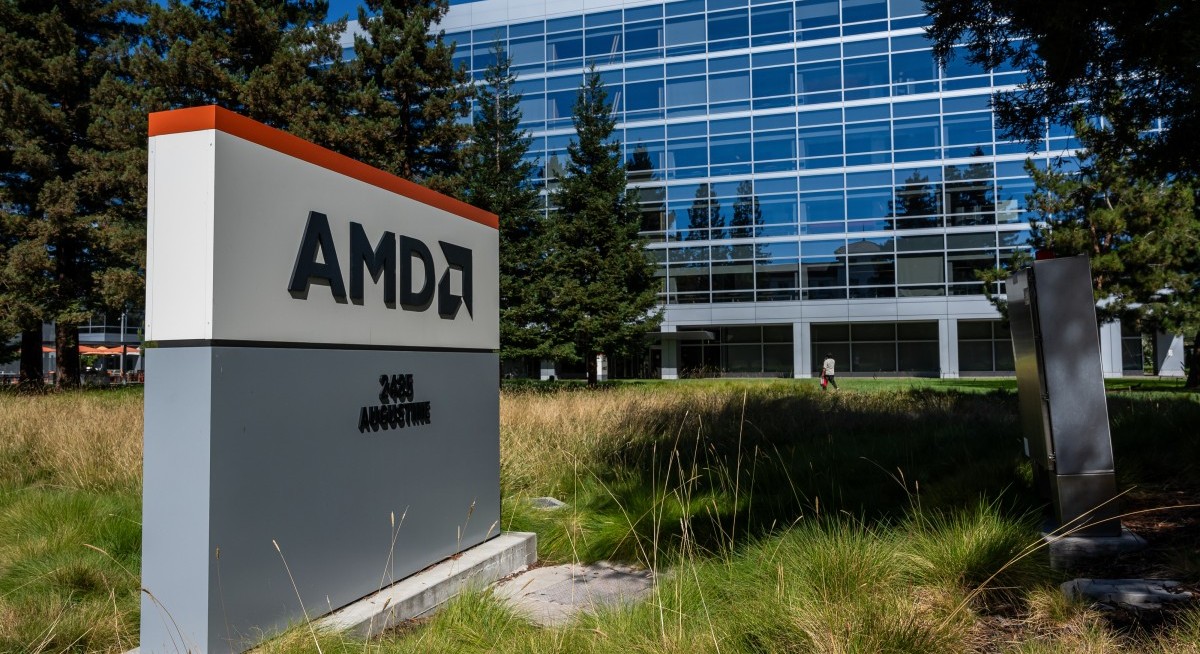


(May 6): Advanced Micro Devices Inc (AMD), the leading challenger to Nvidia Corp in AI computing chips, gave a surprisingly robust sales forecast, showing that it’s cashing in on a flood of data centre spending.
Second-quarter revenue will be US$11.2 billion, plus or minus US$300 million, the company said in a statement on Tuesday. That compares with an average analyst prediction of US$10.5 billion, according to data compiled by Bloomberg.
AMD shares rose as much as 8.7% in extended trading following the announcement. The stock earlier closed at US$355.26 in New York trading, leaving it up 66% this year.
The outlook signals that AMD is winning orders from the biggest spenders on artificial intelligence (AI) computing. Though Nvidia remains the dominant provider of AI processors, data centre customers are increasingly seeking alternatives — a trend that has helped AMD.
There’s a massive amount of money at stake. Alphabet Inc’s Google, Amazon.com Inc and other so-called hyperscalers have indicated that they will spend as much as US$725 billion in 2026 on AI.
AMD is the second-largest maker of AI accelerators — chips that are used to train and run artificial intelligence services. It still trails Nvidia in that market by a wide margin.
See also: Hackers used AI to build zero-day attack, Google researchers say
AMD’s product lineup also includes microprocessors that serve as the heart of server computers, an area where it has taken market share from Intel Corp. All three companies make graphics chips that are used in laptop and desktop PCs.
AMD’s first-quarter sales rose 38% to US$10.3 billion. Profit, minus certain items, was US$1.37 a share. Analysts had predicted revenue of US$9.89 billion and earnings of US$1.28 a share.
Revenue at its data centre business grew 57% to US$5.8 billion. Analysts had predicted US$5.61 billion on average. Personal computer-related sales rose 23% to US$3.6 billion.
See also: OpenAI to buy consulting firm for private equity joint venture
AMD has benefitted from renewed interest in its central processing units, or CPUs. That type of generalist chip is increasingly being deployed in gear used to run AI software.
The data centre CPU market will grow at “greater than 35% annually, reaching over US$120 billion by 2030,” AMD said. As recently as November, at the company’s analyst day, it was forecasting an 18% rate of increase.
“In response to this demand, we are working closely with our supply chain partners to meaningfully increase our wafer and back-end capacity to support this growth,” chief executive officer Lisa Su said on a conference call with analysts.
AMD’s server CPU revenue will grow more than 70% in the current quarter, the company said, and “robust growth” will continue through the second half of 2026 into 2027.
Su also said the company had growing confidence in its ability to generate tens of billions of dollars in annual data centre revenue next year. She expects to exceed AMD’s long-term growth target of greater than 80% in the coming years.
The industry does face some challenges, though. Like other tech companies, AMD is contending with an unwanted side effect of the build-out in new AI data centres: a memory shortage. Computers in those facilities require a vast amount of high-performance memory chips.
That’s created an incentive for memory manufacturers to focus on that part of the business, rather than making as many of the regular chips used in laptops and other devices. The PC industry is projected to make fewer machines as a result.
“We are planning for second half PC shipments to be lower due to higher memory and component costs,” Su said on Tuesday. “Against this backdrop, we still expect our client revenue to grow year-on-year and outperform the market.”
Uploaded by Isabelle Francis




