


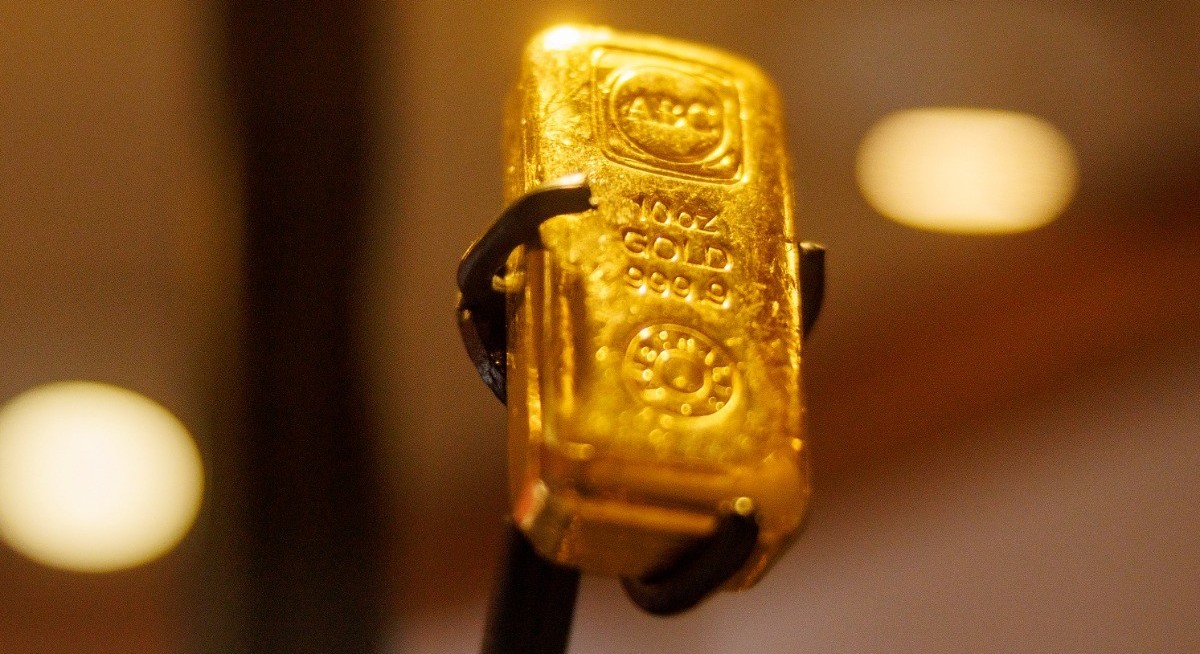


(May 13): India has more than doubled import tariffs on gold just days after Prime Minister Narendra Modi asked citizens to stop buying the metal for at least a year.
The move is aimed at shoring up foreign-exchange reserves as India’s external finances come under pressure from the war in the Middle East and resulting surge in energy prices. The country is among those most vulnerable to the disruption of oil and gas shipments through the Strait of Hormuz.
Modi has portrayed the decision as a way to safeguard the national economy. Whether it works remains to be seen: Gold is deeply rooted in Indian society, where many see it as the only safe way to preserve their precious savings.
How much gold do Indians buy?
For hundreds of millions of Indians, gold is a necessity.
It is how families mark life milestones, transfer wealth across generations and express love at weddings, where a bride’s jewellery is not just an adornment but the financial security she carries into her new life. Every wedding season, every festival, every auspicious date on the calendar sends buyers flooding into jewellers across the country.
See also: Gold declines as jump in US inflation lifts rate-hike odds
Over generations, that relentless consumption has accumulated into a vast stockpile dispersed across the country.
The country is the world’s second-biggest consumer of gold, surpassed only by China, importing roughly 600 to 800 tons of the precious metal every year. Morgan Stanley estimates Indian households hold around 34,600 tons of the metal — rings, bangles, necklaces, bars — tucked into lockers, temple vaults and ancestral trunks from Mumbai to Kolkata. At current international prices, that would equate to a staggering US$5.2 trillion ($6.6 trillion).
Why is gold central to India’s economy?
See also: Gold steady as shares uptick counters Hormuz, inflation concerns
Gold’s role as a safe-haven asset and a hedge against inflation makes it highly valuable for Indian households.
Particularly in rural areas and the informal economy, gold is the only savings instrument many Indians have ever trusted.
There is no universal pension and no social safety net that reaches every household. When the harvest is good or a business turns a profit, gold is where the surplus goes: It is tangible, portable, no paperwork is required and it is nobody else’s liability.
Where does the gold come from?
India produces negligible amounts of gold domestically, making it almost entirely dependent on the rest of the world, bringing in the metal from places such as Dubai, Hong Kong and Switzerland.
Banks import much of India’s gold, which they supply to jewellers and dealers across the country, while refiners bring in raw ore to process locally. Every ounce that arrives must be paid for in dollars, which is where the economy feels it.
Gold is the biggest commodity on India’s import bill after crude oil, and when demand rises — as it does during wedding seasons, festivals or periods of global uncertainty — the import bill swells with it.
To stay ahead of Singapore and the region’s corporate and economic trends, click here for Latest Section
Why does Modi want to stop Indians buying gold?
India’s enthusiasm for gold widens the trade deficit, putting pressure on the rupee. The Indian currency has weakened by around 6% against the dollar this year, making it the worst performer among major Asian currencies, and hitting a record low. Foreigners have pulled more than US$22 billion out of local stocks this year, weighing further on the national current-account deficit.
India’s government hopes a slowdown in gold imports will improve the trade and current-account balances, safeguard the rupee and free up foreign reserves to buy more oil, liquefied petroleum gas and fertilisers. Prices of these critical inputs for the Indian economy have surged due to the war in Iran, causing shortages and spurring inflation.
Policymakers have often considered gold imports to be non-essential (they drain dollars from the national reserves without boosting domestic industries) and have made repeated efforts to restrict them. By discouraging voluntary, non-essential purchases — particularly for weddings — the government aims to stem the outflow of dollars, according to Sakshi Gupta, an economist at HDFC Bank Ltd.
Will the measures actually work?
The higher import duty will make gold meaningfully more expensive for every buyer in the chain, from the bullion dealer to a bride’s family. That is likely to discourage some demand, although the extent to which Indians will actually stop buying gold for weddings, for example, remains to be seen.
Gold’s rapid price growth in the past couple of years may lead some local investors and traders to conclude that it is still worth buying, as any further gains could cancel out the impact of the higher prices. The policy also carries a well-documented risk: The higher the duty, the greater the profit margin for those willing to smuggle the precious metal into the country.
The government is now considering whether to broaden its efforts beyond gold by curbing imports of other non-essential items such as electronic goods, according to people familiar with the matter.
Uploaded by Tham Yek Lee




