




According to the World Gold Council’s (WGC) Central Bank Gold Reserves Survey 2026, 49% of respondents say they store part of their gold reserves domestically, a dip from 59% in 2025 but higher than the 41% recorded in 2024. Notably, 9% of respondents say they have increased their domestic storage of gold in the past 12 months, compared to 5% last year. In fact, 7% of respondents told the WGC that they are planning to increase their domestic storage of gold in the coming year.
Leading this charge is India, which has been rapidly ramping up the amount of gold it has been moving back home. Back in 2022, India held about 38% of its gold domestically but in 2025, that number went up to more than 65%, according to data from the Reserve Bank of India.
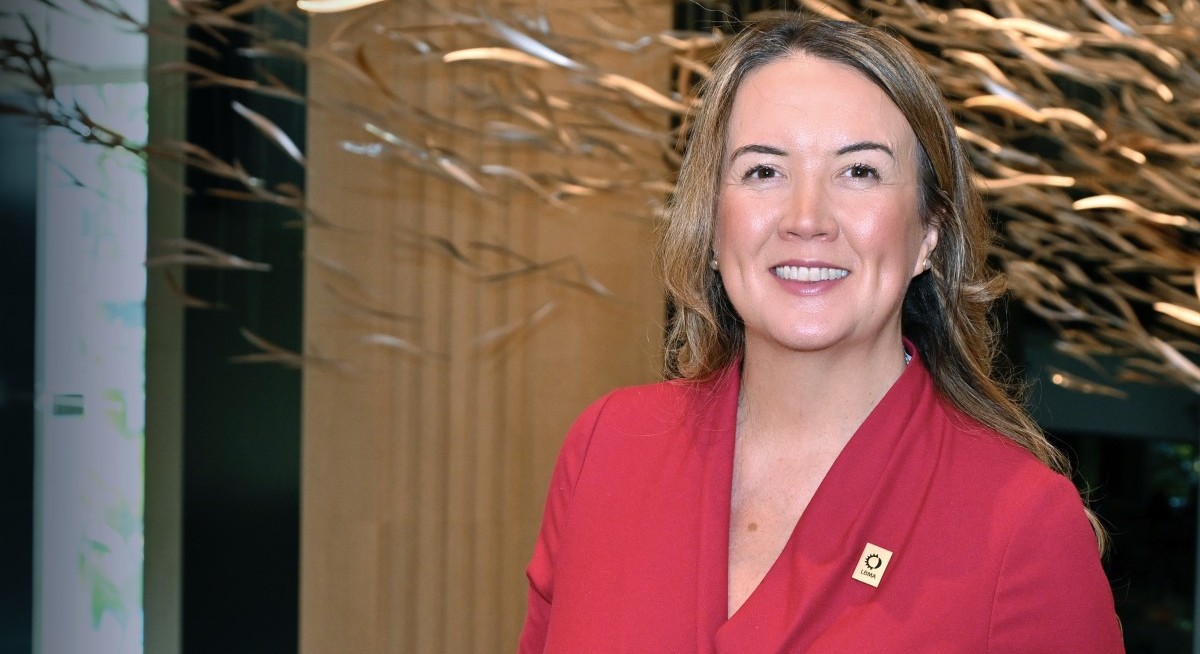
“Repatriation is not a new concept,” says Ruth Crowell, the CEO of the London Bullion Market Association (LBMA). Crowell spoke to The Edge Singapore on the sidelines of the 9th Asia-Pacific Precious Metals Conference (APPMC) held in Singapore on June 15.
“I think the challenge is when you do repatriate, you reduce the liquidity of your metal if you are holding it outside of a financial services hub,” Crowell adds. “It has to be verified to re-enter. One of the benefits of holding gold, at say the Bank of England and within the London market [is that] if you wish to use your gold, in terms of whether it is lending etc., you can do that seamlessly without having to have the gold verified.”
See also: Central banks plot domestic and diverse gold storage locations, expect USD holdings to decrease
Central banks who are rushing to move their gold back home might be missing out on the benefits of being a part of that ecosystem. Gold may be a precious metal but part of its value comes from the market system that regulates the flow of buyers and sellers.
“One of the key misconceptions that we've been talking about in the market is that there are two aspects to a delivery,” Crowell adds. “One, is the list of eligible brands, and two, is verification by a gatekeeper or London custodian that the bar is good for delivery in London. When you move your metal out of that secure infrastructure, to re-enter, it can be time consuming.”
Gold hubs galore
See also: Singapore to launch OTC gold clearing system and central bank gold vaulting services
Crowell has been at the helm of the LBMA for more than a decade. She first joined the association in November 2006 and held appointments such as commercial director and deputy CEO. In January 2014, Crowell was made CEO of the LBMA.
In her special address to APPMC attendees, Crowell noted the heightened interest in gold at a time of immense geopolitical uncertainty. “The wider world is waking up to something we have known for a very long time. Gold is critical. It's a critical part of any portfolio,” Crowell says. “Gold is having a mainstream moment.”
That interest has seen countries such as Singapore and Hong Kong angling to become Asia’s regional gold hub. In January, Singapore established the Gold Market Development Working Group. The group, which is led by the Monetary Authority of Singapore (MAS) and the Singapore Bullion Market Association, has been tasked with developing policies to help position the city-state as a gold trading hub in Asia.
Deputy Prime Minister and Minister for Trade and Industry Gan Kim Yong unveiled some of these new policies during his opening address at the APMC. As part of Singapore’s push, the Singapore Exchange (SGX) will establish an over-the-counter (OTC) gold clearing system by the end of this year and central bank gold vaulting services by October 2026. Six bullion banks, DBS Bank, Deutsche Bank, ICBC Standard Bank, JP Morgan, Oversea-Chinese Banking Corporation, and United Overseas Bank, will participate in the new clearing system as members. The system will support both large bars and kilobars, the preferred standard for the London market and Asian markets respectively.
“Building on existing interbank activity, this will support a deeper and more liquid market over time. We are also exploring a physically deliverable gold futures contract to give the market an exchange-based tool for price discovery and risk management,” says Loh Boon Chye, SGX Group CEO.
To support greater capital deployment into physical gold among eligible funds and family offices, Singapore will remove the 5% cap on physical investment precious metals under the tax incentive schemes for funds. The MAS will be providing further details on this by September.
“We are not seeking to replace established centres of gold trading and liquidity,” says Gan, who is also the MAS. “Instead, Singapore can serve as a trusted node in the global gold ecosystem.”
To stay ahead of Singapore and the region’s corporate and economic trends, click here for Latest Section
It’s not a race
Rival financial centre Hong Kong has been wooing gold investors as well. In March, Bloomberg reported that Hong Kong had been inviting central banks that were friendly to China to be a part of its gold-clearing system. More recently, the outlet reported on May 20 that the city aims to launch its new gold-clearing system in July.
It is worth asking if the region is big enough to accommodate not one, but two gold trading hubs in Asia. Crowell, however, says Singapore and Hong Kong are not locked in a zero-sum game because of their similar ambitions.
“It’s an exciting moment. The press likes to say it’s a competition between centres. I actually think they can complement each other. Both Hong Kong and Singapore play important roles,” Crowell says.
“The announcement from the MAS is a very important, that they will provide client services for other central banks. It’s welcomed and certainly something that we would see as a positive for the global market. Hong Kong, as well, has been a traditional global centre, so the idea that they want to clear gold the way they clear US dollars when the Fed is asleep is beneficial. So, I don't see it as competition, I see it as something that should be linked.”
Instead, what’s more important for Crowell is whether these new, aspiring hubs are able to integrate themselves into the global system. Ensuring that their good delivery standards remain international will prove to be critical in ensuring the liquidity of gold, she says.
Pause in purchases
On June 2, the European Central Bank (ECB) revealed that gold has overtaken US Treasuries as the world’s top reserve asset. According to the ECB’s report, the share of gold in total official foreign reserves rose to 27% at the end of 2025, up from 20% at end-2024. In comparison, the share of US Treasuries fell to 20% from 22% over the same period.
“However, this development largely reflects valuation effects,” the ECB writes. “In nominal terms, the gold price surged by around 60% and 30% in 2025 and 2024 respectively, which mechanically increases the share of gold in total official foreign reserves.”
Central banks have been one of the biggest buyers off gold in recent years. In 2025, central bank demand for gold was 863 tonnes, nearly double the annual average of 473 tonnes between 2010 and 2021. While central bank purchases of gold have remained elevated, the numbers have started to taper off from the 1,000 tonne levels seen between 2022 and 2024.
“At the moment, we have seen a little bit of a pause or a slowing down in terms of purchasing. A lot of central bankers are looking to see what happens next. I think that’s not due to a lack of interest in gold,” Crowell says.
Gold has become a significant part of the reserve architecture, she adds. The slight dip in gold purchases may be the result of central banks adopting a wait-and-see approach given the geopolitical uncertainty in the Middle East.
On June 14, President Donald Trump said the US had struck a peace deal with Iran. Both countries had gone to war after the US and Israel mounted a joint military strike on Iran on Feb 28, 2026. This resulted in the closure of the Strait of Hormuz, which sees about 20% of the world’s oil and natural gas pass through its waters, sending energy prices soaring. Trump says the Strait of Hormuz will be reopened on June 19 as part of the deal.
“We saw the news in terms of the ceasefire. How will gold continue to perform throughout the year? So, it's a long way to say I think central bank demand will continue, but I think we might see some pauses from time to time,” Crowell says.




