


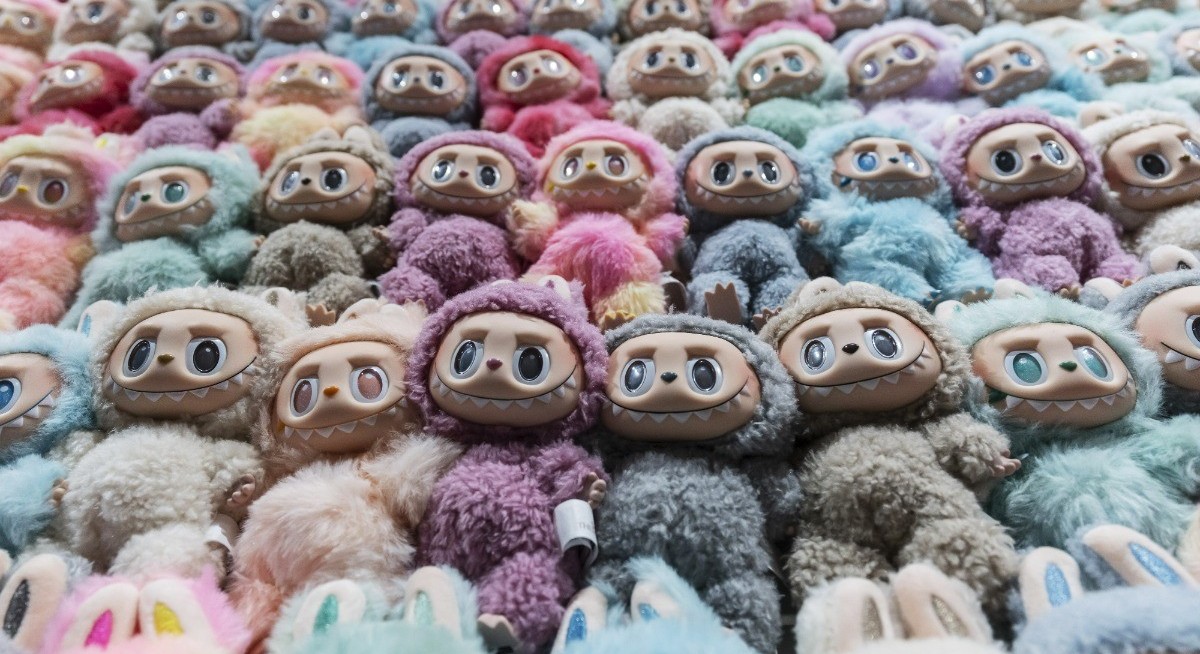


(April 2): A relentless sell-off in Pop Mart International Group Ltd shares is showing little sign of bottoming out as scepticism deepens over the toymaker’s Labubu-led growth.
The stock plunged more than 30% over five sessions through Tuesday after the company’s earnings results showed a rising dependence on the snaggle-toothed monster dolls. That extended a drop from its record high in August to nearly 60%, wiping out about US$33 billion ($42.5 billion) from its market cap.
Pop Mart’s latest earnings tipped market sentiment decisively bearish. A wave of price‑target cuts, rising short interest, and a stock slide that persisted despite multiple buy-backs signal growing concerns over the company’s ability to replicate Labubu’s success with other products.
“We don’t think the market has fully factored in a long downcycle scenario with a much lower margin,” said Sammi Xu, a consumer analyst at Deutsche Bank AG, who downgraded the stock to 'sell' after its results. Weakening sales overseas and in China, high inventory and a continuous downward revision on earnings are main pressure points this year, Xu said.
The popularity of Labubu dolls exploded globally last year — a rare example of Chinese soft power resonating in Western markets — sending Pop Mart shares soaring about 300% from early 2025 to an all-time high in August. But persistent worries that the Labubu craze could fade has weighed on the stock since.

See also: Value Unlock: A good start. But is it enough?
Efforts to diversify its intellectual property (IP) have yet to emerge as meaningful growth drivers. The Labubu-led Monsters series accounted for about 40% of total revenue last year, up from 23% in 2024. Meanwhile, other high-profile figures including Crybaby and Molly posted weaker-than-expected sales.
Pop Mart’s inventory turnover days has also increased 21% from a year ago to 123 days as of end 2025. The company attributed the rise to longer transportation lead time, higher sales to markets abroad and a wider network of stores.
Even cheaper valuations and stock buy-backs are not enough to lure investors. Pop Mart has purchased around HKD1.3 billion (US$166.0 million or $213.6 million) worth of shares since a record daily drop of 23% on March 25. The stock now trades at a record low level of 10.3 times forward earnings, compared with its three-year average of 24 times.
See also: As market shifts, remisiers rally to ‘regroup, reskill and rebound’
“The current share price isn’t expensive, but that can be said of many Chinese consumer stocks trading at similar valuations,” said Angus Lee, a fund manager at Sparx Group Co. “What has set Pop Mart apart is the narrative, whether it’s Labubu or the next hit IP and their ability to succeed globally, but right now, that story feels uncertain.”
To win back investors, Pop Mart needs to demonstrate it can sustain the popularity of its signature IPs from Labubu to Molly, while showcasing its ability to introduce the next blockbuster character, he said. Lee, who started accumulating Pop Mart shares early last year, exited all his positions after the company announced its results.
A Pop Mart spokesperson declined to comment.

The company has accelerated the launch of other emerging characters such as Skullpanda and Twinkle Twinkle, unveiling new collections and crossover series that blend various IPs. At the same time, it’s working on a broader push to extend Labubu’s global appeal from collaborations with Sanrio Co and Fifa World Cup to a planned animated film in partnership with Sony Pictures Entertainment Inc.
Pop Mart shares fell 2.4% on Thursday after closing 1.2% higher on Wednesday.
For now, short sellers have added to their positions in the stock with 123 million shares borrowed and sold short, up 16% from before the results, according to S3 Partners data. Options traders also loaded up bearish contracts, pushing put volume on Pop Mart to a record high on Wednesday.
“The market underestimates the challenges ahead,” said Melinda Hu, a consumer analyst at Bernstein, who was for months the lone sell-side bear on the stock. “Signs of slower growth, margin normalisation, or IP fatigue could drive meaningful multiple compression and consensus forecasts are likely to be revised downward.”
Uploaded by Tham Yek Lee




