


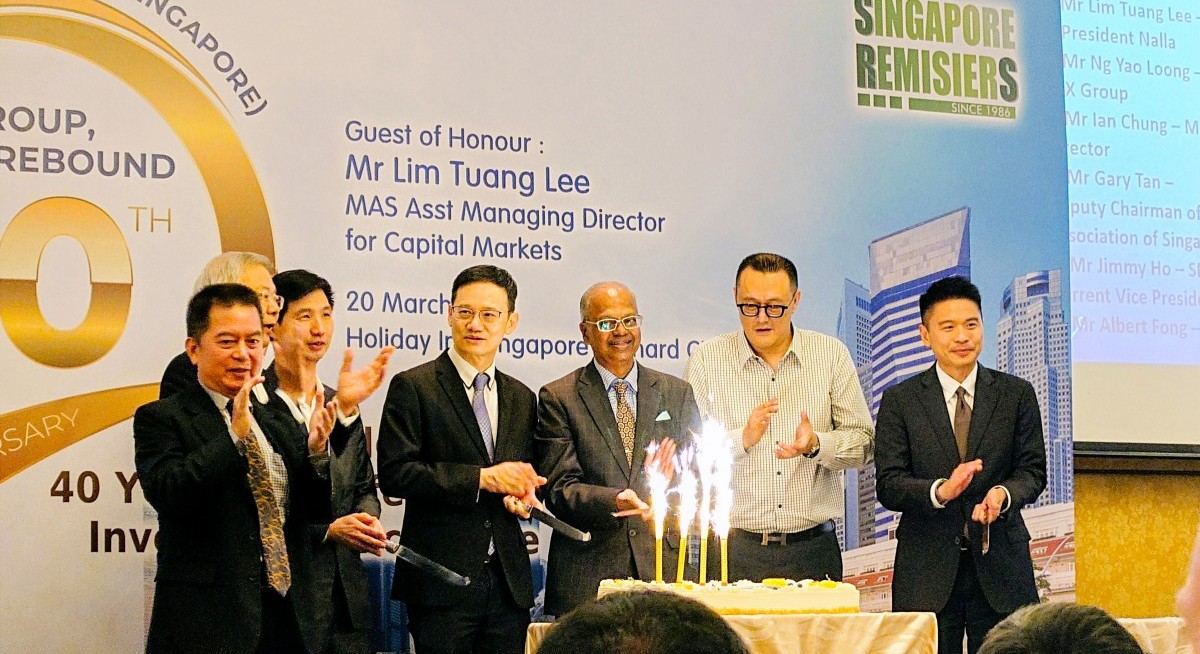


Early on, remisiers occupied a distinctive position. Conjoined as they are with their respective brokerages, they operate with a high degree of autonomy and have been directly responsible for client relations and credit risk long before risk management became formalised. “This independence fostered entrepreneurship and close client ties, but also exposed practitioners to uneven practices and systemic vulnerabilities — underscoring the need for shared standards and collective representation,” reads the society’s (SRS) remarks in the book.
It was the need for a collective voice in the wake of the 1985 Pan Electric crisis that led to the formation of SRS, under the leadership of founding president Lee Wee Seng. To help stabilise the market, the government set up a so-called “lifeboat fund” to support distressed brokerages, and remisiers, despite their job nature, were required to contribute part of their commissions to the fund. After months of engagement, the plan was scrapped in November 1986, not long after SRS was formally registered.
Over the years, SRS would help speak up for members and the profession over various other issues such as standardising transfer fees when remisiers move between brokerages; access to IPO allocations; and reinstating lunch breaks in the Singapore Exchange’s (SGX) trading hours.
In recent years, as markets evolve and the use of newer ways of trading becomes a default, SRS has been putting in more effort, too, towards ensuring its members and the profession at large continue to play a key role in today’s market ecosystem.
See also: DBS likes 'pick-and-shovel' firms as AI and energy drive new global capex supercycle
S Nallakaruppan, current president of SRS, has identified three key themes for SRS to focus on. First, regroup. He says that with more fintech brokerages entering the market alongside mainstream brokers, where remisiers ply their trade, brokerage rates have been reduced “substantially”.
Nallakaruppan says that the way forward for remisiers to survive and thrive in this highly competitive environment is to move up the value chain and evolve from a purely transaction-based model to a value-added fee-based model providing discretionary portfolio managed services to clients. The society, he says, has had “constructive” discussions with the Monetary Authority of Singapore (MAS), the Securities Association of Singapore (SAS), and SGX. “I’m hopeful that one day ... remisiers could be great and trusted financial confidants to our clients,” he says.
Next, remisiers need to continue in their efforts to reskill. In 2024, SRS, together with the SAS launched the Remisier Development Programme. The scheme received support from MAS, Institute of Banking and Finance, as well as SGX. Thus far, more than 500 remisiers have taken part in three courses that were organised: on using AI, essentials of securities trading, and personal branding. “We’ll continue to organise suitable programmes for remisiers that are relevant to the market needs,” Nallakaruppan adds.
See also: Clear cut case of no rate cut, no shortcut to lower US debt: Yellen
The third theme is “rebound”. He believes that with stronger networks and sharper skills, this industry will “rebound, in reputation, in opportunity and in value added services delivered to clients”.
“Rebound is not simply recovery; it is improvement. We will help members adapt business models, embrace responsible innovation and seize new markets so remisiers emerge more competitive and more trusted than before,” he says.
The role of remisiers has received recognition from other key members of the market ecosystem. “Over the decades, remisiers have stood as the vital bridge between the movements of financial markets and clear investment decisions,” says Luke Lim, chairman of SAS. He notes that remisiers help clients translate complexity into clarity, build trust through sound judgement, and guide generations of investors with “a deeply human touch”.
“Remisiers, with their expertise, trustworthiness and human touch, will continue to play a pivotal role in connecting investors to opportunities and fostering investor confidence,” says Lim, whose day job is the managing director of Phillip Securities.
Ng Yao Loong, head of equities at SGX, calls the exchange’s partnership with SRS one that is built on a shared commitment to build a strong and trusted Singapore stock market. More than that, remisiers are playing a key role within the wider market ecosystem.
“While there is a wealth of information, there is often a poverty of attention. Investors are looking for guidance that filters out noise, and brings together investing or trading decisions with broader, long-term financial considerations. The value of the modern remisier therefore lies in insight, perspective and advice,” says Ng.




