


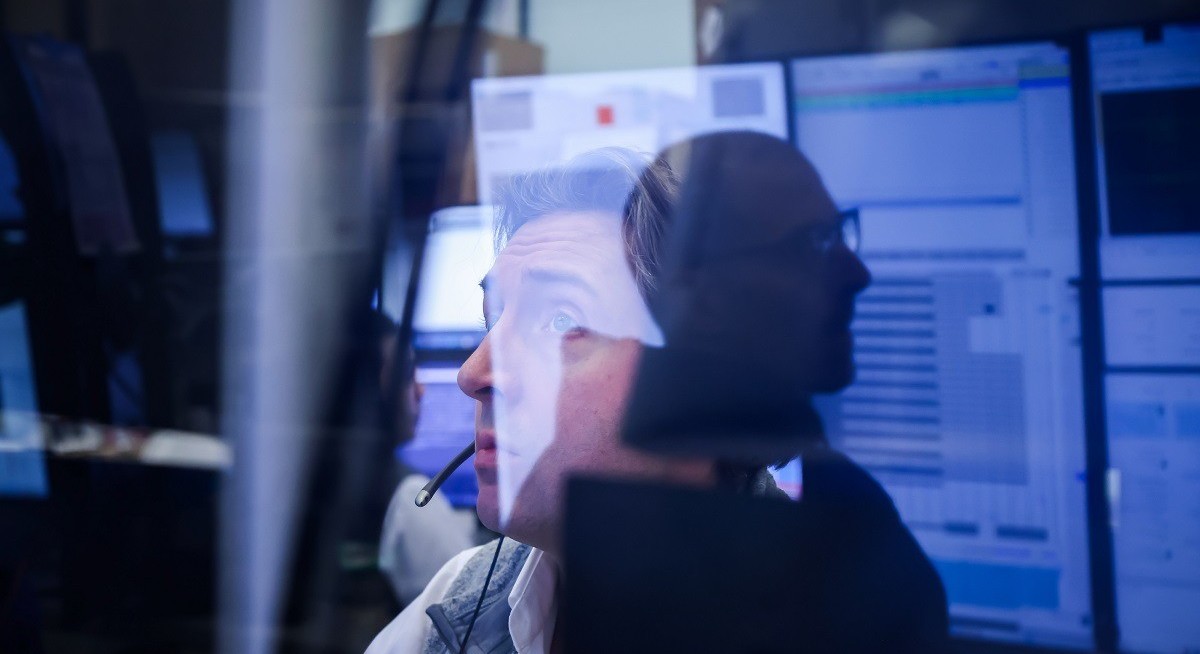


The subdued action contrasts with the extreme turbulence driven by the tariff storm earlier in the year that put the equity benchmark on the brink of a bear market. Since then, stocks have surged, with every dip being bought at a record pace and the fear of missing out dominating sentiment.
While the impressive rally briefly stalled as exuberance over artificial intelligence was questioned in the final stretch of the year, bets the Federal Reserve will have further room to cut rates in 2026 kept fuelling optimism over Corporate America’s profits.
“Investors should position for further advances in equity markets,” Ulrike Hoffmann-Burchardi at UBS Global Wealth Management said this week. “We maintain our attractive rating on US equities. We find compelling opportunities in tech, health care, utilities, as well as financials, which should broaden the foundation for further gains.”
As traders parsed the latest economic data, they’ve kept their call that the Fed makes two quarter-point reductions in policy rates next year, one more than officials’ median forecast.
See also: Stocks tumble as risk mood sours, gold rebounds
Applications for US unemployment benefits fell last week, highlighting the seasonal swings in the data at this time of year. Wednesday’s figures are consistent with a labor market seeing relatively low layoffs, a trend that has remained intact throughout the year despite heightened economic uncertainty.
“For now, we expect two rate cuts next year, likely in the first half, and, provided unemployment doesn’t spiral, a resilient economy, cooling inflation and easier policy should be supportive for risk assets,” Magdalena Ocampo at Principal Asset Management said this week.
In a fifth straight day of gains, the S&P 500 topped 6,930. A closely watched volatility gauge — the VIX — hit the lowest this year. The yield on 10-year Treasuries slid three basis points to 4.13%.
See also: Days of Being Wild: Will Hong Kong get its mojo back?
Gold steadied after a rally that took the precious metal to an all-time high above US$4,500 ($5,779) an ounce.
“The stock market is finally starting to eke out some gains for December after a choppy few weeks, and just in time for the market’s Santa Claus rally, which we expect to take place in its typical format,” said Paul Stanley at Granite Bay Wealth Management.
Meantime, breadth is becoming healthier, with an increasing number of stocks participating in the rally.
“Markets remain constructive, but selective,” said Craig Johnson at Piper Sandler. “The combination of improving breadth and easing inflation supports the call for a Santa Claus rally.”
Seasonal tailwinds may help, but confirmation via breadth and participation is still required, Johnson noted.
“If the historical pattern holds, it puts the market right around a 20% year,” said Mark Hackett at Nationwide. “But, while there’s clearly more to like than not right now, be careful about extrapolating another 20% run next year once momentum cools.”
The S&P 500 has risen nearly 18% so far this year, heading toward a third consecutive double-digit gain, also known as a “three-peat,” according to Sam Stovall at CFRA. A “four-peat” is highly unlikely, he said.
To stay ahead of Singapore and the region’s corporate and economic trends, click here for Latest Section
Since 1945, Stovall noted the S&P 500 recorded only one four-peat (1949-1952) and one five-peat (1995-1999). Of course, past performance is never a guarantee of future results, he warned.
Sell-side strategists across major firms have issued year-end targets for the S&P 500 that are clustered the tightest in almost a decade. With the highest forecast from Oppenheimer & Co at 8,100 and the lowest from Stifel Nicolaus & Co at 7,000, the gap in their annual outlook is just 16%.
“The consensus among Wall Street investment strategists is that the magic will last,” said Ed Yardeni of eponymous firm Yardeni Research, who has a forecast of 7,700 for the US equity gauge.
“However, the first half of 2026 could see a correction if bond yields rise significantly, given mounting concerns that monetary and fiscal policies might be overly stimulative,” Yardeni said.
Meantime, questions about a shift in leadership have surfaced amid lofty tech valuations and concerns about ambitious AI spending plans.
“Investors often view the Magnificent Seven stocks as a single, unified force, assuming they move in lockstep and that the broader market’s success depends on their leadership,” said Brian Levitt at Invesco. “This perception is understandable given their outsized weight in major indexes, but it oversimplifies reality.”
In fact, Levitt notes that the narrative doesn’t match the numbers. Most of these megacaps are actually rising less than the S&P 500 this year.
“Valuations in tech are high, but some Magnificent Seven names have actually underperformed the S&P 500 this year, which suggests that there is still more room to run and that not all tech stocks are trading at runaway or complacent valuations,” Granite Bay’s Stanley said.
“Seasonals remain favorable, and we see at least 5% upside into year-end,” said Thomas Lee at Fundstrat Global Advisors. “And this is arguably the base case, given that in 2025, the Fed only started cutting in September.”
Lee noted that this mirrors September 1998 and September 2024. In both instances, S&P 500 gained 13% in the fourth quarter.
The Fed’s latest cut on Dec 10 faced three dissents, the most since 2019. Officials are divided about the appropriate path for rates, with some policymakers more concerned about a cooling labour market and others saying the central bank should prioritise reining in above-target inflation.
President Donald Trump last week said he had narrowed his list for Fed chair nominees to “three or four” candidates and expected to have a decision pretty quickly, with an announcement “over the next couple of weeks.”
“The Federal Reserve will likely refrain from any more rate cuts until there is a new Fed Chair mid-year,” said Clark Bellin at Bellwether Wealth. “We believe stocks can move higher during this time even without additional rate cuts from here.”
Uploaded by Magessan Varatharaja




