


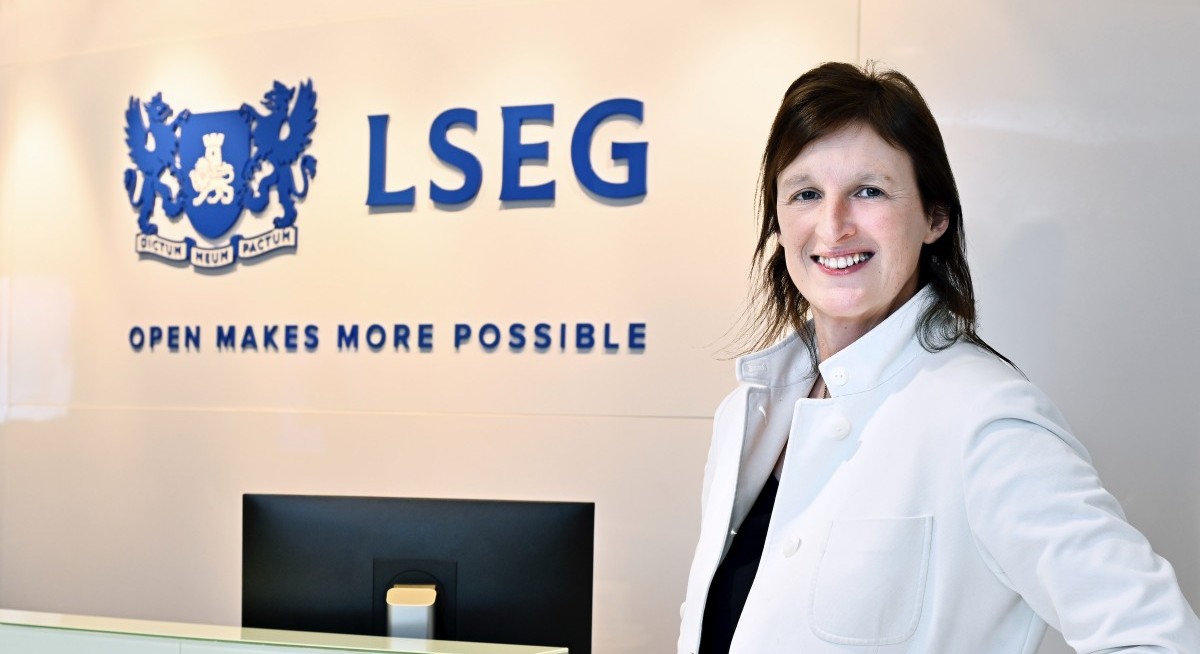


To FTSE Russell CEO Fiona Bassett, the STI’s reputation as a staid index is far from a drawback. In her view, the real test of an index benchmark is its ability to withstand the test of time. “The STI celebrates 60 years today and that is evident of how it has been designed, but also critically of how it has evolved.”
The STI marked its 60th anniversary on Jan 5, the first Monday of the year, at the Singapore Exchange (SGX). In his speech, Minister for National Development Chee Hong Tat, who double-hats as deputy chairman at the Monetary Authority of Singapore (MAS), cheered STI’s total returns of over 28%.
For what it’s worth, the STI, despite the new highs, shows no signs of slowing. As at Jan 21, the STI closed at a record 4,849.10 points on Jan 16, an achievement after hovering between 2,500 points and 3,000 points for the past 10 years.
The index — and the Singapore equities market — had previously faced a dearth of IPOs and liquidity, prompting many market watchers to call for change. This culminated in MAS’s equities market review in August 2024. Even when the STI reached a 17-year high in 2024, long-time observers like PhillipCapital’s Paul Chew, remarked that the market had effectively achieved “nothing” over the past 17 years with average returns of around 4.5% per year, including dividends.
See also: Stocks fall as Trump says Iran truce is over
While Bassett conceded that the STI is known for offering “really attractive” dividend yields, around 4% as at Jan 5, she stressed that the STI is “far more than just a dividend index”.
Today, the STI covers about 85% of Singapore’s market capitalisation and maintains an almost 100% correlation with the overall market.
The blue chip index was created in 1966, a year after Singapore gained independence, with a base price of 100 on Dec 30, 1966. Originally called the Straits Times Industrials Index, it tracked industrial stocks, reflecting Singapore’s young economy at the time.
See also: Asian stocks slip as tech weakness weighs, Samsung falls
In 1998, the index was rebranded as the Straits Times Index to better represent the country’s changing economic landscape. The STI underwent another overhaul in 2008 as part of a new partnership between Singapore Press Holdings, SGX and FTSE.
“When you look at the STI, it’s really historically served as Singapore’s primary equity market indicator,” Bassett notes.
While she acknowledged the three local banks’ significant percentage of the index, Bassett adds that the index was meant to capture the largest and most liquid stocks on the SGX’s Mainboard. “I think in many ways, the composition or weighting to banks is really reflecting the importance of Singapore as the regional financial hub and the role it plays in the overall global ecosystem.”
Reflecting Singapore’s regional focus, Bassett points out that over 40% of the constituents derive revenue from Greater China, India and other Asean countries.
“So yes, [the STI] provides, on a comparative basis, strong dividends, but I think it’s also a really strong investment case in its own right, and certainly when you look at the correlation to other global indexes, it really provides diversification to investors’ portfolios. And I think that’s really what’s continuing to fuel demand,” she says.
The STI’s rally has prompted a flurry of bullish commentary from analysts, who are punting on how high the index can go. In October, DBS Group Research’s group head Timothy Wong made headlines when he predicted that the STI could reach nearly 10,000 points by 2040.
When asked for her prediction, Bassett demurred and explained that FTSE Russell’s job was to uphold the “integrity of the STI” by making sure that it “continues to be a reflection of Singapore’s equity market.”
To stay ahead of Singapore and the region’s corporate and economic trends, click here for Latest Section
“As an index provider, our role is really not to predict those market levels, but really to ensure that investors have the tools to be able to allocate capital in the way that they see fit and to meet their needs,” she says.
Notably, Bassett did not rule out changes to the STI’s constituents as the MAS continues to roll out measures to bolster the local bourse. “As the market continues to develop, it’s certainly possible to see how we might expand the index series or create multiple variants that meet the demands of the market.”
From client to CEO
Bassett, who joined FTSE Russell in 2023, brings a uniquely broad perspective to her role as CEO. “I spent a large part of my career on the asset management side, investment banking side, and was a client before joining FTSE Russell, both the FTSE Russell and other index providers. So that gives [me] a really unique lens.”
FTSE Russell provided a “really powerful proposition to the market” as it had a “great brand, a real strength and breadth across asset classes” which had the ability to “deliver better solutions to the marketplace,” she says.
The role of an index provider, she notes, goes beyond providing benchmarks and indices to allow investors to manage their portfolios and allocate capital. The group’s role in facilitating the development and enablement of capital markets is also “significant”. With nearly US$20 trillion ($25.65 trillion) of assets linked to its indices, the responsibility is considerable.
Reflecting on her tenure so far, Bassett says she has been focused on listening and understanding her clients’ needs. “It’s really, really important to listen and understand the voice of the client, the voice of the policymakers, the voice of the ecosystem at large and the voice of our people.”
To stay connected to realities on the ground, Bassett spends a fair bit of time visiting FTSE Russell’s offices globally. “It’s very important to listen to all of the constituents, and so that is making sure that you’re accessible as a leader to all levels in the organisation or functions of the organisation.”
Index investing is still the rage
For investors, an index is more than just a tool to benchmark their portfolios. Asset management firms like Vanguard and BlackRock have profited from indices such as the STI and S&P 500 by selling exchange-traded funds that track them. In fact, fund inflows into US passive funds have outpaced those for active funds over the past decade.
According to Morningstar, passive funds in the US held over US$19.1 trillion in assets as of October 2025, surpassing the US$16.2 trillion of assets held by active funds. The rise of index investing, however, has raised concerns about concentration risk and its implications for corporate governance.

Source: Morningstar Direct. Data as of May 20, 2025.
Even the late creator of the first index mutual fund targeted at retail investors had sounded a warning on the dangers of indexing. Vanguard founder and CEO John Bogle was dubbed the “father of indexing” for creating the first index mutual fund, The First Index Investment Trust. The fund was later renamed to the Vanguard 500 Index Fund.
“If historical trends continue, a handful of giant institutional investors will one day hold voting control of virtually every large US corporation,” Bogle wrote in an op-ed for The Wall Street Journal on Nov 29, 2018. “I do not believe that such concentration would serve the national interest.”
Bassett says the success of index investing stems from its value proposition to the market. Indices are transparent, low-cost, provide market access and diversification opportunities. “That has resonated hugely with investors and you have seen that in terms of the growth of indexing.”
“My personal view is that we are still early in that overall journey. Obviously, in the equity space, the majority of equity assets are now managed passively versus managed actively, but when you look at the fixed income market, it is much earlier in its overall journey,” she adds.
Critics of indices often point to how they may not represent the economy. They point to how it is usually the big, influential companies that play an outsized role in determining an index’s overall gains or losses.
According to RBC Wealth Management, seven stocks (Alphabet, Broadcom, JPMorgan Chase, Meta Platforms, Microsoft, Nvidia and Palantir Technologies) were responsible for 52.1% of the S&P 500’s total return of 17.9% in 2025. The remaining 47.9% of the gains came from 517 other stocks.
Bassett disagrees with the detractors. She argues that indices are indeed representative because they capture how an economy has changed over time. “The reality is that it does reflect what’s happening in terms of the structural drivers of the economy.”
“In the context of the US, [that’s] obviously technology, but that actually changes through time. If you look at what that composition was through time, when technology was far less of a driver, you can see a little bit [of] the dynamism of the market, which is essentially what the indices are intended to represent.”




