


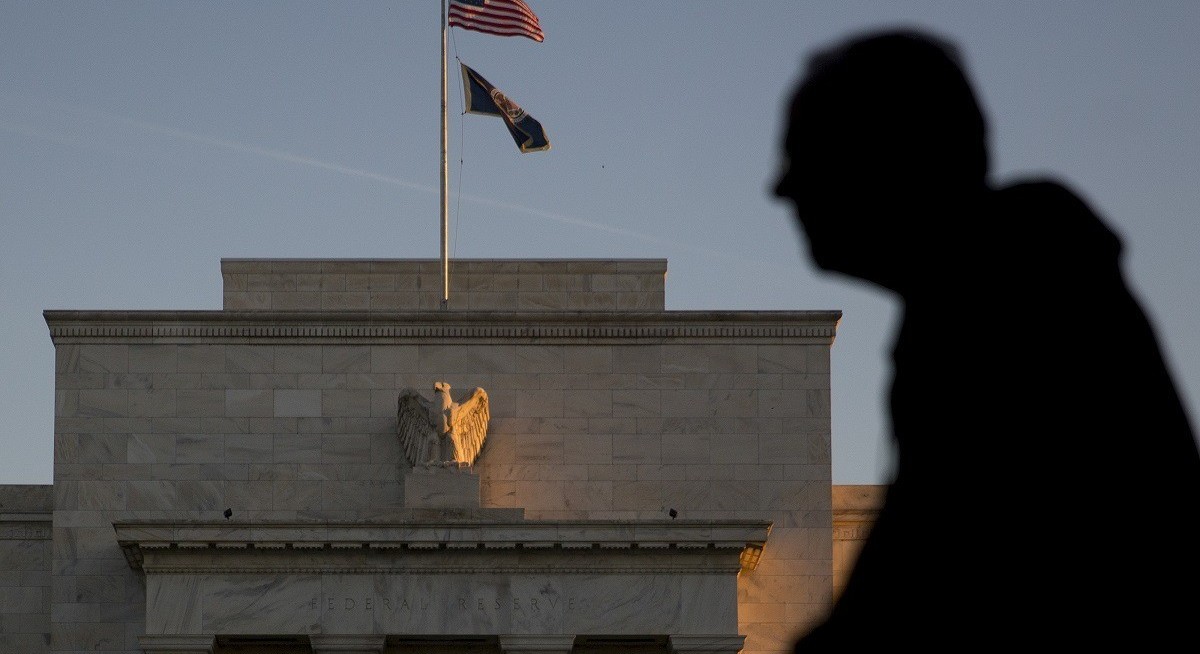


(Jan 25): The Federal Reserve and three of the central banks that just backed its embattled chair are poised to keep interest rates unchanged at an edgy moment for global policymakers.
Officials in Washington are widely expected to defy US President Donald Trump’s calls for lower borrowing costs on Wednesday at the end of their two-day meeting. Peers in Brazil, Canada, and Sweden may also retain current settings.
Those latter three were among more than a dozen, including the Bank of England and European Central Bank, whose chiefs spoke out in “full solidarity” with chair Jerome Powell, backing independence at a time when the administration in Washington is dialling up the pressure on him and his colleagues.
Aside from Trump’s frequent complaints at its unwillingness to slash interest rates, the Fed now faces grand jury subpoenas threatening criminal indictments, while the Supreme Court heard arguments on Wednesday on whether the president can fire governor Lisa Cook.
Beyond that melodrama, every central bank is acting against a tense global backdrop, evidenced by the recent market rout in Japan, lingering investor concern over Trump’s designs on Greenland, and his incessant threats of further trade disruption.
“We are in a more shock-prone world,” Kristalina Georgieva, head of the International Monetary Fund, said Friday at the closing session of the World Economic Forum in Davos. “We’re not in Kansas any more.”
See also: Russia cuts key rate to 15.5% despite uptick in inflation
“We think most FOMC participants can cite data to support holding rates steady at the meeting. That degree of unity would be seen as a vote of support for Powell, who has come under fierce attack from the White House. The most interesting figures to watch are governors Christopher Waller and Michelle Bowman: If they vote with the majority to hold steady, they’ll be signalling to Trump that they side with Powell — including on Fed independence. We expect Waller to vote with the majority, but Bowman to dissent,” said Bloomberg Economics.
While policymakers are focused on the potential growth risks posed by tariffs, they’re also watchful for possible inflation pressures in the current environment.
As many as 18 central banks globally are on the calendar for decisions in the coming week. In contrast to the Fed, counterparts in Africa, confronting a different stage in the economic cycle, may unveil a wave of easing.
See also: BOJ hawk Tamura flags spring as possible timing for rate hike
Elsewhere, inflation data from Australia to Brazil and Japan, Chinese industrial profits and gross domestic product in the euro region will be among the highlights.
Below is our wrap of what’s coming up in the global economy.
US and Canada
Fed officials are expected to hold rates steady after three straight cuts at the end of 2025. Powell is likely to telegraph his view that policy is well-positioned for now, but hold off from signalling much about where rates are headed. That will buy officials time to see the impact of previous reductions.
Recent data showing that the US unemployment rate declined in December while inflation holds above the Fed’s target may work to placate hawks and doves alike, potentially garnering more support for a pause in the easing cycle.
Powell’s press conference will be the first since he disclosed Justice Department subpoenas affecting the Fed, and since a Supreme Court hearing regarding Cook’s battle to keep her job. Still, expectations are low that he’ll share much more on either of those fronts.
The week’s data calendar includes figures out Friday on the December producer price index. Economists expect a modest acceleration in the gauge of wholesale costs from a month earlier.
To stay ahead of Singapore and the region’s corporate and economic trends, click here for Latest Section
Other upcoming reports include durable goods orders and the trade deficit for November, as well as January consumer confidence.
Turning north, the Bank of Canada is widely expected to hold its policy rate at 2.25% on Wednesday, with the monetary policy report set to emphasise slower growth and heightened uncertainty tied to this year’s review of the US-Mexico-Canada Agreement.
Traders in overnight swaps see the central bank staying on the sidelines for most of 2026, after policymakers said the current rate is at “about the right level” to support the economy without reigniting inflation.
Statistics Canada will release November GDP by industry along with a flash estimate for December, likely pointing to weak fourth‑quarter output. November trade data may show a further drop in the share of exports to the US.
Asia
Australia will be a focus when it releases a blast of inflation data ahead of the Reserve Bank’s Feb 3 rate decision. The figures, due on Wednesday, are expected to show that consumer price gains accelerated to 3.6% year over year in the fourth quarter.
Coming on the heels of strong jobs data, the inflation report will likely underpin the RBA’s hawkish bias and spur speculation over a potential rate increase next month.
Japan also publishes inflation data. Friday’s report for Tokyo, a leading indicator for national trends, is forecast to show that the main gauge, excluding fresh food, slowed to 2.2%.
However, an index that removes distortions from energy subsidies is expected to hold steady at 2.6%, demonstrating that underlying price pressure remains robust and keeping the Bank of Japan on track for more increases to borrowing costs.
Fourth-quarter GDP data is scheduled from the Philippines, Taiwan and Hong Kong. Growth is estimated to have sped up to 1.5% quarter-on-quarter in the Philippines, while Taiwan’s year-on-year advance is seen accelerating to 8.75%.
China publishes industrial profits data on Tuesday that may offer fresh evidence of the pressures mounting for manufacturers as weak demand squeezes corporate margins for exporters and domestic-oriented industries alike.
December trade data is on tap from the Philippines, Hong Kong, Sri Lanka, New Zealand and Thailand, while Japan and New Zealand will release consumer confidence reports. New Zealand also release a gauge of business sentiment for January after the reading jumped in December to the highest in 30 years.
On the policy front, Pakistan’s central bank is expected to cut its SBP rate to 10% on Monday, while authorities in Sri Lanka are seen holding settings steady on Wednesday.
Europe, Middle East, Africa
In the euro area, reports will focus on momentum in the economy. Germany’s Ifo survey on Monday may be closely watched given that the sentiment index hasn’t really matched recent buoyancy in industrial data that may reflect the government’s defense and infrastructure stimulus.
The region’s first glimpse of GDP in the fourth quarter will arrive on Friday. All economists surveyed by Bloomberg predict some sort of expansion after Germany’s sketchy data already pointed to unexpectedly strong growth. France, Italy and Spain are all predicted to have shown increases in output.
Spain and Germany will also release price data on Friday in advance of wider regional numbers due the following week. Economists anticipate inflation slowed in January to 2.4% in Spain — the weakest level in seven months — while it likely held at 2% in Germany.
Few ECB officials are scheduled to speak, and on Thursday a blackout period starts before their first decision of the year, on Feb 5. The BOE is also entering a quiet period in advance of its outcome the same day.
In terms of policy meetings in Europe for the coming week, here’s a rundown:
- Hungary’s central bank will set rates on Tuesday, with no change forecast by economists but all eyes on potential signs of a cut.
- The Ukrainian central bank’s decision is on Thursday, with the possibility of a large cut in borrowing costs foreseen by some observers.
- Also on Thursday, the Riksbank is seen holding its key rate at 1.75%, with officials likely to reiterate their view of unchanged borrowing costs “for some time to come.” With inflation slowing, Swedish policymakers can wait for evidence that a recovery is building in the largest Nordic economy.
Africa will also see several decisions on borrowing costs:
- Ghana is poised to extend its easing cycle on Wednesday, with policymakers expected to cut their rate by 300 basis points to 15% as inflation continues to ease.
- Mozambique is anticipated to lower borrowing costs to support the economy amid subdued price pressures.
- South Africa may follow a day later with a 25-basis-point cut, to 6.5%, as the inflation outlook remains benign.
- Malawi is likely to retain its key rate at 26% as inflation stays elevated.
- On Friday, Eswatini and Lesotho — whose currencies are pegged to the rand — will possibly diverge. Eswatini is expected to trim borrowing costs by a quarter point, while Lesotho may stay on hold.
Latin America
Brazil serves up a mid-month consumer price report along with its first monetary policy meeting of 2026.
Inflation may have ticked back up to breach the 4.5% top of policymakers’ tolerance range after slowing for three months to end 2025. The central bank’s 3% target is by most accounts out of reach for at least the current calendar year and next.
While a majority of Brazil-watchers expect to see a multi-year easing cycle begin to trim the key rate from the current 15% starting in the first quarter, few see that kicking off on Wednesday.
Chile’s central bankers can afford to stand pat after December’s quarter-point cut to 4.5%, likely 25 basis points above the consensus terminal rate.
Also on tap from the world’s largest copper producer and exporter is an end-of-month data dump: six separate reports, with monthly production data the highlight.
Brazil, Chile, Colombia and Mexico all post December unemployment reports. Among the region’s bigger economies, Peru, Brazil and Colombia currently enjoy record-low jobless rates.
In Mexico, fourth-quarter output data more likely than not will show LatAm’s No 2 economy dodged a technical recession after posting twin negative prints for the three months through September.
External headwinds, especially the wild cards surrounding US trade policy and the review of the free trade accord with the US and Canada, weigh on the outlook for 2026.
Colombia’s central bank on Friday is all but certain to waste no time responding to a 23% hike to the minimum wage.
Analysts see a half-point rate increase to 9.75%, with 125bps to 150bps more tightening by year-end as 2026 inflation expectations have surged to 6.37% from 4.59% last month.
Uploaded by Magessan Varatharaja




