


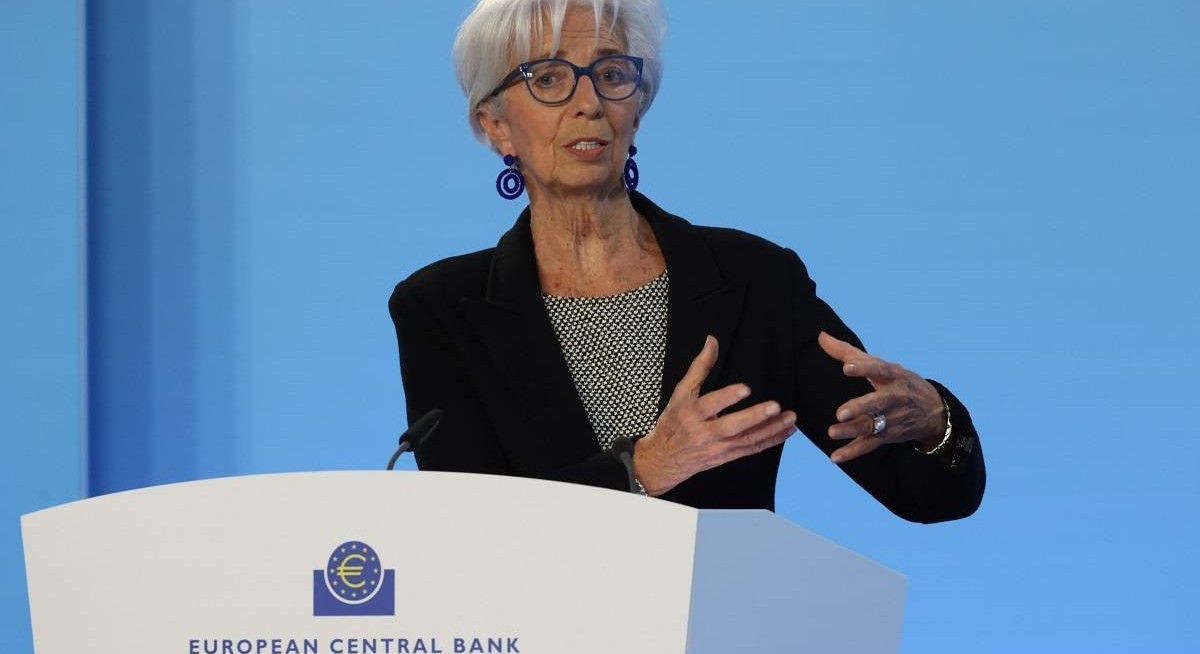


(April 14): President Christine Lagarde said the eurozone economy has moved away from the European Central Bank’s Iran war base case, though not enough to currently warrant leaning toward raising interest rates.
“We are in between the baseline and the adverse” scenarios, Lagarde told Bloomberg Television on Tuesday in Washington, where she’s attending the IMF’s spring meetings.
Asked whether the ECB has a bias toward tightening monetary policy, Lagarde said it doesn’t. “We have a compass which indicates price stability predicated on financial stability,” she said.
The ECB is weighing what action is needed following 6 1/2 weeks of fighting in the Middle East that’s driven energy costs sharply higher and bruised economic sentiment. Headline inflation in Europe has already jumped well beyond the 2% target. The key question is how persistent the spike will prove.
Markets reckon rate hikes are only a matter of time, pricing more than two quarter-point moves this year. But with the fate of peace talks between the US and Iran up in the air, they’re leaning against an increase at the next meeting on April 29-30.
New IMF projections published earlier Tuesday may add some clarity, suggesting faster global inflation alongside more meager growth. In the 21-nation eurozone, consumer prices are seen rising 2.6% this year — matching the ECB’s own forecast.
See also: Hong Kong dollar bond sales boom as issuers tap into haven flows
Several officials from the Frankfurt-based central bank deem that baseline outcome less likely as the conflict drags on and the closure of the Strait of Hormuz worsens.
That would bring closer the adverse scenario drawn envisaging inflation peaking at 4.2%. Should the situation deteriorate further still, a severe scenario includes a short recession and price gains topping 6%.
For now, officials are watching how strongly higher energy costs feed through to other parts of the economy, keeping a particular eye on things like wage demands, which rose dramatically after inflation exceeded 10% in the wake of Russia’s attack on Ukraine in 2022.
See also: IMF chief says global prices will take time to recede after war
“We’ve said very clearly that we would need data to act, but that we would not hesitate to act,” Lagarde said. “It really captures well the position that we have. We need the data in order to analyse whether it’s a see-through, it’s going to be short-lived, we will get back to the past, if you will. Although I don’t think that’s actually possible.”
Uploaded by Magessan Varatharaja




