


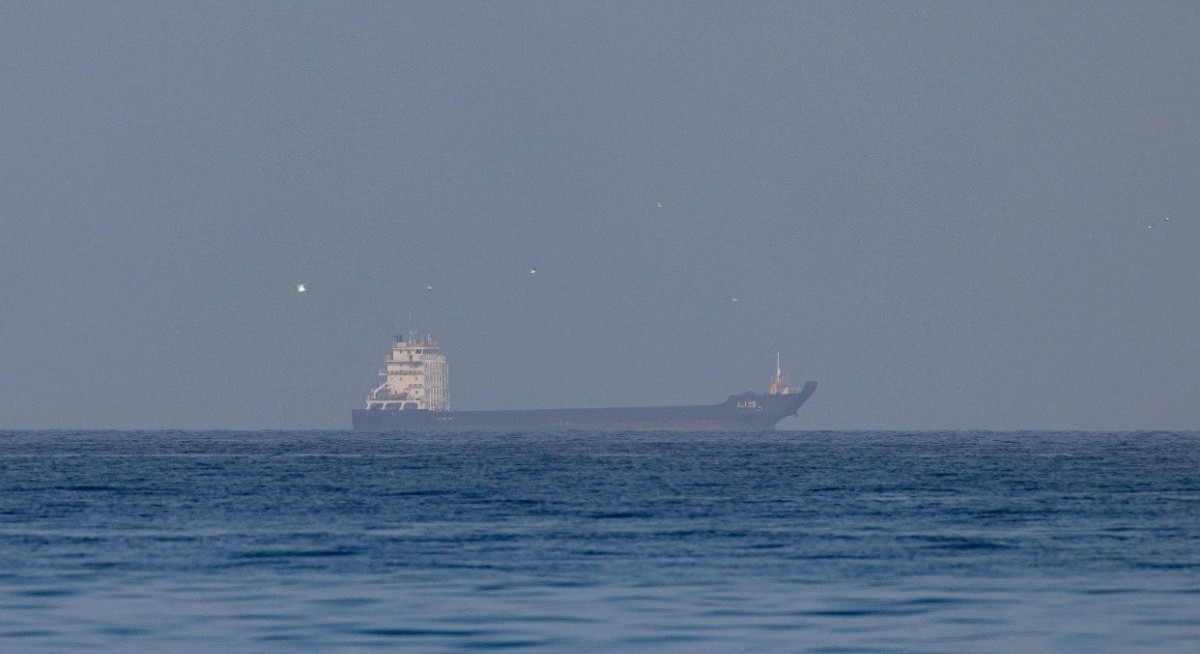


(April 6): Traffic through the Strait of Hormuz has climbed to its highest levels since the early days of the war, as more countries secure apparent safe-passage agreements with Iran.
The waterway saw 21 ships transit over the weekend as more energy-starved governments negotiate to extract vessels, cargoes and crews from the Persian Gulf, strengthening Tehran’s grip on the waterway. That’s the highest two-day total since the first days of March, when traffic was winding down.
Of those vessels, 13 headed out into the Arabian Sea.
Iranian vessels continue to dominate traffic, but on Sunday a tanker carrying Iraqi crude made its way through the strait, after Iran said it would grant an exemption to “brotherly Iraq”. India — which has negotiated the exit of some ships, and even taken Iranian liquefied petroleum gas for the first time in years — has now seen eight of its LPG tankers come through.
Though the number of vessels is still a fraction of what it was before the war, when about 135 vessels were passing regularly each day, more countries are securing transits. Last week, two China-linked container ships made the crossing on a second attempt. Two Japan-linked vessels have also passed.
The Strait of Hormuz, a narrow corridor connecting the Persian Gulf with the rest of the world, has become a focal point as the war enters its sixth week, with US President Donald Trump threatening to hit civilian infrastructure and bring “Hell” to Iran if it does not reopen the passage. Tehran has said it will only do so after the tolls that it’s charging vessels for transit can cover war damages.
See also: Italy deficit at 3.1% breaches EU ceiling in setback for Meloni
“Iran is responding to requests from its partners while reinforcing its grip on Hormuz,” said Muyu Xu, a senior crude oil analyst at Kpler Ltd in Singapore. “Passage is still at Iran’s mercy and the situation could change at any time if the conflict escalates.”
Iran is also advancing a law governing its control of the strait and fees for passage, a move that formalises an idiosyncratic payment system that has been in place for weeks, according to shipowners.
While Tehran is negotiating with friendly nations, the terms of these deals remain opaque. This is true even when the agreements are publicly recognised, as with Iraq over the weekend. It is even more so in cases where it is unclear which counterparties secured safe-passage, as with ships linked to France and Japan.
See also: Trump restructures broad metals tariffs but keeps 50% rate
Last week Pakistan was offered 20 slots to pull ships from the Gulf — more than it currently has stuck behind the Strait of Hormuz. The country has been considering options including taking on other tankers and potentially reflagging them to secure fertiliser, oil and other supplies.
Ships with Chinese, Turkish, Greek and Thai associations have also transited.
To date, the majority of green-lit ships have taken what appears to be a route indicated by Tehran, hewing close to Iran’s coast. More, however, have begun taking a path along the opposite coastline. Oman, which shares the waters of the strait, confirmed on Sunday that it has held talks to smooth the flow.
Uploaded by Magessan Varatharaja




