


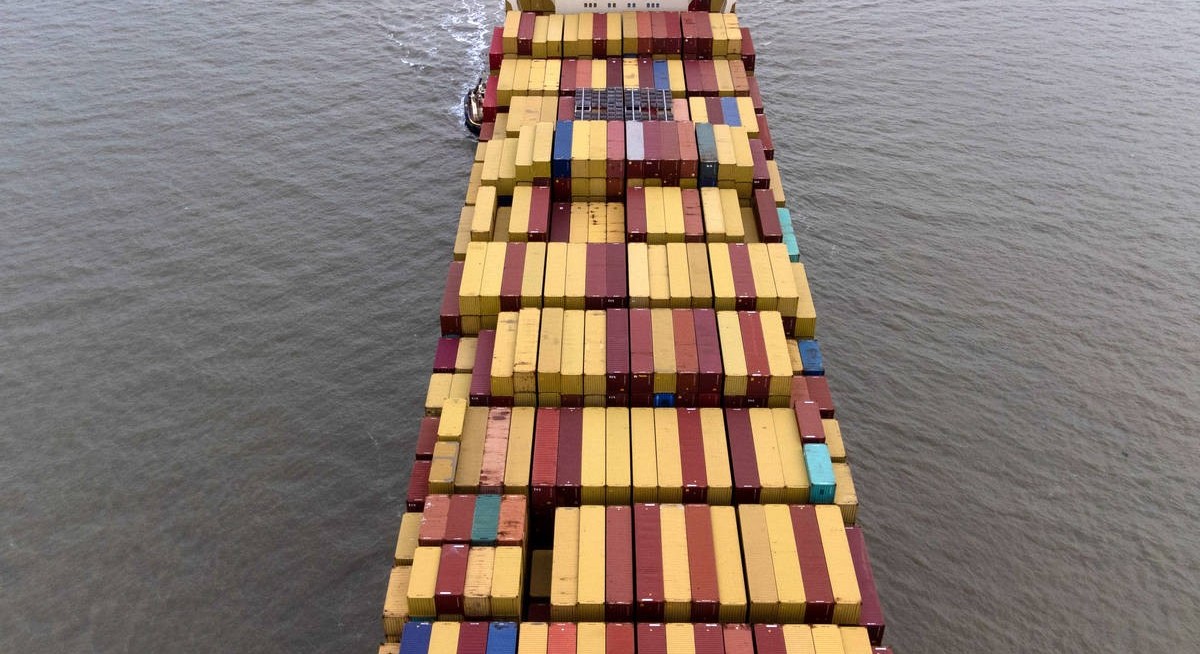


(March 28): Ship traffic through the vital Strait of Hormuz oil channel appears to remain largely halted four weeks into the Iran war, despite efforts by Tehran to set up a system to charge for transits.
Just four bulk freighters and two liquefied petroleum gas carriers crossed the waterway on Thursday, tracking data based on ships’ Automatic Identification System signals showed. There were 39 in the past seven days. That compares with an average of almost 60 commercial vessels every day in 2025.
Two large container ships linked to China’s state-owned Cosco Shipping Corp attempted to exit the Persian Gulf, before making a U-turns near Iran and heading back. Iran said it turned back three such vessels of different nationalities, the semi-official Mehr news agency reported.
Overall transits don’t appear to have been boosted by the fact Iran is trying to set up a tolling system, seeking payments of as much as US$2 million ($2.59 million) per voyage through the waterway. Tehran also said this week that ships from “hostile” countries wouldn’t be allowed through, highlighting the possibility that some others might be permitted.
The waterway’s effective closure has become the most pressing issue for the global economy because it’s the world’s busiest oil chokepoint. It is causing a major shortfall in global petroleum supply, driving a surge in fuel prices and forcing producer countries in the region to cut millions of barrels a day of output.

See also: Economists see oil spike costing Canada jobs, raising inflation
The tracking data suggest that a gift that US President Donald Trump said he got from Iran — for 10 oil carriers to be allowed to pass — doesn’t appear to have materialised so far.
To be clear, ships could be sneaking out, making it hard to be certain what the precise rate of transits are.
A majority of vessels turn off their signaling equipment when sailing through the waterway and only switch it back on again when they are far away.
See also: Spanish prices rise at fastest pace since 2024 on Iran war
Satellite imagery in the area is also delayed, further complicating vessel observation.
On Friday, Iran and Israel exchanged further missile fire, with Tehran also targeting Gulf states. Saudi Arabia reported intercepting drones and missiles headed towards Riyadh, while alerts sounded in Doha and Kuwaiti ports sustained damage from drone strikes. Israel, for its part, said it is stepping up attacks on Iranian military infrastructure.
It emerged Friday that one shipowner, Greece’s Dynacom Tankers Management Ltd, sent at least its third tanker through the strait.
To try to capture ships that switch off their transponders, Bloomberg monitors vessels that disappear from the Persian Gulf, as well as those that reappear in waters far beyond Hormuz.
Uploaded by Tham Yek Lee




