


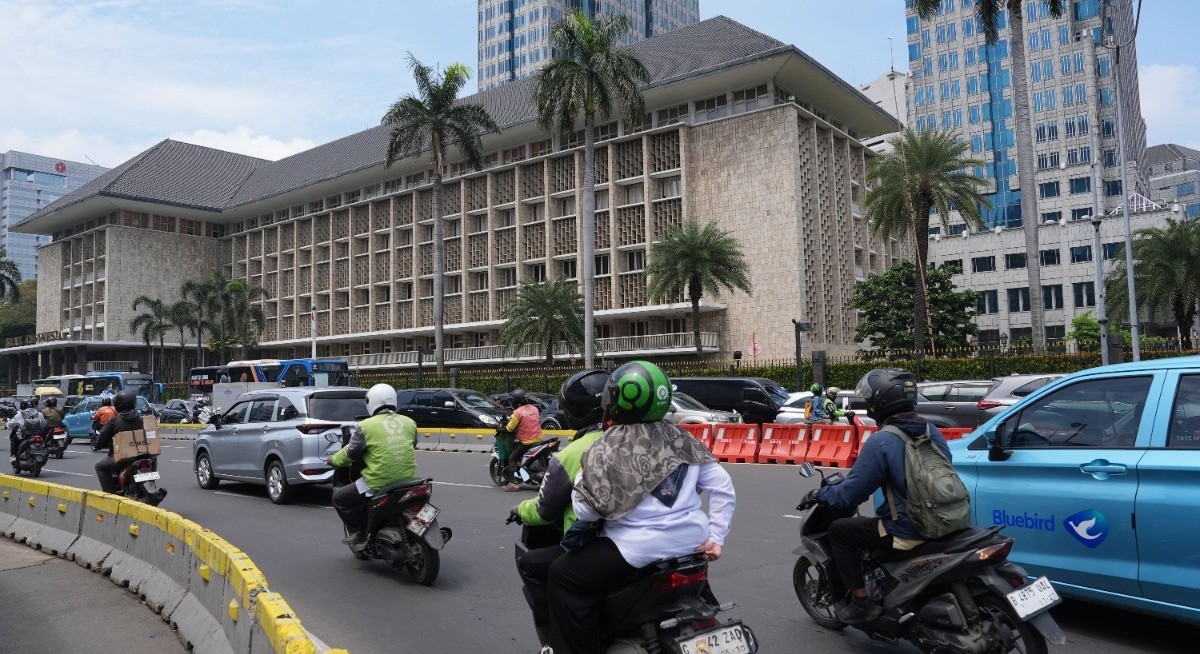


(May 19): Three of Asia’s most vulnerable economies are showing rising strains as their central banks come under pressure to tighten policy even as the economic hit from the Iran-war oil shock deepens.
Indonesia, the Philippines and India are already grappling with capital outflows and free-falling currencies as Middle East tensions hurt consumers and companies alike. Now, global bond ructions are piling on further pressure.
Higher US bond yields drive up the dollar and reduce the appeal of emerging-market assets, fuelling capital outflows from Asia. That raises the burden of servicing dollar-denominated debt and pressures central banks to raise interest rates to defend their currencies and boost the appeal of local debt, even as domestic growth is set to weaken — leaving authorities in a catch-22.
“Growth in much of the region is set to come under greater pressure, leaving central banks in a bind whether and how to respond to soaring price pressures,” said Frederic Neumann, chief Asia economist at HSBC Holdings Plc. “The going may get tougher still. We are not out of the woods yet.”
Elevated oil prices and inflation concerns have pushed government bond yields around the world to multiyear highs, with 30-year Treasury yields climbing above 5% and nearing their highest levels since 2007.
The jump in US yields has intensified pressure across emerging Asia. Aside from China’s yuan, all major Asian currencies have weakened since the Iran war, with the Philippine peso, Indian rupee and Indonesian rupiah among the region’s worst performers. A Bloomberg index of Philippine bonds has lost 13% for dollar-based investors, the steepest decline in emerging Asia.
See also: EU races to finalise US trade deal to avoid more Trump tariffs


Bank Indonesia is widely expected to raise interest rates on Wednesday after stepping up intervention to defend the rupiah, which has plumbed new record lows.
See also: Bond ructions gatecrash talks by G7 on skewed world economy
“Even that would provide only brief respite though,” said Jason Tuvey, deputy chief emerging markets economist at Capital Economics. “Putting the currency on a more solid footing ultimately requires the authorities to shift away from the populist and interventionist policies adopted since President Prabowo came to power.”
Bank Indonesia has been buying up long-term bonds in a bid to bring down yields, while selling short-term paper to lure more inflows to underpin the currency. That’s akin to the “Operation Twist” it introduced in 2022, when the central bank tried to temper a sharp rise in borrowing costs following the Covid pandemic.
In the Philippines, traders and economists are increasingly discussing the possibility of a large or off-cycle rate increase should pressure on the peso intensify further. The government rejected all bids for Treasury bonds it auctioned on Tuesday to prevent a sharp rise in yields.
India has so far largely responded with currency intervention and trade protectionism with gold and silver imports facing tougher curbs. Economists say similar measures could spread to Southeast Asia, especially if food prices surge.
The risks are especially acute for emerging Asia because history shows how quickly investor sentiment can turn when global financing conditions tighten.
During the 1997-98 Asian financial crisis, countries including Thailand, Indonesia and South Korea saw currencies plunge and foreign reserves evaporate within months after investors lost confidence in their ability to finance large current-account deficits and defend exchange rates. The turmoil triggered deep recessions, soaring inflation and political upheaval.
The 2013 “taper tantrum” sparked by signals the Federal Reserve would begin winding back stimulus led to sharp capital outflows from emerging markets as US bond yields surged. India, Indonesia and the Philippines were among the countries hit hardest.
To stay ahead of Singapore and the region’s corporate and economic trends, click here for Latest Section
This time around, central banks in the region have stepped up foreign exchange intervention, yet their currencies remain under pressure.
“Such scale of FX intervention will become increasingly difficult to sustain as FX reserves have been already substantially drawn down, while the energy price headwind has not subsided,” Sanjay Mathur, chief economist for Southeast Asia and India at Australia and New Zealand Banking Group Ltd, wrote in a note last week.
ANZ economists forecast current account deficits for India and Indonesia at 1.9% and 1.1% of gross domestic product in 2026, with the Philippines at 4%.
The Philippines — among the world’s hardest hit by energy shortages — is also being weighed by political turmoil. The government is in the midst of an impeachment case against Vice President Sara Duterte, who is accused of misusing public funds.
The oil shock has slowed Philippines GDP growth to its weakest since 2009, outside the pandemic. Inflation also breached 7%, well over the central bank’s 2%-4% target.
In Indonesia, President Prabowo Subianto’s expansive fiscal ambitions — including his flagship free meals programme — have unnerved investors already worried about the country’s debt trajectory and sovereign ratings outlook.
India’s Narendra Modi, while politically on more solid ground, is also navigating competing pressures to maintain infrastructure spending and welfare support even as oil prices threaten to widen the fiscal deficit and stoke inflation.
“The lesson from the taper tantrum and Asian crisis is how risk premium can rise very quickly and reserves which seem adequate can diminish very fast,” said Rob Subbaraman, chief economist at Nomura Holdings Inc. “Rising cost of living pressures can lead to growing political instability as the general public blame the government.”
Uploaded by Evelyn Chan




