


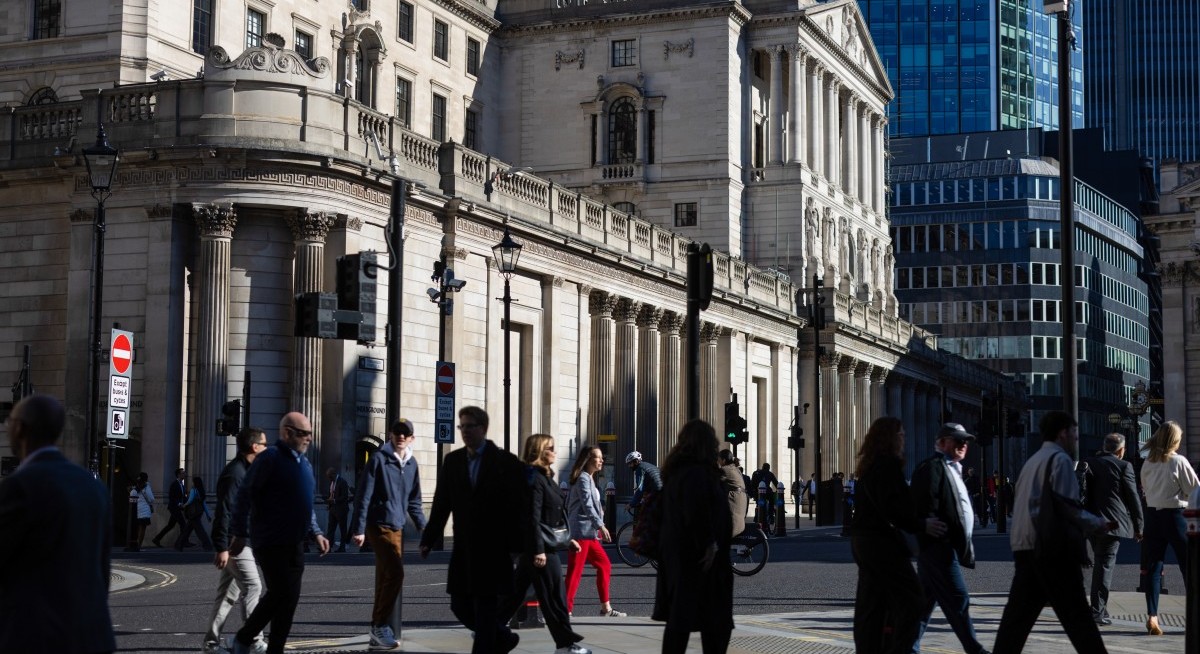


(April 1): Financial institutions’ use of artificial intelligence (AI) could increase rapidly and become a financial stability threat, the Bank of England (BOE) warned on Wednesday, as it also called out the potential for AI to trigger shocks in the private credit markets that ricochet more broadly.
In its first update since the outbreak of war in Iran on Feb 28, the BOE’s Financial Policy Committee (FPC) also said resulting disruptions had delivered a “substantial negative supply shock” to the global economy that would “weigh on growth, increase inflation and tighten financial conditions”.
“The conflict has made the global environment materially more unpredictable and followed a period in which global risks were already elevated,” the BOE said, adding that the ultimate impact would depend on the ”duration, scale and repercussions” of the war. Multiple vulnerabilities ”could crystallise at the same time”.
The BOE has repeatedly warned on AI’s destabilising potential, including the potential for “materially stretched” valuations to trigger wider financial stress. Bloomberg last month reported that officials were considering including an AI-inspired job shock in the next banking stress tests.
In Wednesday’s assessment, officials said that while UK financial institutions had so far mostly judged that the potential risks from advanced AI exceeded potential gains, that view was likely to change as technology improves. “Risks are likely to increase, potentially rapidly, amid growing intent among financial firms to expand their deployment of advanced AI,” the BOE said.
Risks are particularly pertinent in payments and financial markets, where advanced AI could fail to adequately capture things like fraud, or make markets more prone to sharp corrections, the BOE said.
See also: Asian credit-default swaps head for biggest drop in 11 months
AI was also linked to recent outflows from private credit, where the BOE blamed “concerns about potential disruption from AI” for a wave of redemptions as spooked investors asked for their cash back.
“Stress originating in these retail funds could spill over to other parts of private credit and private equity markets, as well as other correlated asset classes,” the BOE said, pointing to potential difficulties with refinancing and additional lending.
Officials noted, however, that markets had so far proved resilient, as had households, companies and banks, and that there was no disruption linked to hedge funds reducing their average net gilt repo borrowing by 21%, or £19 billion through the conflict.
See also: Australia passes law to trade, stock fuel alongside rare earths
The BOE also touched on the risks exposed by the collapse of specialist mortgage provider MFS, which left big name banks nursing exposures running to hundreds of millions. The BOE said the episode highlighted the dangers of “high leverage, weak underwriting standards, opacity, overly optimistic valuations and complex structures”.
The BOE does not directly supervise firms like MFS, which offered bridging loans and buy to let mortgages, but does oversee the traditional banks who loaned MFS their money.
Mortgage interest rates are already rising on expectations that the Iran war will prompt the BOE to hike, and the BOE’s data shows an extra 1.3 million people will face higher repayments by the end of 2028 as a consequence of the shock, though the central bank held interest rates steady at their March meeting.
The FPC said the dynamics were “increasing pressure on UK households and corporates” but stressed that overall indebtedness was low, echoing data released by the ONS on Tuesday which showed historically high household savings.
The BOE also published its semi-annual systemic risk survey - where data collection ended 12 days before the outbreak of the Iran war. Geopolitical risk reached its highest level on record, though respondents remained confident about the stability of the UK financial system.
Uploaded by Felyx Teoh




