


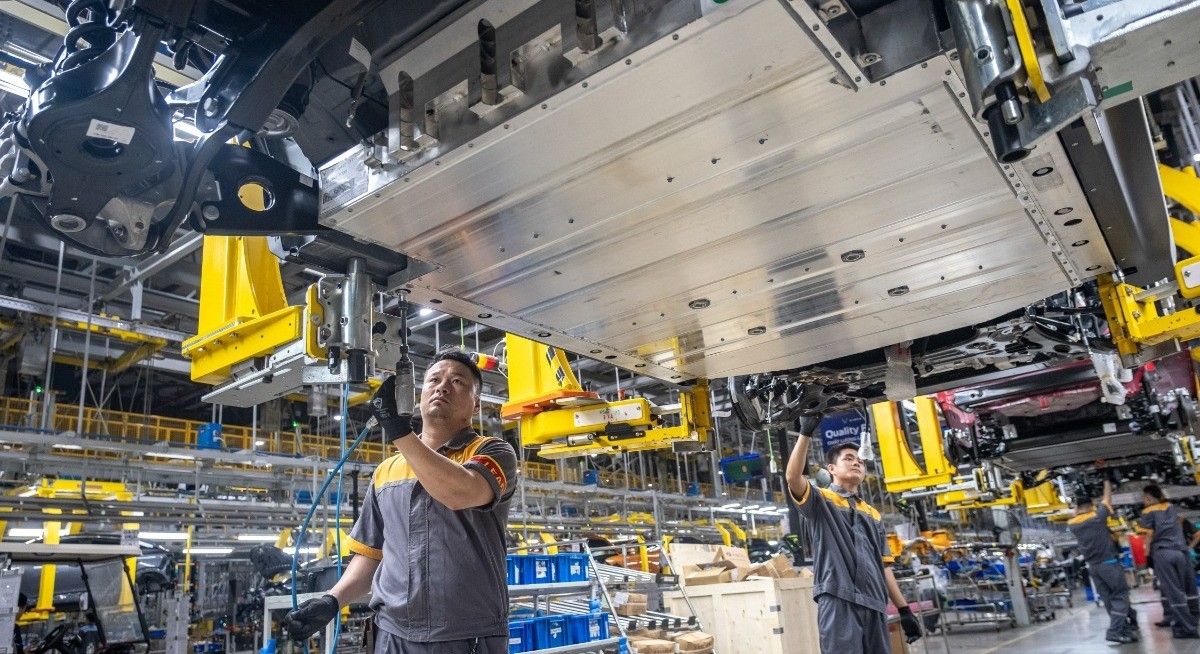


(April 1): Manufacturing across much of Asia expanded in March, with activity improving in South Korea, Malaysia and Thailand, even as other economies saw the impact of energy supply disruptions from the US-Israeli war on Iran that have pushed oil prices higher.
The conflict appeared to weigh on activity in Vietnam, Indonesia and semiconductor hub Taiwan, where readings eased from February while remaining above the 50 threshold that separates expansion from contraction, S&P Global data published Wednesday showed. Thailand led the region with a reading of 54.1, while Malaysia returned to expansion after contracting the previous month.
The March reports mark the first full month of manufacturing PMI data since the US-Israeli war on Iran began on Feb 28 and subsequently escalated, disrupting shipping through the Strait of Hormuz, a key oil transit route. The conflict has pushed oil prices above US$100 (RM403.25) a barrel, raising the risk of renewed inflationary pressures.
Following February’s record-high reading of 53.8, the S&P Global Asean Manufacturing Purchasing Managers’ Index fell to 51.8 in March. Despite signalling a moderate improvement in the health of Asean’s manufacturing sector and extending the current run of expansion to nine months, it was the lowest figure since last September and highlighted a notable loss of growth momentum since February.
“The initial signs of the war in the Middle East were visible across the Asean economies,” Maryam Baluch, economist at S&P Global Market Intelligence, said in a statement. “The regions’ outlook remains uncertain and will be influenced by the intensity and duration of the war in the Middle East.”

See also: South Korea exports continue to surge despite escalating Iran risks
Data from China’s National Bureau of Statistics had shown factory activity expanded for the first time this year in March despite higher energy prices and disruptions caused by the escalating conflict in the Middle East. The non-manufacturing measure of activity in construction and services unexpectedly grew in March, the bureau said.
Overall though, Asia, including China, remains vulnerable to spillovers from foreign shocks in case of a slowdown in global growth. And factories around the region that rely on crude or oil-derived products as raw materials are already struggling with higher costs.
Governments across Asia are preparing for worst-case energy scenarios that could include a prolonged and severe disruption to supplies.
See also: Eurozone inflation jumps most since 2022 as energy costs bite
South Korea set up an emergency economic task force to urgently prepare for adverse scenarios. The Philippines declared a national emergency. Japan is reviewing its entire supply chain of petroleum-related products while India’s Prime Minister Narendra Modi warned the war could cause unprecedented challenges for the nation.
Uploaded by Chng Shear Lane




