


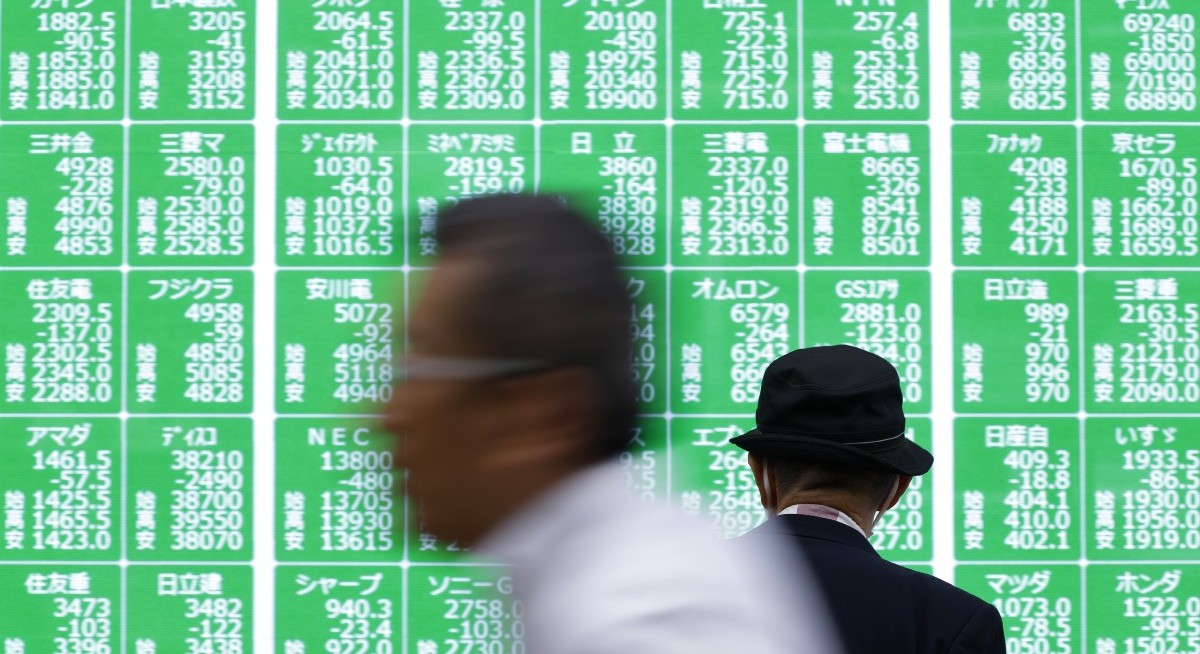


(March 17): Asian equities rose, led by technology companies, after Nvidia Corp issued an upbeat outlook for artificial intelligence and US stocks rallied on optimism over ships passing through the Strait of Hormuz.
The MSCI Asia Pacific Index advanced 1.2%, with gains led by technology shares — that are seen as less exposed to the Iran war — such as Samsung Electronics Co and Taiwan Semiconductor Manufacturing Co. South Korea’s benchmark, a bellwether for AI, jumped 2.6%. That came after Nvidia said it expects to generate at least US$1 trillion ($1.28 trillion) in revenue from AI chips through the end of 2027.
The dollar edged up after its biggest one-day loss in more than a month and Treasuries were a touch lower. Brent crude advanced to about US$102 a barrel Tuesday, after dropping 2.8% on Monday. US equity-index futures were slightly weaker, suggesting the optimism seen on Monday may be beginning to fade.
Risk appetite was also boosted by expectations that major economies may release additional petroleum reserves to offset potential supply disruptions after President Donald Trump renewed calls for allies to help safeguard the Strait of Hormuz. Threats to flows through the vital shipping lane continued to fan inflation concerns as investors brace for a slate of central-bank meetings this week.
“As the war with Iran continues, oil prices are dictating the mood and headlines from the Strait of Hormuz are driving markets,” Bob Savage, head of markets strategy and insight at BNY, wrote in a note. “Concerns for the week revolve around how central bankers see through these matters.”
Trump expressed his frustration with other nations that have so far been publicly noncommittal on his calls to help ensure vessels can transit the strait.
See also: Asian stocks edge up as oil declines, dollar falls
Later on Monday he said he had requested China — among those he’s asked for support — to delay a summit with his counterpart Xi Jinping for about a month, saying it was important for him to remain in Washington to oversee the war.
“The possibility that the US-China meeting could be postponed by one month may also be taken as a sign that the war with Iran is likely to drag on longer than expected,” said Hideyuki Ishiguro, chief strategist at Nomura Asset Management. “That would weigh on equity markets.”
Meanwhile, the International Energy Agency, which recently agreed to a record release of emergency reserves, said it has more that can be made available if needed.
See also: BofA’s Hartnett warns markets are starting to look like 2008
The effective closure of the Strait of Hormuz has forced the likes of the United Arab Emirates and Kuwait to reduce oil output further. Still, a trickle of vessels is beginning to find a way through the waterway.
The yen remains in focus as it edges ever closer to the 160-per-dollar mark, reflecting investors’ concerns around the nation’s heavy reliance on imported energy. Traders expected the Bank of Japan to keep interest rates on hold in its policy meeting later this week, with a quarter-point hike expected only in July.
“Right now the yen will go to 160 and the BOJ cannot stop this weakening unless they hike rates,” said Ashwin Binwani, founder of Alpha Binwani Capital, who has bearish positions on Japan’s currency against the greenback. “If the oil price doesn’t go down in the next three months, the yen will go to 165.”
Investors will turn their attention to the Federal Reserve’s rate decision Wednesday, with policymakers expected to hold rates steady as the war clouds the outlook.
The Bank of England and the European Central Bank also meet this week. The Reserve Bank of Australia is widely expected to deliver a rate hike in Sydney later Tuesday.
“Until that time where the Strait returns to normal operations, risks to energy markets and the global economy will persist,” Kyle Rodda at Capital.com wrote in a note. “The policy response to the crisis will begin to crystallise in the coming days as a massive week of central bank meetings commence.”
Corporate highlights:
To stay ahead of Singapore and the region’s corporate and economic trends, click here for Latest Section
- Alibaba Group Holding Ltd is setting up a business unit to bring its sprawling AI services and development endeavours under a single umbrella, signalling its determination to profit off artificial intelligence.
- Wall Street banks led by JPMorgan Chase & Co have already attracted enough demand for the nearly US$15 billion of debt it is selling to back the leveraged buyout of video game maker Electronic Arts Inc, the largest of its kind.
- Bank of America Corp has agreed to settle a proposed class action lawsuit on behalf of Jeffrey Epstein victims who accused the bank of aiding in the deceased financier’s sex-trafficking, according to a court record.
Some of the main moves in markets:
Stocks
- S&P 500 futures fell 0.2% as of 10.36am Tokyo time
- Japan’s Topix rose 1.1%
- Australia’s S&P/ASX 200 rose 0.2%
- Hong Kong’s Hang Seng rose 1%
- The Shanghai Composite was little changed
- Euro Stoxx 50 futures were little changed
Currencies
- The Bloomberg Dollar Spot Index was little changed
- The euro fell 0.1% to US$1.1490
- The Japanese yen fell 0.2% to 159.41 per dollar
- The offshore yuan was little changed at 6.8879 per dollar
Cryptocurrencies
- Bitcoin rose 2.1% to US$75,828.45
- Ether rose 1% to US$2,369.98
Bonds
- The yield on 10-year Treasuries advanced two basis points to 4.24%
- Japan’s 10-year yield advanced one basis point to 2.275%
- Australia’s 10-year yield declined five basis points to 4.95%
Commodities
- West Texas Intermediate crude rose 2% to US$95.33 a barrel
- Spot gold rose 0.2% to US$5,015.03 an ounce
Uploaded by Chng Shear Lane




