


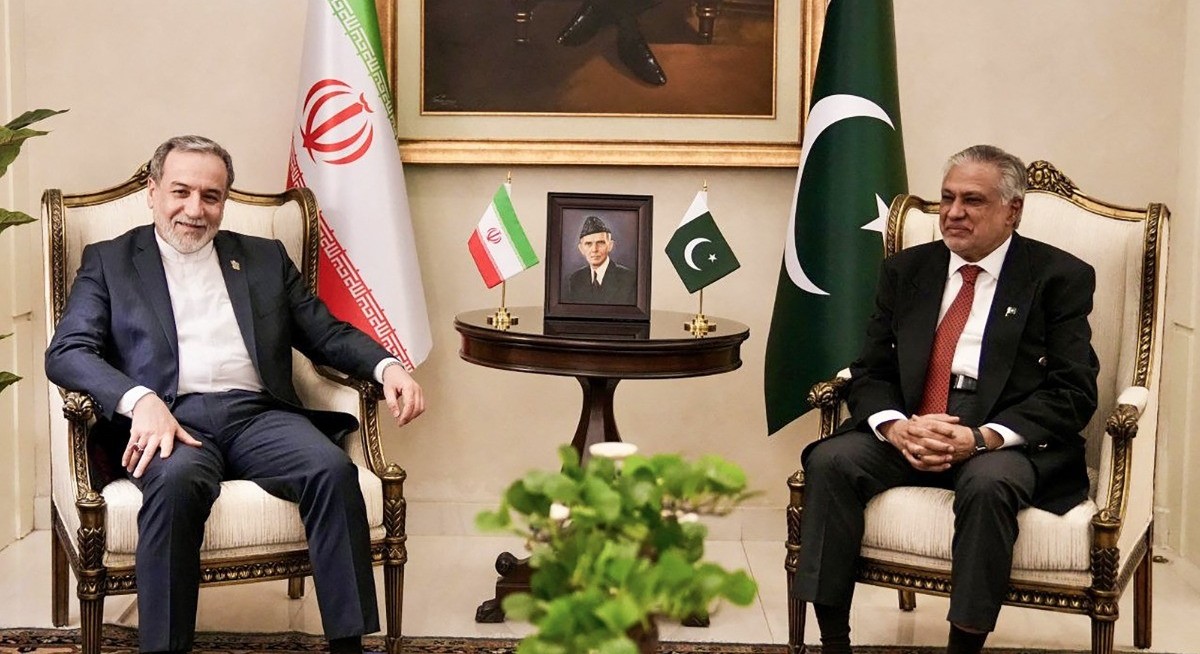


(April 27): The US and Iran failed to kick off a second round of peace talks this weekend despite a last-minute push by Pakistan, delivering a blow to Islamabad’s efforts to broker a settlement to end the two-month-old war.
After days of anticipation, President Donald Trump on Saturday called off a planned trip by his special envoys Jared Kushner and Steve Witkoff to Islamabad for round two of peace negotiations with Iran, saying the Islamic Republic had “offered a lot, but not enough” to merit new discussions. Iran’s foreign minister instead made two separate visits to Islamabad on the weekend, with Axios reporting that a new proposal was made to the US and conveyed through Pakistani mediators.
The failure to get the US and Iran back to the negotiating table underscores the limits of Pakistan’s mediation efforts, led by military chief Field Marshal Asim Munir along with Prime Minister Shehbaz Sharif. Although a ceasefire since early April has largely held, the US and Iran remain deadlocked on the blockade of the Strait of Hormuz, which has choked off supplies of crude, fuel and natural gas. Iran has also resisted US demands to totally roll back its nuclear programme.
Under the Obama administration, it took 20 months to negotiate a deal with Iran on its nuclear programme, and it’s unrealistic to expect a meaningful resolution to the crisis in a short time, said Adam Weinstein, deputy director at the Quincy Institute in New York.
“Pakistan can provide a venue and momentum, but it can’t force either side to compromise,” he said. “Trump’s approach is to shoot first, bring a loaded gun to the negotiating table, and demand surrender. That may have worked briefly in places like Venezuela, but it is unlikely to work with a country like Iran.”
The stalled negotiations follow weeks of shuttle diplomacy orchestrated by Pakistan. Two weeks ago, Islamabad hosted marathon talks between US Vice President JD Vance and an Iranian delegation, which failed to deliver a peace deal. Munir then visited Tehran a few days later to mediate further. Trump announced a ceasefire between Israel and Lebanon shortly after.
See also: Trump’s Hormuz blockade has deepened a historic shipping crisis
Expectations were high that Pakistan would pull off a second round of negotiations this past weekend that would lay the groundwork for an end to the war. However, ahead of the weekend, both sides were sending conflicting messages about the prospects of talks.
Pakistani officials told reporters late on Friday that Iranian Foreign Minister Abbas Araghchi was arriving in Islamabad to advance new peace talks with the US. Iranian officials quickly denied Araghchi was in the city for talks, saying the foreign minister was instead in Pakistan for a bilateral visit. By Saturday evening, he had left Islamabad for Oman — by which time Trump had called off the visit by his team. Araghchi then returned to Islamabad on Sunday, and arrived on Monday in Russia to meet President Vladimir Putin.
Araghchi said he discussed with Pakistan the conditions under which negotiations with the US can continue, the state-run Islamic Republic News Agency reported on Monday. Axios reported that Iran signalled it might accept an interim deal whereby it reopens the Strait of Hormuz in exchange for Washington ending its blockade of Iranian ports.
See also: Trump says G20 visit by Putin would ‘probably be very helpful’
“A mediator that could end this conflict on terms Washington deemed acceptable would be viewed globally as a miracle worker,” said Christopher Clary, associate professor of political science at the University at Albany. “A mediator that failed would merely be a normal country. The problem is Pakistan wanted to be viewed as a miracle worker.”
Islamabad began lifting security restrictions on Sunday that had been in place for several weeks, further signs that talks between the two sides weren’t likely soon. Police checkpoints were taken down, universities announced the resumption of in-person classes and hiking trails on the periphery of the city had re-opened.
Trump has continued to offer praise for Munir and Sharif despite holding back envoys for new talks. Iran’s ambassador also thanked Pakistani authorities and Islamabad residents for their support.
“It’s beyond Pakistan’s remit and ability to bring both to the table,” said Burzine Waghmar, a member of the SOAS South Asia Institute at the University of London. “The Pakistanis have given it their all. Perhaps they will realise how the Turks too found it difficult to mediate in Istanbul prior to the end February war.”
Without a lasting peace deal, it’s unclear how long a ceasefire will hold and when the vital Strait of Hormuz can be reopened. Pakistan in particular has been hit hard by the energy crisis, with rolling blackouts in Islamabad and fuel shortages hitting citizens, undermining an already fragile economic recovery.
“Pakistan is especially exposed to the global energy shock,” Clary said. “It has anemic economic growth, high levels of import dependence, and substantial flows of remittances from the Gulf. The longer this goes on, the worse it is for Pakistan. That is the biggest cost Pakistan will suffer if mediation fails.”
Uploaded by Felyx Teoh




