


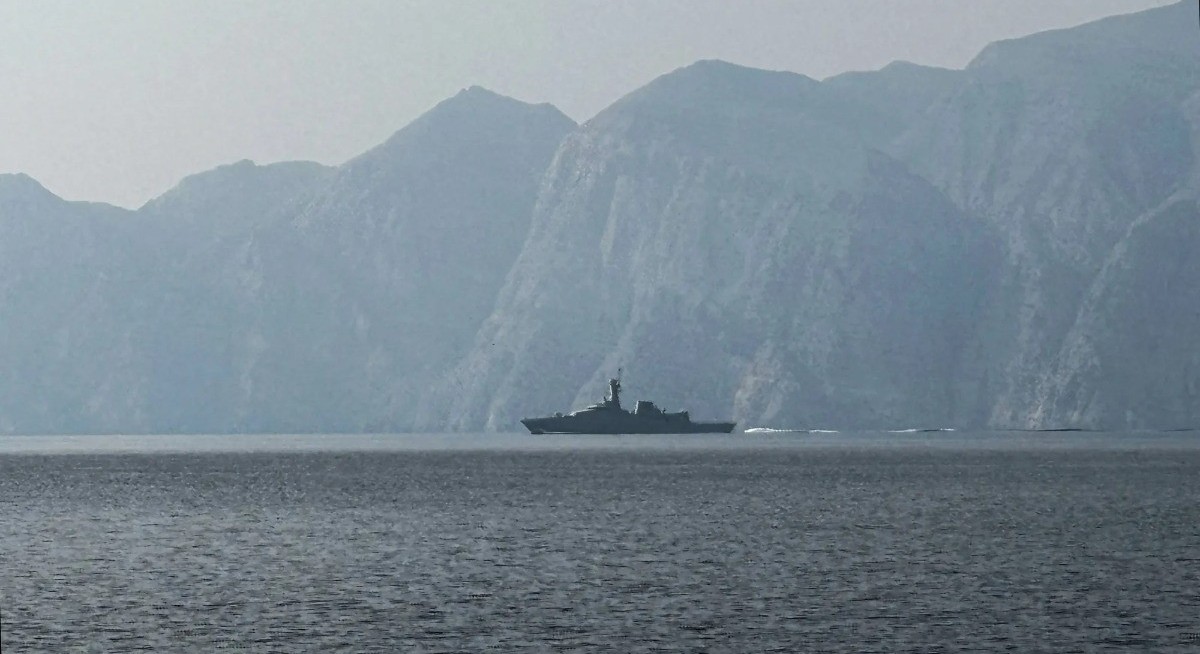


(April 23): Traffic through the Strait of Hormuz remains largely frozen, with only occasional movements of Iran-linked vessels breaking the lull.
As of Thursday morning, only one Iran-linked bulk carrier was observed making the transit out of the Persian Gulf, according to vessel-tracking data compiled by Bloomberg.
Security risks in the waterway escalated on Wednesday after Iranian gunboats opened fire on commercial ships, while the US blocked two of Tehran’s oil tankers.
The standoff has deepened as the US military said it intercepted two Iranian oil supertankers attempting to evade a US blockade outside the Persian Gulf, underscoring Washington’s push to constrain Tehran’s shipping. The action comes in the wake of Wednesday’s hostilities, during which Iranian forces targeted at least three ships and forced two of them into Iranian territorial waters.


See also: Singapore says trade through Malacca Strait must remain free
The euphoria was among the vessels attacked by Iran on Wednesday but appears to have completed its outbound journey and is currently anchored near the UAE’s Khor Fakkan. A small group of ships with ties to Iran also moved out over the same period, including a long-range crude tanker, a liquefied petroleum gas carrier and a bulker.
Diplomatic efforts remain stalled, with Washington awaiting Iran’s response before resuming talks. Market analysts say supply losses are now unavoidable, warning that continued disruption could permanently alter traffic patterns through the strait.
Vessels transiting Hormuz with active automatic identification system signals during the past day were confined to a narrow northern lane near the Iranian islands of Larak and Qeshm, the route approved by Tehran.
See also: Trump extends Iran ceasefire, keeps blockade as talks falter
The US blockade may encourage ships to switch off their tracking signals to avoid detection, making it harder to get an accurate picture of traffic through the waterway. This means transit figures may sometimes be revised higher when vessels reappear far away from the riskiest waters.

Because vessels can move without transmitting their location until they’re well away from Hormuz, automated positioning signals were compiled over a large area covering the Gulf of Oman, the Arabian Sea and the Red Sea to detect those that may have departed or entered the Persian Gulf.
When potential transits are identified, signal histories are examined to determine whether the movement appears genuine or is the result of spoofing — where electronic interference can falsify the apparent position of a ship.
Some transits may not have been detected if vessels’ transponders haven’t been switched back on. Iran-linked oil tankers often steam from the Persian Gulf without broadcasting signals until they reach the Strait of Malacca about 10 days after passing Fujairah in the UAE. Other ships may be adopting similar tactics and won’t show up on tracking screens for many days.
This tracker will be published during heightened tensions involving Iran, and aims to capture traffic for all classes of commercial shipping.
Uploaded by Evelyn Chan




