


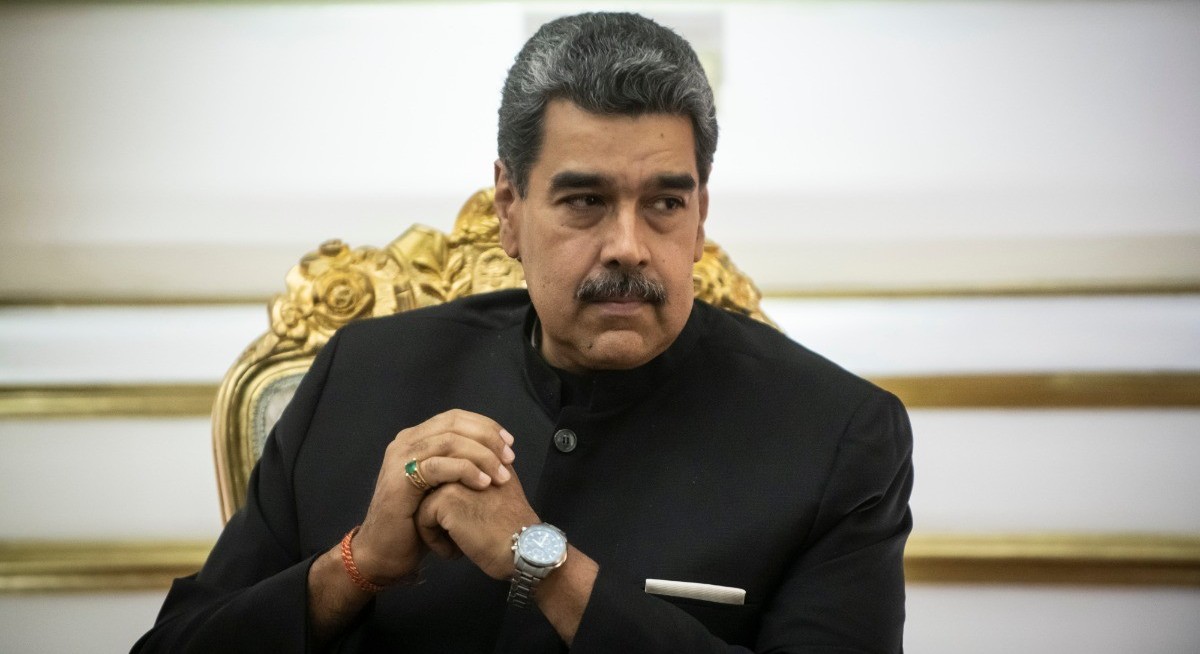


(March 26): Nicolás Maduro is set to return to a Manhattan federal court on Thursday as the US pushes forward with a broad drug-trafficking and narco-terrorism conspiracy case against the ousted Venezuelan leader that’s loaded with regional and geopolitical implications.
Prosecutors claim Maduro, who was seized by the US military on Jan 3, played a key role in a conspiracy to traffic cocaine into the US. They also allege that Maduro and others partnered with groups designated by the US as foreign terrorist organisations and that he sought to enrich himself while serving in government over a quarter century.
Thursday’s in-person court appearance will be the first since Jan 5 for Maduro, 63, and his wife, Cilia Flores, 69, who was also charged in the case. Both have pleaded not guilty and are being held without bail.
During the hearing, the couple’s defence lawyers and prosecutors are scheduled to update US District Judge Alvin Hellerstein on efforts to move the case forward. The judge is likely to discuss pretrial scheduling with the lawyers, including the timing of requests by Maduro and Flores to dismiss the charges or to limit the evidence that can be used against them.
In one early flash-point that’s already emerged, the ousted Venezuelan president has claimed the US is preventing him from receiving money from the government in Caracas he needs to pay for his legal defence.
Maduro’s US lawyer, Barry Pollack, has said in court papers that Venezuelan law requires the government to pay Maduro’s legal fees, and officials there are willing to do so. He said the US is unconstitutionally violating Maduro’s right to the counsel of his choice, requiring dismissal of the case.
See also: Canada to push for de-escalation in Middle East at G7 meeting
If Venezuela isn’t permitted to send funds, Pollack has asked to be permitted to withdraw from the case in favour of a court-appointed lawyer.
Prosecutors say money from the Venezuelan government can’t be used because of US sanctions against the country. Maduro and Flores remain free to use their own money to pay lawyers, the US said in a court filing.
Pollack told Hellerstein in the January hearing that he anticipates “voluminous and complicated” legal filings on behalf of the defence, including that Maduro is immune from prosecution as the former leader of a sovereign nation.
See also: Consultant says Iran war won’t stop Chinese investment
Hellerstein, 92, is presiding over the case and would handle a trial if the case goes before a jury, though that could be a year or more from now.
The case is US v Maduro, 11-cr-00205, US District Court, Southern District of New York (Manhattan).
Uploaded by Felyx Teoh




