


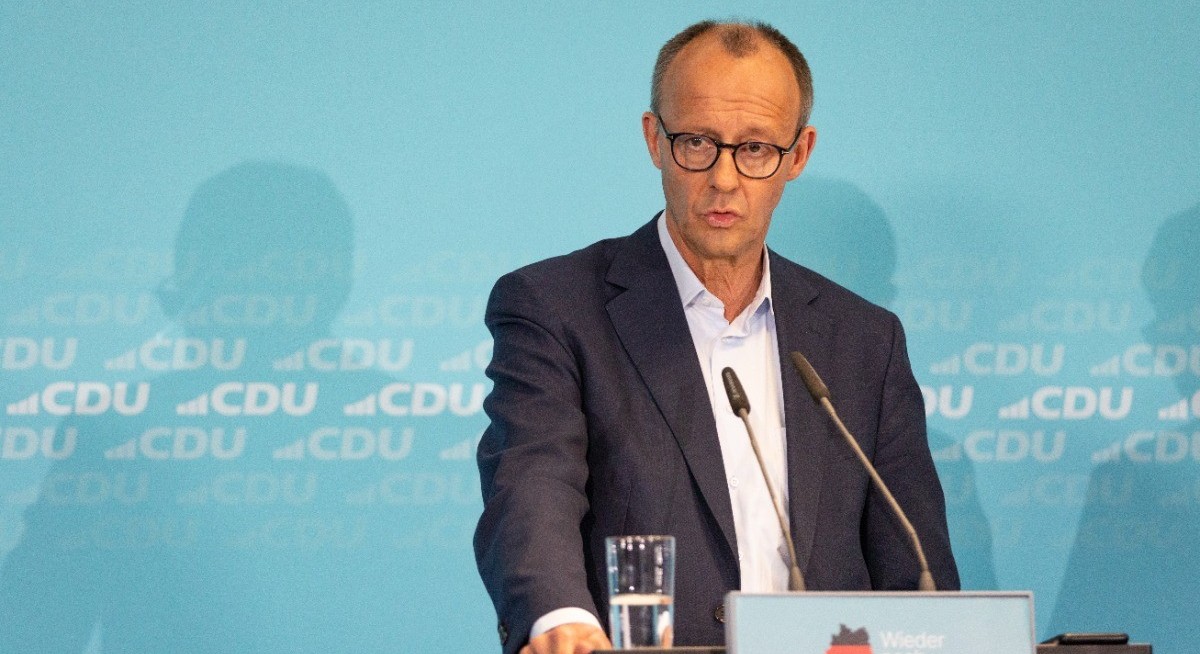


(April 27): The US is being “humiliated” by Iranian leaders as President Donald Trump struggles to negotiate an end to the war, German Chancellor Friedrich Merz said in comments that risk driving a further wedge in transatlantic relations.
In unusually candid terms, the German leader said he didn’t see “what strategic exit the Americans are now choosing,” adding that Tehran’s negotiators are proceeding “very skilfully — or indeed very skilfully not negotiating” .
The result is that an “entire nation is being humiliated by the Iranian leadership, particularly by these so-called Revolutionary Guards,” Merz told a group of students at a secondary school in western Germany on Monday.
The comments underscore several European leaders’ reassessment of their relations with Trump. A tendency to smooth ties by currying favour has given way to a more sober perspective of a US president who has repeatedly called into question Nato, bolstered European far-right forces and threatened to seize Greenland, a territory of Denmark.
Italian Prime Minister Giorgia Meloni, who had cultivated close ties with Trump, has navigated a falling out with the American leader, who attacked her verbally after she defended Pope Leo XIV against Trump’s broadsides. At a European Union summit in Cyprus on Friday, Meloni said she’s had no recent contact with Trump, though relations with the US are “still solid”.
Spain’s prime minister, Pedro Sanchez, has in contrast been consistently critical of Trump, drawing the president’s ire after the country denied access to military bases as part of the Iran war.
See also: Stalled US-Iran talks show limits of Pakistan mediation push
Merz made an effort to open a productive channel to Trump, including a White House visit in March that involved comparative bonhomie between the two leaders. But the chancellor, whose government is grappling with a spike in fuel prices that is hitting Europe’s No 1 economy, has grown more critical of the Iran campaign.
US and Iranian officials failed to engage in a second round of peace talks over the weekend. After days of anticipation, Trump on Saturday called off a planned trip by his envoys to Pakistan, saying Iran had “offered a lot, but not enough”. Iran’s foreign minister made two separate visits to Islamabad at the weekend, with Axios reporting that a new proposal was made to the US and conveyed through Pakistani mediators.
Merz, reiterating that German and European leaders hadn’t been consulted by the Trump administration before the start of the US-Israeli assault on Iran on Feb 28, said he’d expressed his scepticism directly with Trump in two conversations.
See also: Trump’s Hormuz blockade has deepened a historic shipping crisis
“If I had known that this would go on for five or six weeks and keep getting worse, I would have made my point to him even more forcefully,” Merz told students at the school in Marsberg in the chancellor’s home district.
The lesson from previous wars, including US-led campaigns in Afghanistan or Iraq, is that the problem lies in bringing such conflicts to an end, Merz said.
“In that respect, I hope this comes to an end as soon as possible,” Merz said. But he didn’t see an immediate prospect for an end, with Iran stronger than its adversaries had expected and Americans lacking a convincing negotiating strategy. The war, he said, is hitting home in Germany.
“This war against Iran has a direct impact on our economic performance and must therefore be brought to an end as soon as possible,” he said.
Uploaded by Felyx Teoh




