


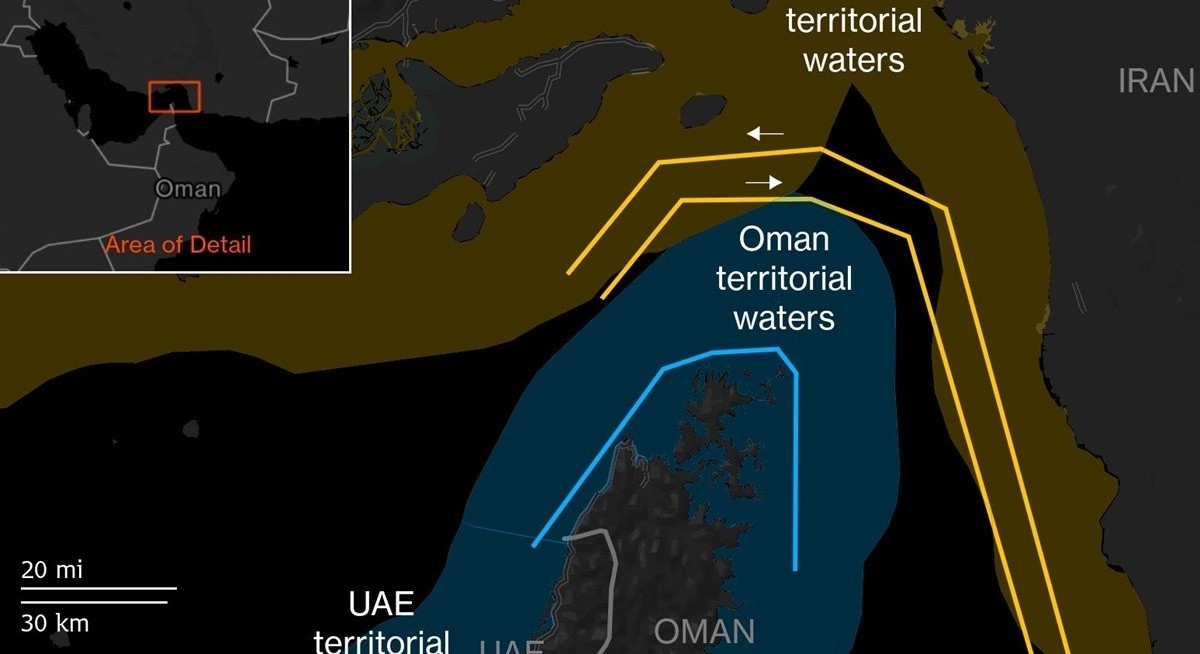


(July 2): Some leading European powers now accept that ships transiting the vital Strait of Hormuz will have to pay fees to Iran and Oman, according to people familiar with the matter.
The prospect of some sort of service fee in the aftermath of the US and Israeli war with the Islamic Republic was described as a given by two of the people, who asked not to be identified discussing private deliberations.
Privately, some Gulf Arab officials hold the same view, they said, though this is not necessarily the formal position of their governments.
It’s unclear what type or the amount of fees any nation would be willing to accept. The US and Gulf Arab countries, meanwhile, continue to insist that Iran and Oman cannot impose charges of any kind for the Hormuz strait. Concerns include adhering to international maritime law and the risk it creates a precedent for other countries to impose fees on different waterways.
While coming to terms with the idea of the additional costs, European countries have pressed Iranian and Omani officials not to discriminate against ships based on their nationality, the people said. The UK, France and other European nations are also pushing for an international maritime coalition to help with clearing mines in Hormuz, but its deployment will depend on negotiations over a permanent peace deal progressing, they said.

See also: Iran says ship ran aground in ‘unauthorised’ Hormuz transit
Oman, Saudi Arabia, the United Arab Emirates, Qatar and Kuwait either declined to comment or didn’t respond to requests for comment from Bloomberg.
Bahrain’s government, in a statement, said it had not accepted or even indicated acceptance of any fees or tolls on vessels transiting the strait.
“The free and unimpeded passage of international shipping through the strait is a matter of international law, not a matter for negotiation,” Bahrain said.
See also: Hormuz oil transits continue though attacks make owners wary
Oman has told European officials there’s no way of going back to the pre-war status quo in the Strait of Hormuz, Bloomberg reported last week. Ships passing through the waterway — a critical chokepoint for energy supplies from the Gulf — may be charged fees for services related to de-polluting the strait and navigation costs.
Oman, an ally of both the West and Iran, is facing pressure from both sides. In public, the sultanate, which borders the southern part of the strait, has sent mixed messages on what it will do, though has always said it will abide by international maritime law.
Oman is studying the Malacca strait in Asia as a potential model, one of the people said, a sign the country is trying to find a solution that appeases Iran and the rest of the world. Oman’s leaders think a Malacca-type system would only work if all Persian Gulf states accept it, the person said. It’s unclear whether a voluntary system would be a viable option for Iran.
The Malacca strait is loosely managed between Indonesia, Malaysia and Singapore, with the countries charging vessels for any navigation and security services that are needed. There is a fund that collects voluntary contributions for safe navigation, though it doesn’t regularly release details of financial contributions. In 2017, Singapore disclosed that US$22 million had been raised over a 10-year period for the fund, or roughly US$2.2 million per year.
Commercial shipping through the Strait of Hormuz has increased since Iran and the US signed an interim peace deal around two weeks ago. That agreement, along with American military support for vessels, has boosted oil flows through the chokepoint from the likes of Saudi Arabia, to more than 10 million barrels per day, slightly more than half pre-war levels. Iran has also boosted its crude exports thanks to the US lifting a blockade of its ports.
In a rare visit to Europe last week, the Sultan of Oman, Haitham bin Tariq, mentioned plans for the Strait of Hormuz in a meeting with French President Emmanuel Macron in Paris. The two leaders said in a joint declaration that they would promote restriction-free transit.
Gulf countries, who came under heavy attack from Iran for weeks in the initial phase of the war, have indicated a willingness to tone down their reluctance to pay tolls in the name of de-escalation, the people said.
To stay ahead of Singapore and the region’s corporate and economic trends, click here for Latest Section
Ongoing discussions between Iran, Oman and neighbours over the Strait of Hormuz come as US negotiators Steve Witkoff and Jared Kushner travelled to Doha this week to take part in indirect talks between Washington and Tehran. They were seeking to build on the interim deal, which triggered a 60-day negotiating period to resolve issues such as Iran’s nuclear programme and billions of dollars in frozen funds.
Those efforts faced a rocky start after a series of clashes over Hormuz late last week, alongside debates over the future management of the waterway. About a fifth of the world’s oil and liquefied natural gas supplies flowed through the strait before the conflict.
US President Donald Trump said on Wednesday that negotiators had made progress, saying “we’re getting along very well”.
The Islamic Republic effectively shut the waterway at the start of the US and Israeli bombardment in late February, with the US in turn blockading Iran’s ships from reaching ports.
That triggered a surge in energy prices and supply shortages. Since early on in the war, Iran has demanded having some form of future control of traffic going through the strait.
Uploaded by Felyx Teoh




