




(May 28): Tension between the US and other Nato members is driving countries in Europe to consider collective defence that’s less reliant on America — yet the picture is much different in Asia.
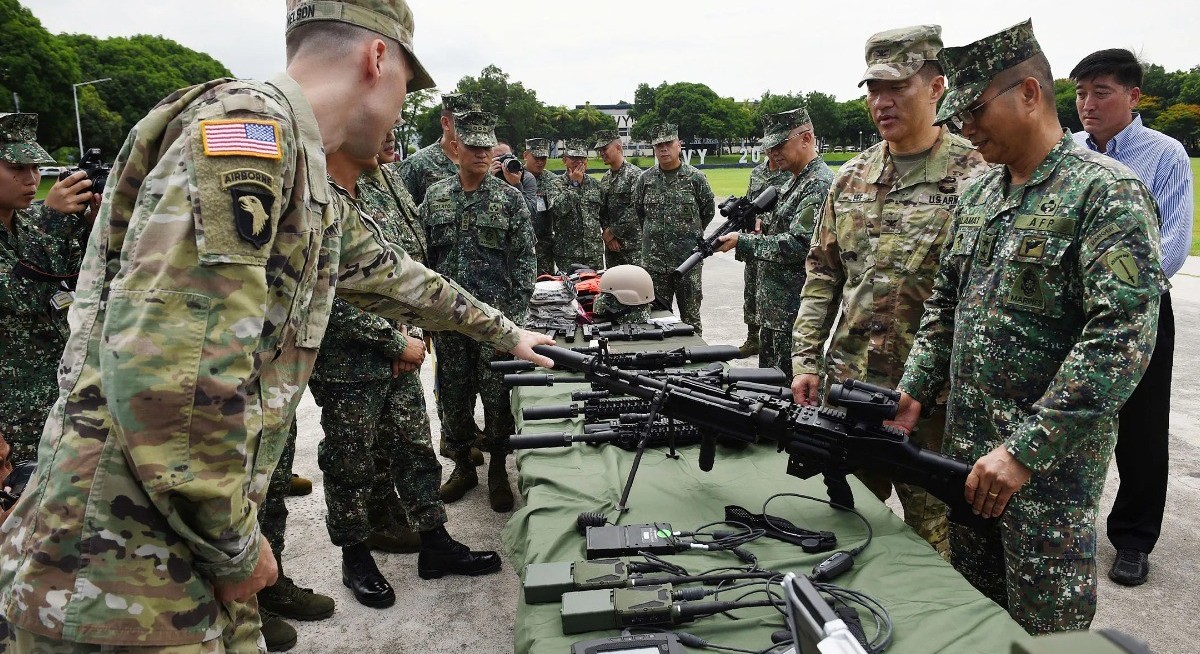
The US has deepened military coordination with its allies in the Indo-Pacific over the last few years, moving more missile systems, fighter jets and other weaponry into the region. It has also expanded the scale and complexity of joint training to prepare for potential crises, such as a conflict over Taiwan.
Demands on the US military from the war against Iran have created some shortages in Asia, such as a Marine Corps Expeditionary Unit sent from Japan. US President Donald Trump’s transactional nature, including his recent remarks about arms sales to Taiwan being a “negotiating chip” with China, worries allies and partner countries globally.
But away from the political theatre, US military deployments and operations in the western Pacific have grown steadily since the first Trump administration.

It’s all welcome in Tokyo, Seoul, Canberra and other capitals in the region that believe US military power is critical to counter the challenges from China and North Korea. Defence chiefs will look to hear more on that theme this weekend from US Defence Secretary Pete Hegseth, who is set to address the annual Shangri-La security conference in Singapore on Saturday.
See also: US and Iran clash near Hormuz as talks go ‘back and forth’
The Trump administration’s view that China is a far more direct challenge than Russia works in the favour of Washington’s Asian allies. Still, keeping the US engaged means making trade concessions, expanding defence budgets, and even praising the US leader.
“The European response is self-reliance and strategic autonomy,” said Evan Mederios, who served on the White House Security Council during the Obama administration. “And you have the Asian response, principally Japan, South Korea and Australia, which is to double down on he alliance and pull the US closer.”
US plans to reduce troop levels in Germany have reinforced concerns in Europe about the US commitment to Nato. Angered by a lack of support from Nato for the US and Israeli war on Iran, Trump has publicly raised the possibility of withdrawal from the alliance.
See also: Foreign Minister Vivian heads to North Korea in rare visit
French President Emmanuel Macron, one of the strongest advocates of strategic autonomy, is expanding its nuclear arsenal and has led calls for Europe to be better able to defend itself.
“The lesson we must draw is, let us no longer be dependent,” Macron said in April.

US allies in Asia haven’t been immune to Trump criticism, notably his complaints over military spending and treaties that oblige the US to defend them without a reciprocal commitment. The president has also said they should do more to protect shipping in the Strait of Hormuz.
But the contrast in the tone from the White House and Pentagon in recent months over European and Asian allies has been striking.
On a visit to Seoul in January, Pentagon policy chief Elbridge Colby described South Korea as a “model ally” after it said it would raise defence spending to 3.5% of gross domestic product. Trump has praised Australia’s defence investment plans and during a meeting with Japanese Prime Minister Sanae Takaichi in March, cited “tremendous support” from Japan “on everything.”
Admiral Samuel Paparo, commander of US Indo-Pacific Command, called allies in the region the “strategic centre of gravity” at a security conference in Honolulu in January.
To stay ahead of Singapore and the region’s corporate and economic trends, click here for Latest Section
Those allies are becoming more willing to deploy around the region and not just assume the US will lead. For Japan that was evident in its first deployment of combat troops to the Philippines for the annual Balikatan exercise in March. South Korea and Australia, meanwhile, are working with the US to equip themselves with nuclear-powered submarines.
Over the last few years, the US has conducted about 110 joint exercises each year with its Indo-Pacific allies and partners, according to US Indo-Pacific Command. The forecast for this year is 112, according to a US military official, speaking on condition of anonymity because of the sensitivity of the matter.
Some of the biggest growth in joint exercises has come in Japan, where the US military has become more active along the south-west island chain that extends close to Taiwan. Over two weeks in September last year, around 19,000 Japanese and US Marine Corps personnel participated in an annual exercise known as Resolute Dragon, more than double the roughly 9,000 troops involved a year earlier.
Trump’s recent remarks about arms sales to Taiwan have generated fresh concern about the potential for a regional conflict that would almost certainly draw in nearby American allies like the Philippines and Japan. Yet dealing with such an outcome without the US remains unthinkable.
“American leadership is indispensable,” Filipino Defence Secretary Gilberto Teodoro Jr said during a meeting with Hegseth at the Shangri-La conference last year.
The transactional nature of the US president is at the heart of debate among Nato countries about bolstering self-reliance, said Mike Green, head of the US Studies Center in Sydney. It’s something Asian countries are more familiar with, he notes, citing movements of US forces out of the region in previous decades.
“I think for our European allies, this is new and different for them,” Green said. “They haven’t seen this level of vitriol towards Europe from American political leadership in 75 or 80 years. And frankly, in my view, as a result, they’re overreacting a bit.”
Uploaded by Evelyn Chan




