


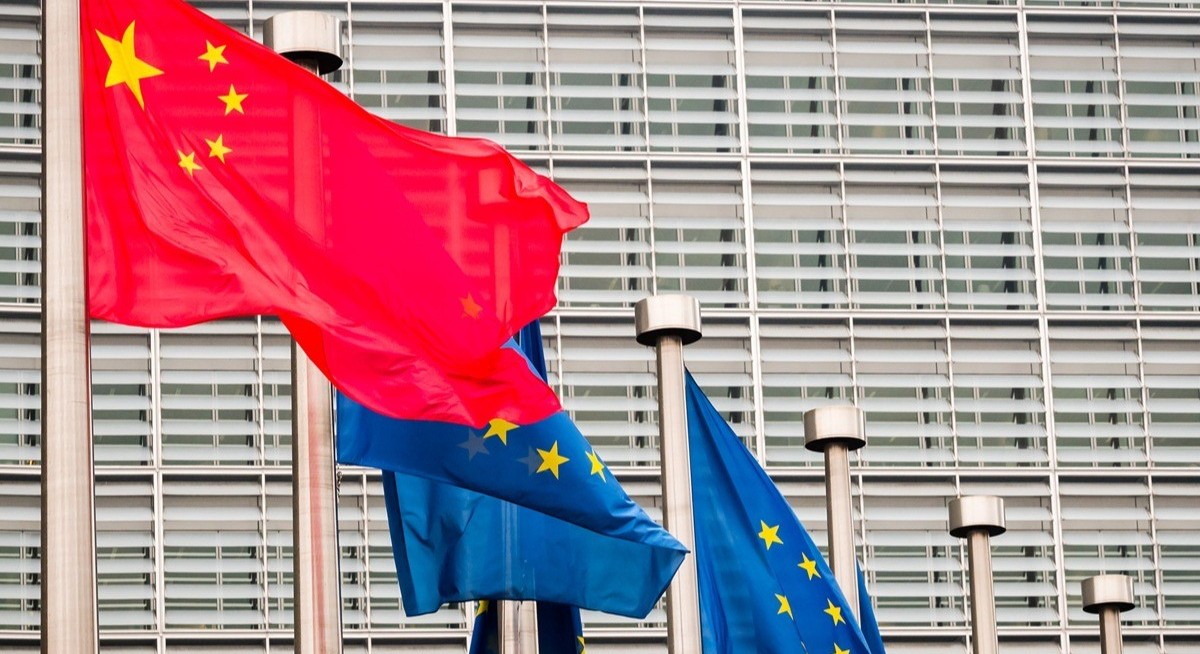


(July 11): The European Union is developing a “solidarity instrument” to support companies that diversify critical supplies away from China and cushion the impact of any retaliation by Beijing in the event of a trade conflict.
The tool will come at a price, though, and would require funding, just as member states haggle over the bloc’s next multiyear budget, according to people familiar with the matter.
It’s unclear how much money would need to be committed as it would depend, among other things, on the scale of any Chinese response — but it could be significant given the size of the industries and trade involved. The EU’s deliberations come as several member states push to cut spending.
The tool, which is being developed by the bloc’s executive arm, would be part of the EU’s efforts to address a massive trade deficit with China that now exceeds €360 billion (US$411 billion) and affects every member state.
Envoys were briefed on the efforts this week, said the people, who spoke on condition of anonymity to discuss private talks.

See also: India, NZ plan strategic partnership including maritime security

Spokespeople for the European Commission, which handles trade matters for the bloc, declined to comment.
The EU’s strategy to re-balance trade relations with Beijing includes parallel tracks: a dialogue, developing new instruments to diversify supplies, and making better use of existing tools such as anti-subsidy probes, safeguard measures and possible deployment of the so-called anti-coercion instrument. That step would allow the bloc to adopt numerous tariff and non-tariff responses to alleged coercive practices.
See also: US demands Iran declare Hormuz open to all ships
The bloc’s executive arm has been at pains to note that none of its tools are uniquely aimed at China, the people said.
In talks so far, Beijing has been open to exploring how to increase imports from the EU but less keen to find ways to tame its own exports, said the people. Both are key to the EU given the vast trade gap, as well as China’s market barriers and moderate consumption levels, the people added.
The EU is also pushing for longer permits and simpler procedures to import critical supplies, as well as asking Beijing to reduce market access constraints and abate its exports. China wants the EU to reciprocate any changes Beijing agrees to by loosening the bloc’s own controls, said the people.
The two sides have set an October deadline to make progress. Ursula von der Leyen, president of the European Commission, said in June that the bloc will act decisively if the dialogue doesn’t deliver.
EU trade chief Maros Sefcovic is due to travel to China in October to take stock of the talks, ahead of an EU leaders summit in Brussels where the issue will be on the agenda.
Several officials in Brussels and a number of capitals are skeptical that EU leaders have the political will to take on Beijing if diplomacy fails. China will inevitably retaliate aggressively if the EU acts, the people said.
Beijing has a stranglehold on minerals and chips critical to key European industries such as defence and autos. This complicates efforts to get tough on Beijing as China can potentially use export controls to bring European companies to their knees. China has already cautioned that it’ll fight any EU moves to protect its industries and expand its policy toolkit.
To stay ahead of Singapore and the region’s corporate and economic trends, click here for Latest Section
In 2025, China showed some of the damage it can do when it imposed restrictions on rare-earth elements, causing global panic about shortages and manufacturing shutdowns.
In a display of how vulnerable the EU is to supply disruptions, European carmakers this year successfully lobbied the commission to temporarily suspend sanctions on a major Chinese semiconductor supplier. Without an exemption, the companies warned that they’d run out of stock within weeks.
Uploaded by Liza Shireen Koshy




