




Since the war in Iran broke out, major biofuel-producing countries, including Indonesia, Malaysia, Thailand, Vietnam and Brazil, have moved to allow more biofuels to be blended into transport fuels to cut down on imports and ensure supply security.
Yet many environmentalists contest the idea that biofuels are a sustainable alternative energy source. And as more farmland is used to produce them, there is less available for food production, increasing the risk of global food shortages and hunger in the poorest nations.
What are biofuels?
Biofuels are made from biomass — typically crops such as corn, sugarcane, soybeans and palm oil — rather than fossil hydrocarbons such as oil.
See also: Winning the AI race: Why ‘speed-to-power’ is the new currency for Southeast Asia’s digital economy
They are mainly used for transport, where they are blended into gasoline and diesel as a cleaner-burning alternative, but they can also be used for power generation, heating and aviation. Ethanol, used in petrol, is made by fermenting sugars or starches from corn and sugarcane using yeast — a process similar to brewing beer or wine — before being distilled to fuel-grade purity.
Biodiesel is produced by reacting vegetable oil or animal fat with an alcohol, splitting the molecules into two layers: a thin, fuel-like liquid that can be used in diesel engines and a denser byproduct called glycerin, which is used in products such as shampoo and toothpaste. There is also renewable diesel, or hydrotreated vegetable oil, in which feedstocks are processed with hydrogen under high pressure to produce a higher-quality “drop-in” fuel that performs better in cold weather.
The priciest biofuel is sustainable aviation fuel (SAF), which uses advanced refining processes to convert waste oils into jet fuel that can be blended with conventional jet fuel for use in aircraft. There is also so-called advanced, or second-generation, biodiesel, made from non-food sources like crop waste, wood chips and even algae, which avoids competing with food crops.
See also: Asia’s energy shock: Who is resilient, who is not?
Why is demand for biofuels on the rise?
Demand has been rising for decades, but accelerated sharply from the early 2000s as governments introduced mandates to curb greenhouse gas emissions and reduce reliance on imported oil. Biofuels now account for about 6% to 8% of global farmland use, compared with about 1% 20 years ago.
In the US, production has been growing since the 1980s but surged after the Renewable Fuel Standard was expanded in 2007, helping to make the country the world’s largest ethanol producer, accounting for roughly half of global supply. Similar policies in Brazil, the European Union and later Asia made biofuels a core part of energy and climate strategies.
Governments see biofuels as a quick win: They can be blended into existing fuels and used in most engines, while leveraging existing infrastructure like refineries and fuel stations. This avoids the need for the costly new systems required for other non-fossil-fuel energy sources, such as hydrogen. For countries with large agricultural sectors — particularly emerging economies — biofuels offer a way to repurpose crops, support farmer incomes and cut fuel imports. Indonesia’s palm-based biodiesel program, for example, has become key to reducing a hefty diesel import bill.
Demand now comes from both developed and emerging economies, but for different reasons. In the US and Europe, it is driven by climate policy and emissions targets. In countries such as Indonesia, India and Brazil, the focus is on energy security and affordability, particularly where electrification of transportation has been slower and vehicles still rely heavily on liquid fuel.
How has the Hormuz crisis affected demand for biofuels?
The disruption to global energy flows has accelerated the shift toward biofuels, pushing governments and producers to fast-track blending, production and trade.
To stay ahead of Singapore and the region’s corporate and economic trends, click here for Latest Section
The world’s second-largest ethanol producer, Brazil, has announced plans to raise the limit for the proportion of ethanol biofuel that can be blended into gasoline to 32% of the total from 30% currently, a way to limit a rise in domestic gasoline prices due to the war and rein in inflation in a general election year. Brazil’s government said the measure will potentially allow the South American country to stop importing gasoline.
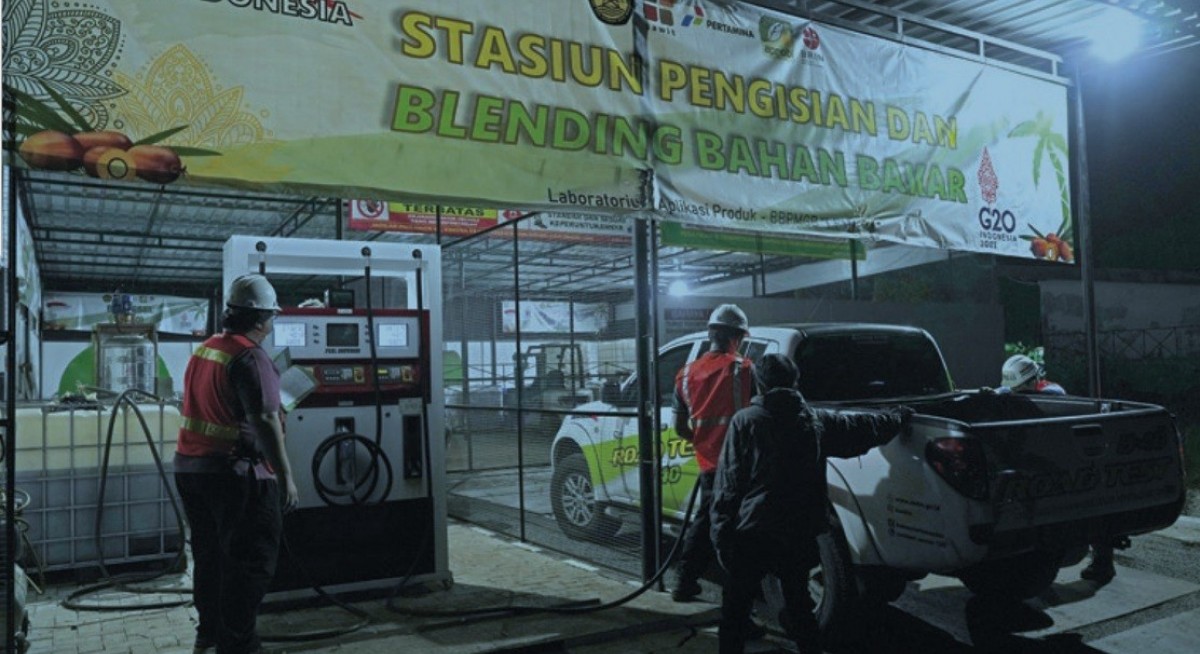
Indonesia, the world’s largest palm oil producer, is hastening its rollout of a diesel blend comprised of 50% biofuels — one of the world’s most ambitious biofuel-blending mandates — in a nationwide push toward self-sufficiency in food and fuel. Neighbouring Malaysia, which ranks a distant second in palm oil production, plans to gradually raise the share of palm-based fuel in diesel to 20% from 10%.
In the US, the war with Iran has been used as a talking point by proponents of biofuels to push for government approval of nationwide, year-round sales of higher-ethanol gasoline. They say that because ethanol is currently cheaper than gasoline, it makes sense to increase the amount of corn-based fuel sold to ease consumer costs.
Can biofuels really solve the energy crisis?
Biofuels can help to offset the costs of soaring gasoline prices, as mixing them with gasoline means you need less of the fossil fuel to produce a similar amount of energy.
Still, these products are no silver bullet. For one thing, critics say higher ethanol content is slightly less energy-dense than gasoline, meaning you could get fewer miles per gallon when using it in your car. And in some places, there is a limit to the amount of biofuels that can be blended.
In the US, the standard ethanol blend in gasoline is 10%. Federal air-quality rules restrict the sale of higher-ethanol E15 during the summer months because higher temperatures increase evaporation, which contributes to smog. The Environmental Protection Agency can waive those limits in emergencies, and the Trump administration has already issued a waiver for the summer of 2026, following one in 2025. Similar waivers were used for three years under former US president Joe Biden.
Equipment is also a problem. Some, particularly older, cars cannot run on gas with higher biofuel blends. And you need special cars that are uncommon in places like the US to run on really high levels.

Why are there concerns about the growth of biofuels?
A large share of biofuels comes from food-based feedstocks such as corn, soybeans, sugar cane and palm oil, which means diverting these crops into fuel can tighten supplies, raise prices and stoke food inflation. These tensions tend to intensify when events such as wars and extreme weather threaten harvests, as each biofuel policy push risks forcing a trade-off between feeding people and fuelling economies.
India, the world’s biggest vegetable oil importer, warned that global palm oil supplies are tightening as top producers Indonesia, Malaysia and Thailand all channel more output to domestic biofuels “at a time when import dependence remains high and price sensitivity is elevated” — a strain that could worsen if the El Niño weather phenomenon curbs farm yields.
In the US, it is unlikely that corn ethanol production will lead to higher food prices, as corn crops are hitting record levels and farmers are seeking other markets, including biofuels, to offset rising production costs.
Land-use change has also become a key concern, especially in countries such as Brazil that are confronting agriculture-driven deforestation. The country has long faced criticism from overseas buyers and environmentalists over how biofuels lead to more land being converted for farming. Brazil’s response to those claims has focused on the nation’s capacity to grow multiple crops per year on existing farmland, with most of the corn used for ethanol coming from that system.
The European Union, meanwhile, has classified palm-based biodiesel as a high-risk source of indirect land-use change, citing concerns that rising demand can drive deforestation and displace food production. The bloc is phasing out the use of such fuels by 2030, even as overall biofuel use in transportation continues to grow in the region.
Biofuel production can also pollute the air and groundwater. And it uses an enormous amount of water to grow crops for biofuel, which could worsen stress on ecosystems. — Bloomberg




