


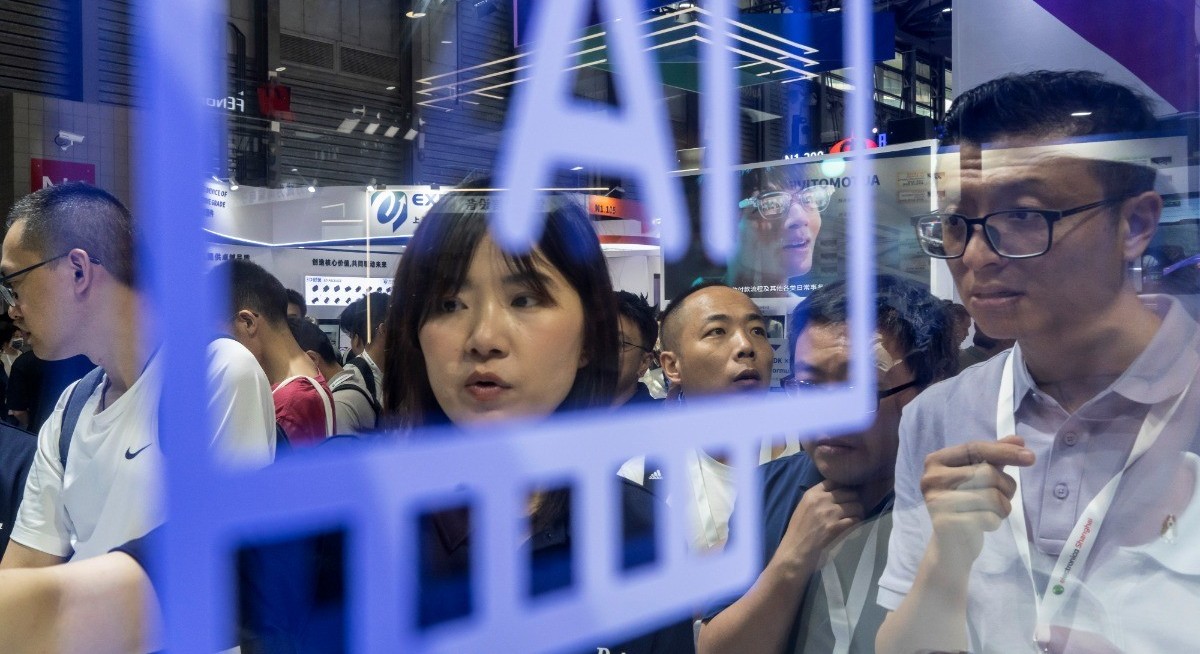


(July 13): Investors are rotating beyond AI winners in emerging markets, where just three technology stocks worth US$4.4 trillion ($5.7 trillion) drive an outsized share of returns.
Funds including JPMorgan Asset Management and Grantham Mayo Van Otterloo & Co are turning to bets on the broader economy — such as gaming, energy, and even a Vietnamese milk company. JPMorgan AM is looking at India and China for diversification away from the giant tech companies, one of them in Taiwan and two in South Korea.
“This type of concentration is never easy for a portfolio manager, it’s always difficult,” said Warren Chiang, portfolio manager for systematic equity at GMO in Berkeley, California. “The point here is to look for opportunity in as many places you can, but the absolute risk will be there no matter what.”
Taiwan Semiconductor Manufacturing Co, Samsung Electronics Co and SK Hynix Inc now make up more than 30% of the MSCI Emerging Markets Index — as much as the exposure of the “Mag 7” in the S&P 500. Their influence, and sharp price swings, have made the index the most volatile in six years.

On Monday, SK Hynix shares tumbled by the most on record in Seoul after the memory chipmaker’s highly anticipated US trading debut — and MSCI’s index of emerging-markets equities dropped as much as 2.5% to the lowest level in a month.
See also: South Korean AI rout drags emerging stocks to three-week low
Chipmaking stocks are faltering amid questions over whether cloud providers have overbuilt AI infrastructure. Samsung Electronics’ blowout earnings failed to spark a rally last week, while signs that AI developers are set to flood the market with their own chips deepened concerns that AI investment could outpace demand.
South Korea’s Kospi has slid more than 25% from its June record, with waves of selling repeatedly triggering exchange circuit breakers to temporarily halt trading.
Worries that valuations are getting too frothy — and tech exposures too heavy — led William Lam, co-head of Asia and EM equities at Invesco, to pare back Samsung Electronics in one of the firm’s Asian equity funds by more than 60% since the start of the year. He said he redeployed the proceeds into other Korean companies that are not tied to tech.
See also: Tech founder’s downfall in Indonesia shows rising business risks
“We think it’s important to safeguard clients’ capital from over-concentration,” Lam said. “History suggests that competition, capacity expansion and normal industry dynamics are likely to erode returns over time.”

Despite efforts to diversify, SK Hynix is simultaneously one of the largest underweights in GMO’s US$1.9 billion Emerging Markets Equity Strategy fund — and one of its top holdings, according to Chiang. The US$1 trillion company maker of memory chips has seen a 13-fold surge in its share price since the start of 2025 — more than fundamentals justify, in Chiang’s view.
“You’re not going to get around having a big position in TSMC, Samsung, SK Hynix, but your active position, that could be diversified at the stock level, country level and industry level,” he said.
As long as there is increased development and spending on AI by hyperscalers in the US, the positive trends in the Asian supply chain will continue, according to Alison Shimada, head of total emerging markets equity at Allspring Global Investments.
Retail flows show enduring confidence. The US$25.4 billion Avantis Emerging Markets Equity ETF — the largest actively-managed exchange-traded fund tracking emerging equities — just posted its biggest weekly inflow in four months.
BlackRock Inc is seeking to balance tech exposure with investments in industries poised to benefit from developments in artificial intelligence — including energy, materials, power infrastructure and utilities. It’s a way to cushion the volatility of pure AI plays, said Egon Vavrek, head of the emerging markets and Asia core team.
To stay ahead of Singapore and the region’s corporate and economic trends, click here for Latest Section
A top pick for Brandes Investment Partners’ roughly US$1.3 billion Emerging Markets Value Fund is NetEase Inc, China’s second-largest gaming company.
China tech stocks are also attracting interest. US export controls have forced the nation to create a separate technology ecosystem centered on domestic companies such as SMIC and Huawei.
That makes them a good way to get exposure to AI while also diversifying away from global chip leaders, according to Mark Davids, head of emerging markets and Asia-Pacific equities at JPMorgan AM.
“Chinese technology companies are the survivors of a fierce evolutionary race,” said Oliver Shale, investment specialist at Ruffer, a US$25 billion global macro absolute return manager. “They have strong business models, healthy balance sheets and a captive domestic customer base.”
Uploaded by Magessan Varatharaja




