


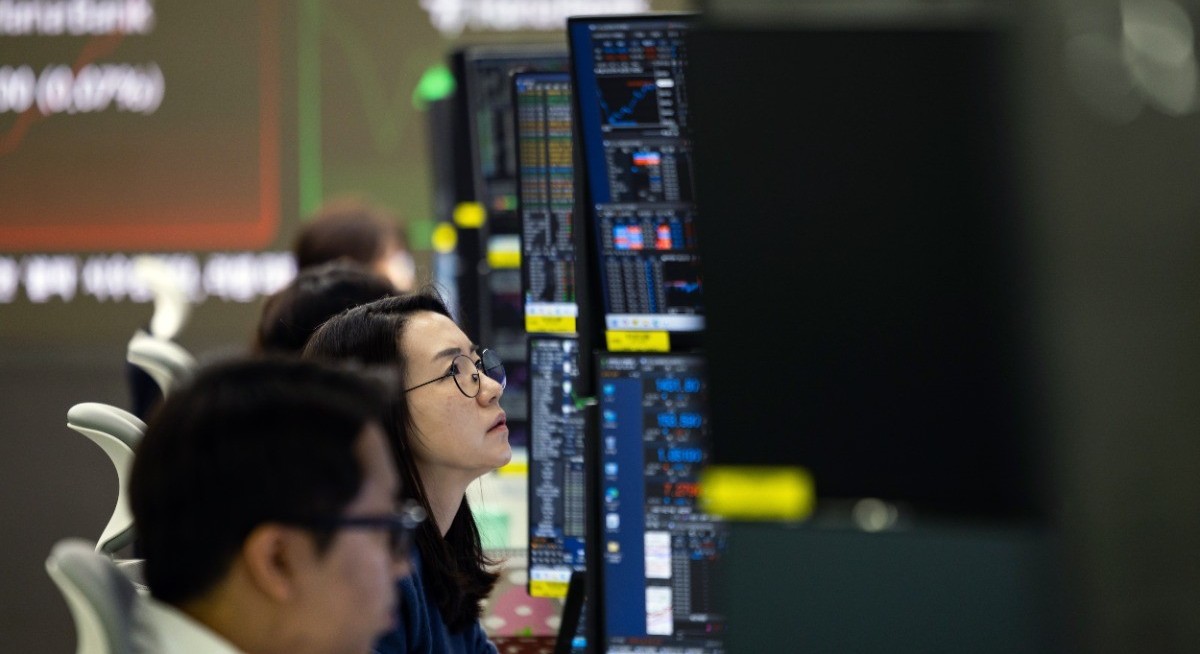


The shift is adding a tailwind to a strong start for Asian assets. Inflows into North and Southeast Asian equities have reached US$3.3 billion so far in January, according to data compiled by Bloomberg, set for the largest monthly flows since September. Another US$7.15 billion flowed into emerging market ETFs in the week ended Jan 16, with three-quarters going into Asia-focused funds. Bond markets in Thailand, Indonesia, South Korea and India drew US$3.7 billion this month.
“Emerging Asia is positioned to outperform broader EM this year, even amid heightened geopolitical uncertainty,” said Ray Sharma-Ong, deputy global head of multi-asset bespoke solutions at Aberdeen Investments. This points to strengths “either unique to Asia or far more developed”, including AI spending, stable credit conditions, and China’s anchoring role.
Aberdeen has recently boosted its emerging Asia exposure, expecting South Korean and Taiwanese equities to gain from AI spending.

See also: Emerging markets claw back losses as Trump hints at Iran war end
Emerging-market stocks and currencies are off to a storming start to 2026 as tensions between the US and Europe weigh on the dollar and re-energise diversification flows around the world. Latin American equities have been among the main gainers thanks to higher commodity prices. Dollar pressure on Monday, driven by rising debasement concerns, sent the ringgit to its strongest level since 2018, while the won hit a three-week high.
That’s in contrast to developing Asia, where investors are betting on AI earnings-led outperformance over the next year. Technology-linked stocks remain a key driver, while a firmer yuan and robust Chinese exports are expected to support regional trade.
Asian markets also help investors spread their risks, as the region moves less in sync with the US or Europe. Even as the Cboe Volatility Index or VIX — Wall Street’s fear gauge — rose to a two-month high last week, emerging Asia equities are up about 6.5% so far this year, beating the 1.9% gain in the MSCI World Index.
See also: Emerging assets fall for first time this week as oil prices jump
The outperformance is supported by stronger profit growth expectations. Aggregate earnings per share for companies in emerging Asia’s equity indices are seen rising by 30% over the next 12 months, according to data compiled by Bloomberg. That compares with forecasts of a 17% gain for Latin American stocks and 29% for emerging Eastern Europe.
“Asia represents this pocket of diversification, with a good prospect for earnings,” said Sophie Huynh, a portfolio manager at BNP Paribas Asset Management. “The correlation of Chinese equities with the rest of the equity complex is low, or lower relative to pre-Covid.”
Much of the support for Asia comes from China, which wields an outsized influence in the region. Despite pressure on its local economy, exports have accelerated, helping generate a record trade surplus of US$1.2 trillion.
Data underscore that role. Heavy trade links with China mean the yuan anchors regional currencies, with correlations of 0.50 or higher against the baht, ringgit and Korean won over the past five years. A correlation of one means the assets move in tandem.
“The yuan is an anchor for regional FX stability” and is expected to appreciate gradually as the trade surplus grows, said Leonard Kwan, a portfolio manager of the T Rowe Price Dynamic Emerging Markets Bond Strategy.
Uploaded by Chng Shear Lane




