


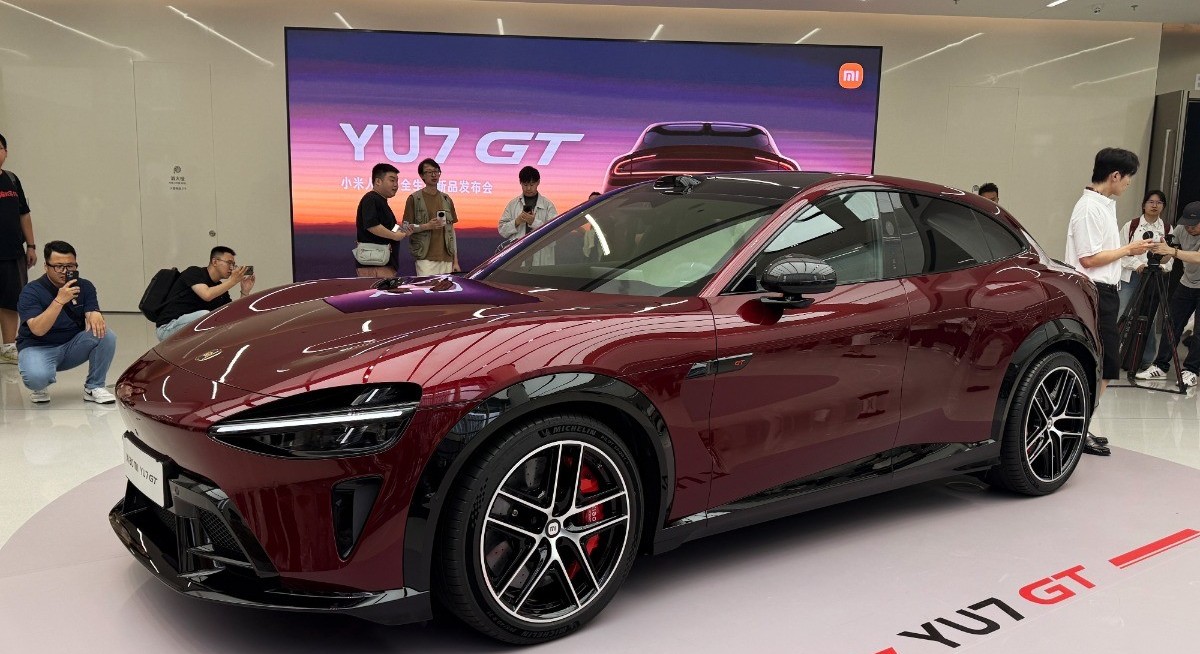


(May 21): Chinese tech giant Xiaomi Corp introduced a performance version of its popular YU7 sport utility vehicle (SUV), deepening a push into cars as its core smartphone business faces pressure from surging chip costs.
The YU7 GT boasts as much as 1,000 horsepower and a driving range of 705km (438 miles) on a full charge. It will start at 389,900 yuan, chief executive officer Lei Jun said on Thursday at the model’s unveiling event in Beijing.
The Porsche Cayenne Turbo Electric, a high-performance SUV of similar size, starts from 1.12 million yuan in China. The GT’s price is also 140,000 yuan cheaper than the SU7 Ultra, the racing version of Xiaomi’s first electric sedan.
When put to the test at Germany’s Nürburgring circuit after being modified for track conditions, the GT set a new record for an SUV, Lei said.
“Our aspiration is a pure-blooded machine which has the performance and appearance of race cars,” Lei said. “But it’s also luxurious and has a good range, and can take the family on a long distance journey.”
The GT is Xiaomi’s second attempt at marketing a sport variant of its cars, and the company will be hoping for a better reception than the SU7 Ultra. Sales of the performance EV have suffered since some customers sued Xiaomi for exaggerated marketing claims. Only 80 of the Ultras sold in March, down from more than 3,100 the same time last year.
See also: SP Mobility launches inaugural high-speed charging hub in Tengah HDB estate
At the event, Lei also introduced a new entry level trim for the YU7, starting at 233,500 yuan. This is 20,000 yuan lower than the previous basic version, another indication that the price war in China’s EV market shows no sign of tempering. Lei said the price adjustment was made to better compete with Tesla Inc’s Model Y to win the title of China’s best-selling SUV.
The company’s ambitions in the country’s competitive EV market can also help offset the challenges that its core smartphone business is facing. Xiaomi has been a major casualty among the top smartphone makers from the global memory chip crunch. Suppliers including Samsung Electronics Co have prioritised manufacturing advanced memory used in artificial intelligence data centres, leading to a shortage of conventional memory products and skyrocketing costs.
The Beijing-based company’s global smartphone shipments fell nearly 20% in the first quarter amid a broader market decline of 2.9%, as it strategically cut volume of low-end devices that don’t have the margins to absorb the rising costs, according to market data tracker IDC.
See also: BYD in talks with Stellantis and others about taking Europe plants
But China’s EV market is also encountering weak sales due to a roll back in government subsidies. Although exports remain a bright spot, Xiaomi won’t start selling overseas until 2027, missing out on the near-term boost to electric car demand in markets outside of China due to surging gasoline prices.
Uploaded by Felyx Teoh




