


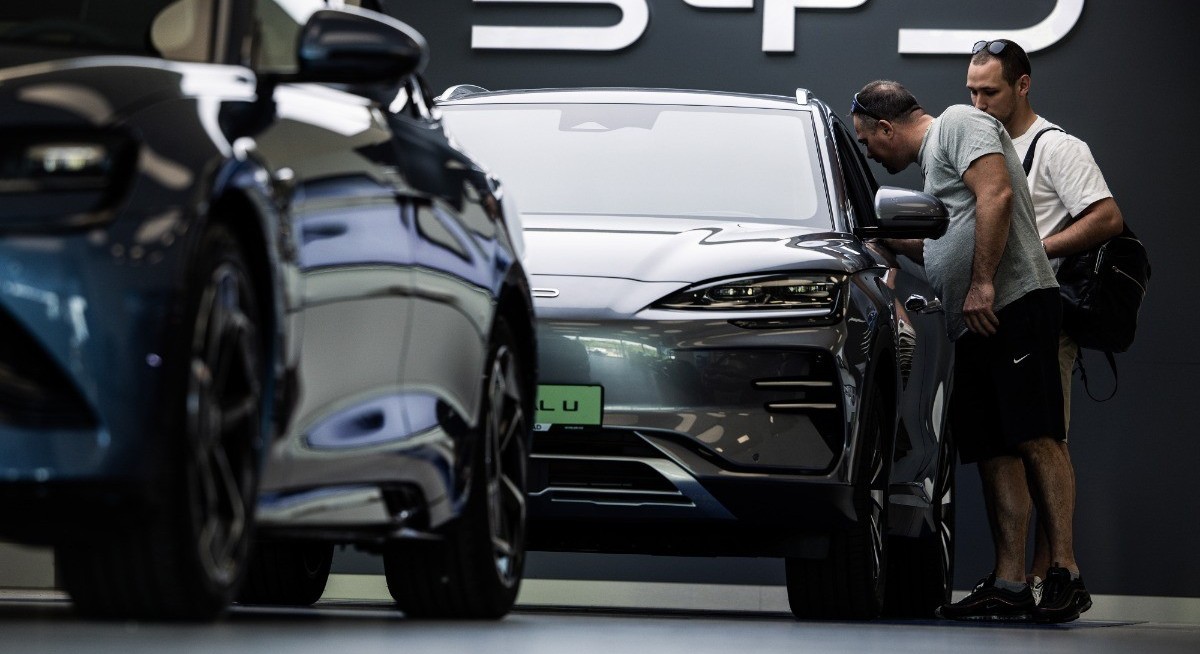


(April 1): BYD Co’s exports and overseas sales climbed 65% in March as surging oil prices due to the Iran war boosted demand for electric cars, though the automaker continues to struggle to regain momentum in the China market.
The carmaker said sales outside of China hit 120,083 in March, the highest in three months. But that wasn’t sufficient to lift BYD’s total deliveries, which fell about 20% to extend its streak of declines into a seventh month.
Still, it was enough to see the carmaker reclaim its lead over rival Geely Automobile Holdings Ltd, which had outsold BYD in the first two months of year.
The mixed bag of data underscores the challenges ahead for BYD, which is leaning heavily on its international push to shore up slumping profit as momentum in China stalls. The figures also indicate that BYD’s big bet on batteries and ultra-fast charging to revive domestic demand is yet to win over consumers, who have grown more circumspect in their spending after electric vehicle (EV) subsidies were reduced.
Bustling showrooms across Asia in March had pointed to a likely boost for BYD in foreign markets as surging fuel prices reignite consumer interest in EVs. Still, it’s unclear how long that lift will last: while stubbonly high energy costs would support demand, the global economic fallout of the conflict may weigh on consumer appetite for big-ticket purchases.
For BYD’s overseas push, growth will depend on how quickly its new plants in Hungary, Thailand and Brazil ramp up production, and how much volume can be localised rather than exported from China, according to Chris Liu, Shanghai-based senior analyst at Omdia.
See also: BYD profit disappoints again on ‘brutal’ China EV competition
BYD has signalled that it’s confident exports will reach 1.5 million vehicles in 2026, up from the 1.3 million target the Shenzhen-based carmaker previously disclosed. Geely plans to grow exports to 750,000 units in 2026, up from a previous goal of 640,000.
At home, higher and more volatile gasoline prices reinforce the value proposition of EVs, which could further support BYD’s market share in China, according to Liu. The March data is the first snapshot of Chinese demand without the distortion of the extended Lunar New Year holiday.
BYD last week reported a steeper-than-expected decline in fourth-quarter earnings, capping a year in which the company saw its first annual profit drop in four years.
Uploaded by Felyx Teoh




